Two Years of the Prabowo–Gibran Administration and 57 Million MBG Recipients
The Constitutional Court has ruled that the Free Nutritious Meals (MBG) programme is constitutional, thereby supporting efforts to tackle stunting.
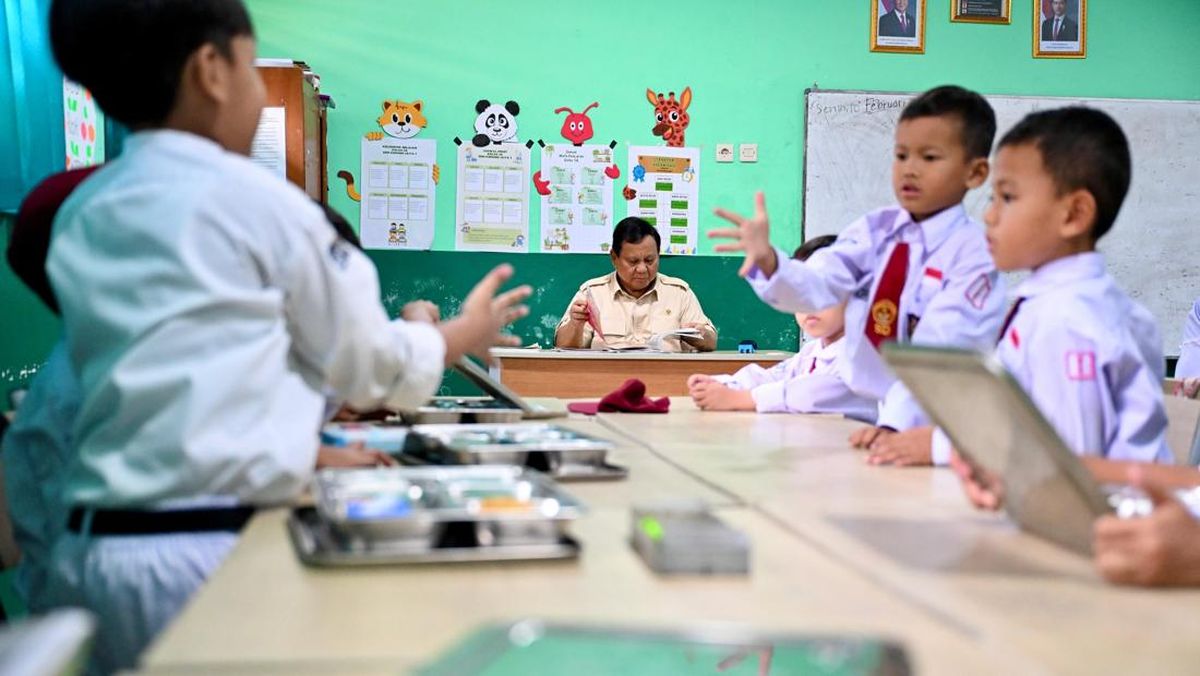
Constitutional Court (MK) Ruling No. 40/PUU-XXIV/2026 does indeed stipulate that the Free Nutritious Meals (MBG) programme must not draw upon the 20 per cent education budget allocation in the State Budget, as stipulated in the 1945 Constitution.
However, on the other hand, through this ruling, the Constitutional Court also affirmed that the MBG programme is a noble policy and remains valid to continue.
“Based on Ruling No. 40, whether we like it or not, the Constitutional Court has declared that the MBG (Free Nutritious Meals) programme is constitutional. Therefore, President Prabowo’s flagship programme can still be implemented,” said Wiwik Budi Wasito, a legal and constitutional expert from UIN Malang, East Java, when contacted on Tuesday (13 October).
Meanwhile, in the operative part of its ruling, the Constitutional Court stated: “In this regard, the objective of the MBG programme—which is cited as a tangible solution to the problem of stunting or other health issues arising from the unequal fulfilment of citizens’ nutritional needs—is a broad objective; therefore, in the Court’s view, it must be allocated its own separate budget line within the State Budget.”
Wiwik predicts that in future, the MBG budget allocation will be taken from the health sector. This is because, in its ruling, the Constitutional Court assessed that the MBG programme aims to support efforts to tackle stunting.
In the legal considerations of Ruling No. 40, the Constitutional Court even emphasised that the MBG programme forms part of the constitutional mandate.
“In this regard, the Court must also emphasise that the programme to provide nutritious food free of charge to the targeted members of the community is also one of the constitutional mandates,” wrote the Constitutional Court in its legal considerations.
One of the articles referred to by the Constitutional Court is Article 28H(1) and Article 34(3) of the 1945 Constitution. These articles affirm the right to a good and healthy living environment and the right to health care as one of the constitutional rights of citizens.
Meanwhile, Article 34(3) of the 1945 Constitution of the Republic of Indonesia emphasises the state’s responsibility for social security and the provision of adequate healthcare services.
Based on these considerations, she asserted that there is no constitutional justification for cancelling the programme, unless the government and the House of Representatives insist that the MBG be funded from the education budget. If that were to happen, the State Budget could be deemed unconstitutional and could once again be challenged before the Constitutional Court.
According to Wiwik, a similar case occurred at the start of President Susilo Bambang Yudhoyono’s (SBY) administration in 2006. As the education budget allocation fell short of the 20 per cent requirement and accounted for only 7 per cent of the State Budget, the Constitutional Court struck down the State Budget Law.
“It will be more or less the same in the future. If the government in 2027 remains obstinate and continues to tamper with the 20 per cent education budget, it is hoped that another petition will be lodged and granted by the Court,” said Wiwik.
The MBG is a national priority programme under the administration of President Prabowo Subianto and Vice-President Gibran Rakabuming, which was launched on 6 January 2025 – two months after their inauguration on 20 October 2024.
The policy is set out in Presidential Regulation No. 115 of 2025 on the Governance of the Implementation of the MBG Programme. However, a year before the programme was officially launched, in 2024, the government under President Joko Widodo had already established its implementing body, the National Nutrition Agency (BGN).
In the first year of implementation, from January 2025 to January 2026, there were a total of 55.1 million beneficiaries of the programme. These included pupils from early childhood education (PAUD) through to upper secondary school (SMA), toddlers, pregnant women and breastfeeding mothers. This figure exceeded the initial target of just 6 million beneficiaries.
The total number of MBG beneficiaries is distributed via 19,100 kitchens or nutritional service units (SPPG) spread across 38 provinces, with 780,000 staff or volunteers involved.
The government has allocated Rp71 trillion for 2025 – the first year of the MBG’s implementation – drawn from the education budget. This sum is significantly larger than the budget allocated to the Ministry of Education, Culture, Research and Technology (Kemendikdasmen), which stands at Rp33.55 trillion.
In 2026, the MBG budget allocation is set to rise dramatically, increasing almost fourfold to Rp268 trillion. However, during the course of the programme, the government has implemented efficiency measures, reducing the figure by 14.2 per cent to Rp229 trillion.
“At the start of the DIPA year, the budget ceiling for the MBG was Rp268 trillion. Currently, the effective ceiling stands at Rp229 trillion, meaning around Rp38 trillion has been saved through efficiency measures,” said Sudarto, Director-General of Budget at the Ministry of Finance, at the Ministry’s office in Jakarta on Friday (9 October).
As at 30 September, MBG expenditure had reached Rp153.2 trillion. Unlike in 2025, when funding was drawn solely from the education allocation, in 2026, the MBG allocation is also drawn from the health and economic budgets.
The breakdown of these three funding sources is 83.4 per cent from education, 9.2 per cent from health, and 7.4 per cent from the economy.
Meanwhile, for 2027, the government and the House of Representatives have agreed on an indicative ceiling for the MBG of Rp240.20 trillion, a reduction of Rp30 trillion from the initial proposal of Rp270.20 trillion. Specifically, the allocation for programme implementation amounts to Rp232.88 trillion, and Rp7.33 trillion is earmarked for management.
With this allocation, the National Nutrition Agency (BGN) aims to increase the number of beneficiaries by 72.4 million, comprising 60.6 million schoolchildren and 11.8 million pregnant women, breastfeeding mothers and under-fives.
“Every rupiah of the budget must be directly linked to improving the nutritional quality of the population,” said BGN Head Sudaryono on 17 September.
BGN Spokesperson Tysa Novenny stated that as of 9 October 2026, the number of MBG beneficiaries stood at 57.5 million, as per the Provisional Beneficiary Determination Letter (SPS), with a total budget realisation of Rp153.2 trillion.
According to Tysa, the agency has also carried out a number of evaluations and improvements following criticism and cases of food poisoning linked to the programme in various regions. Some of the improvements include new cooperation agreements with partners and foundations, the labelling of ‘ompreng’ (portioned meals), and the introduction of a buffet-style MBG scheme.
As of 5 October, BGN has also officially implemented an adjustment to the incentive, from the original Rp6 million per day per…
Source: CNN Indonesia ›


Comments (0)
No comments yet.