Two Years of the Prabowo–Gibran Administration and Efforts to Ensure Equitable Access to the Internet Within the Country
The Prabowo-Gibran government is focusing on ensuring equitable access to the internet across Indonesia. Although 98 per cent of villages are connected, 2,000 villages, particularly in Papua, remain without internet coverage.
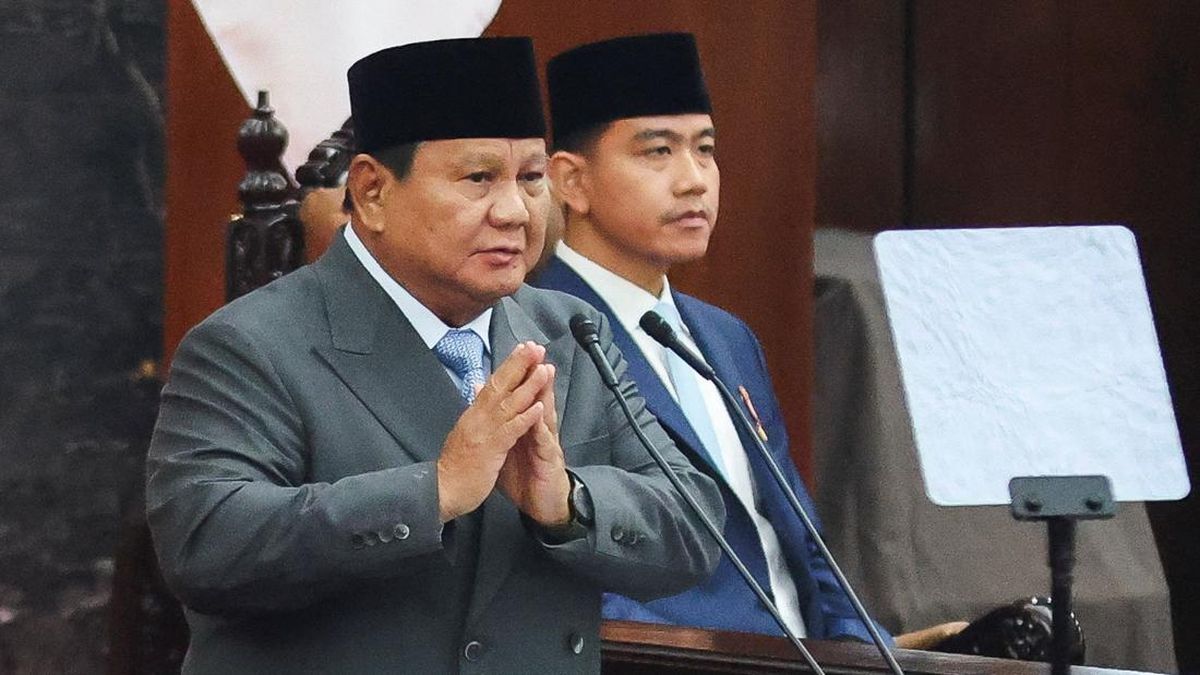
The Prabowo Subianto–Gibran Rakabuming administration continues to drive forward the equitable distribution of internet access across Indonesia. Although internet coverage is claimed to have reached 98 per cent of villages and sub-districts, around 2,000 villages remain unconnected, with the Papua region posing one of the greatest challenges.
The government has undertaken a number of initiatives to expand connectivity, ranging from infrastructure development in underdeveloped, frontier and outermost (3T) regions, to frequency auctions to promote faster and more affordable internet services.
According to a report from the Telecommunications and Information Accessibility Agency (BAKTI) under the Ministry of Communication and Digital Affairs (Komdigi), internet coverage now reaches 98 per cent of the country, with a total of around 83,000 villages and neighbourhoods now connected to the internet.
However, there are still around 2,000 villages that remain unconnected or are ‘blankspots’. Papua is cited as the region with the highest number of blankspots.
“Currently, across Indonesia, there are a total of around 83,000 villages and neighbourhoods, of which nearly 98 per cent are already covered (by the internet),” said BAKTI Komdigi’s Director-General, Fadhilah Mathar, at the Bakti Media Connect 2026 event in Jakarta, Wednesday (12 August).
In an effort to ensure equitable internet access, BAKTI has also provided internet coverage in 3T regions, utilising infrastructure such as 4G base transceiver stations (BTS), the Palapa Ring fibre-optic network, and the Republic of Indonesia Satellite (Satria-1) with a capacity of 150 Gbps.
To date, BAKTI’s efforts have brought internet access to 3,864 public service points and 4G coverage to 6,747 villages.
Internet access has also been provided at more than 31,000 locations across various regions of Indonesia. This connectivity covers the education sector, accounting for approximately 68 per cent, and the health sector, accounting for 5.89 per cent, to support e-government initiatives.
In addition to education and healthcare, around 19.9 per cent of these locations are government offices and community centres. This infrastructure is utilised in traditional markets, places of worship, defence and security posts, business premises, and public transport facilities.
Meanwhile, the Palapa Ring, which stretches 12,148 kilometres, has served 131 Network Operation Centre (NOC) locations across 57 non-commercial districts and cities.
According to Fadhilah, the development of connectivity in 3T regions must be directed towards delivering tangible benefits to the community. Therefore, the programme’s success is measured not only by the quantity of infrastructure but also by the extent to which it is utilised.
These figures are supported by the latest survey from the Indonesian Internet Service Providers Association (APJII) for 2026, which states that internet users in Indonesia will reach 81.76 per cent, an increase of 6 million people compared to the previous year.
The APJII survey also found that Indonesia’s internet penetration rate in 2026 reached 235 million people out of a total population of 287 million.
This figure represents an increase compared to the previous year, which stood at 80.66 per cent, or approximately 229 million people. This increase demonstrates that the internet has become a primary necessity for the Indonesian people across various aspects of life.
To address this issue of equitable access, the government, through the Ministry of Communication and Digital Affairs (Komdigi), has rolled out various programmes during the two-year term of the Prabowo-Gibran administration. The following are the measures they have taken.
In 2025, Komdigi conducted an auction for the 1.4GHz frequency band, which is one of the government’s strategies to achieve its mission of providing affordable high-speed internet at 100Mbps. Komdigi allocated this spectrum to revitalise wireless broadband access (BWA) services for local fixed networks based on packet-switched technology.
Spectrum usage rights were granted in the form of Radio Frequency Band Licences (IPFR), with service areas defined on a regional basis. The auction was won by MyRepublic and Surge (WIFI).
Each winner is entitled to operate an 80 MHz frequency band in the 1432–1512 MHz range within their respective regions for a period of 10 years.
Both companies have taken up the frequencies they won and are rolling out affordable internet services with speeds of up to 100 Mbps.
These fast and affordable internet services are expected to expand the coverage of fixed broadband services in Indonesia.
Deputy Minister for Communications and Digital Affairs Nezar Patria stated that the penetration rate of fixed broadband services currently stands at just 22 per cent of existing connectivity. He hopes this figure can rise to 50 per cent, so that the public has more choices of affordable internet services.
“So, we want the costs to become even lower by strengthening fixed broadband, not just mobile broadband. Currently, the penetration rate of our fixed broadband stands at approximately 22 per cent of total existing connectivity,” said Nezar Patria at the Digital Infrastructure Summit 2026 in Central Jakarta on Monday (12 October).
The government aims for 100Mbps internet services to be accessible at a cost of around Rp100,000. According to Nezar, with Indonesia’s per capita income approaching US$5,000, the cost of a household internet subscription should ideally be within the range of Rp200,000 per month.
Currently, the cost of fixed broadband internet remains at around Rp300,000. Consequently, infrastructure must be strengthened to improve the affordability of the service.
According to Nezar, 4G network coverage now reaches 97 per cent of inhabited areas in Indonesia. However, there are still a number of areas with small populations that are not yet covered by telecommunications infrastructure.
Meanwhile, Nezar noted that 5G network penetration remains at around 8.5 per cent. Consequently, accelerated development is required to support the growing need for connectivity and the utilisation of digital technology.
To expand 4G and 5G network coverage, Komdigi will once again hold a spectrum auction for the 700MHz and 2.6GHz bands in July 2026. This auction will be participated in by…
Source: CNN Indonesia ›




Comments (0)
No comments yet.