Alternative to Ozempic & Co.?: New syringe to kill fat cells
Instead of just shrinking fat cells, a new drug should trigger their controlled self-destruction process and even prevent a yo-yo effect after discontinuation. Initial studies show success. But researchers warn of possible side effects in the liver.
Instead of just shrinking fat cells, a new drug should trigger their controlled self-destruction process and even prevent a yo-yo effect after discontinuation. Initial studies show success. But researchers warn of possible side effects in the liver.
A syringe that does not simply shrink fat cells, but causes them to die in a targeted manner: this is exactly what the experimental drug CBL-514 should do. Initial studies in humans show that the treatment can reduce fat just below the skin. New data, so far only presented at a specialist conference, now suggest that the fat around the internal organs, which is particularly problematic for health, could also decline. And animal testing feeds yet another hope: The method could potentially help to slow down weight gain after weaning syringes.
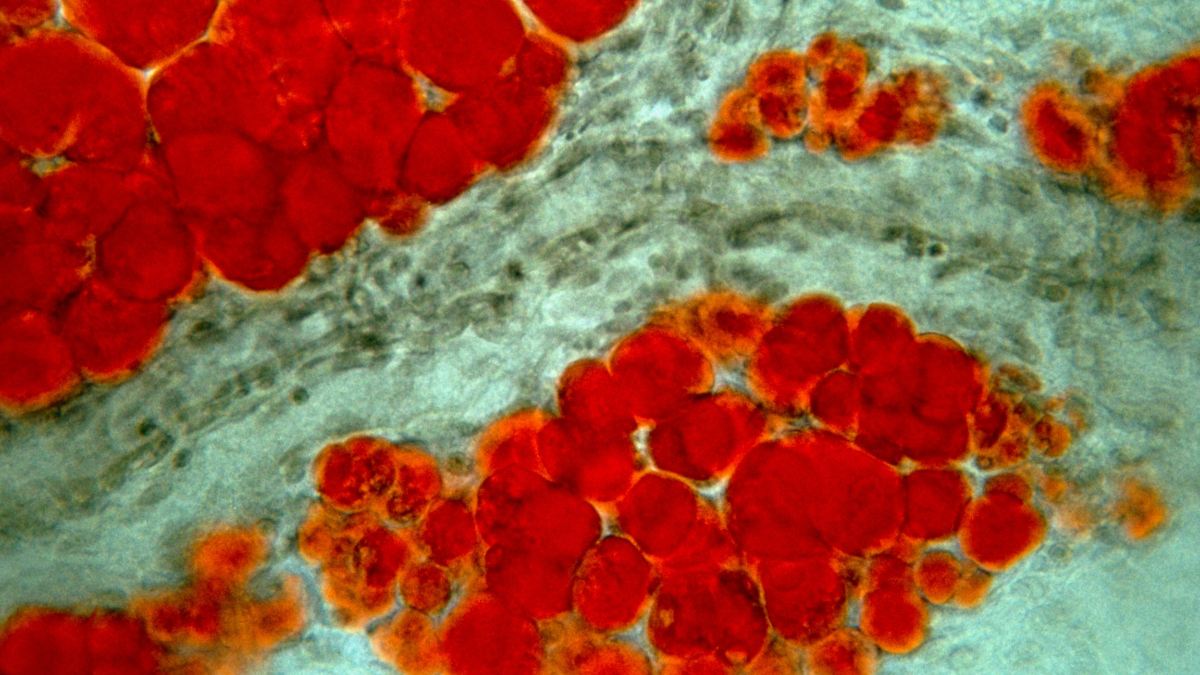
CBL-514 works differently than the known GLP-1 drugs. Active ingredients such as semaglutide or tirzepatid primarily dampen the appetite and lead to people eating less. Fat cells become smaller, but their number does not necessarily decrease. CBL-514, on the other hand, is said to act directly in fatty tissue: The active ingredient triggers the so-called apoptosis in fat cells - a controlled self-destruction process by which the body eliminates unwanted or damaged cells. In contrast to uncontrolled cell damage, the surrounding tissue should be spared as much as possible.
The fact that the active substance can actually reduce subcutaneous fat has now also been shown in a peer-reviewed Phase 2 study, which was presented at the congress "European Association for the Study of Diabetes". 108 adults received up to four belly treatments with the active ingredient or a placebo. Four weeks after the last treatment, the measured subcutaneous fat in the CBL-514 group had decreased on average by a good 20 percent, while it had practically not changed in the placebo group. Twelve weeks later, the difference was still detectable. The investigation was funded by the manufacturer Caliway Biopharmaceuticals, several authors work for the company or hold shares there.
CBL-514 is also said to fight another type of fat that is significantly more dangerous to health: the visceral fat that lies deeper in the abdomen and surrounds the organs. Too much of this is associated with an increased risk of, among other things, type 2 diabetes and cardiovascular disease. For the analysis presented at the European Diabetes Congress EASD, the research team evaluated MRI images of 41 participants from two phase 2 studies. The subjects had a body mass index between 22 and 30.
The body mass index (BMI) is a simple formula to determine the ratio of body weight to height. It is calculated by dividing the body weight in kilograms by the square of the height in meters (kg/m2) and serves as a rough guideline for the classification of the weight.Underweight: below 18.5 Normal weight: 18.5 - 24.9 Overweight: 25 - 29.9 Obesity Grade I: 30 - 34.9 Obesity Grade II: 35 - 39.9 Obesity Grade III: from 40
The result: Four weeks after the last treatment, visceral fat volume in the CBL-514 group had decreased on average by 12 percent. In the placebo group, however, it had increased by 5.7 percent. Even with a later control eight to twelve weeks after the treatment, the difference remained. This sounds promising, but the study comprises only a small subgroup and is currently only available as a conference contribution - a complete, peer-reviewed publication for this analysis does not yet exist.
"These results provide encouraging initial evidence that CBL-514 may reduce the volume of visceral fat in the abdomen," says Marie Spreckley of the University of Cambridge, who was not involved in the research. The MRI measurements and the comparison with a placebo group are strengths of the investigation. At the same time, she warns against hasty conclusions: "These results in humans do not show whether the treatment helps people lose weight or improves their health." This would require larger studies and significantly longer follow-up observations.
Even more speculative is the hope that CBL-514 could defuse one of the biggest problems of today’s weight-loss drugs: weight gain after discontinuation. Many people regain weight after the end of treatment with GLP-1 or related agents. In animal studies, CBL-514 was found to increase weight loss by tirzepatide in overweight rats and actually slow down regaining weight after discontinuation. “That provides a reason to investigate whether CBL-514 could help people maintain weight loss,” says Spreckley. "But this benefit has yet to be proven in humans."
The degradation of fat cells is also not automatically only advantageous. Justin Rochford, a metabolic researcher at the University of Aberdeen and also not involved in the study, points to a possible problem: subcutaneous fat also serves as a memory for the body. If too much of this is lost, excess fats could theoretically escape to less favorable places - for example, the liver. Rare diseases with missing adipose tissue know that such a fat redistribution can promote metabolic disorders. It is therefore crucial to examine "what happens to the fat in the liver, the blood lipids and the control of blood sugar," says Rochford.
Meanwhile, the manufacturer is pushing the development further. In September 2026, the company reportedly treated the first participant in an international Phase 3 study examining CBL-514 to reduce larger amounts of subcutaneous fat on the abdomen. Whether the fat cell syringe actually becomes a drug that, in addition to the construction..
Source: n-tv ›


Comments (0)
No comments yet.