Is that ARB that has just come down to seven percent?
The Indonesian Stock Exchange (BEI) lowered the Bottom Auto Rejection limit from 15 percent to seven percent on Monday (19 / 10). Here's the definition of ARB.
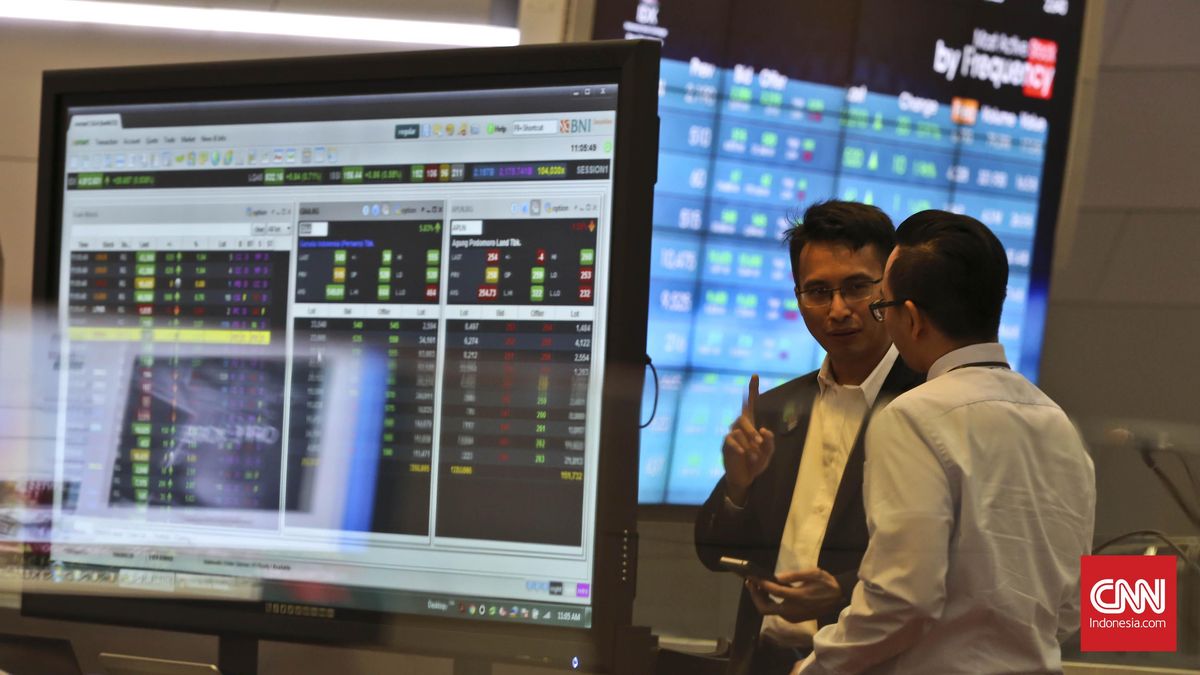
The Indonesian Stock Exchange (BEI) lowered the Bottom Auto Rejection limit from 15 percent to 7 percent from today, Monday (19 / 10).
The Adjustment of that rule is passed through the new SK Decisions Act BeI Number Keg-00157 / BEI / 10- 2026 on the Act of the El- A on the Ecuity-Artificial Trade Effect, which substitutes previous provisions in SK BEI Number Ke00136 / BEI / 09- 2026.
"Consider the conditions of Indonesian capital markets that are being volatile as well as global market dynamics," it is necessary to adjust to the limits of the Auto Rejection to keep the creation of the trade of regular, normal, efficient, "a sound of BEI consideration in its publication.
The market calls for this adjustment to give investors an opportunity to evaluate and digest the available information, so it can help the investment decision process better based on the fundamental conditions of the Indonesian economy.
The exchange also states that the latest provisions have been effective since October 19, 2026 to December 31, 2026, and will be evaluated again following the progress in the market.
In that rule, the upper Auto Rejection limit is unchanged. While for ARB, BEI regulates stock prices at Rp1-Rp10 range, the ARB limit is equal to Rp1.
So, what is ARB and what are the consequences?
The Auto Rejection Bottom (ARB) is an automatic mechanism for the BEI trading system that limits the maximum reduction in stock prices in one day's trading.
Simply put, when the price of a sale offer or a purchase demand goes beyond the bottom limit, the exchange system will automatically reject the order.
BEI also applies the Top Auto Rejection, which is a symmetrical mechanism that limits the highest share price rise allowed in a day.
These two mechanisms are designed as a defense fortress to maintain order, order, and trade efficiency on the market.
Just so you know, seven percent of the ARB limit doesn't mean the stock price will drop by seven percent every day. That number is the maximum threshold of the lower ceiling limit allowed by the system.
The stock price movement itself remains entirely dependent on supply and demand dynamics, the transaction activities, as well as the market sentiment.
BEI steps pressed the ARB limits from 15 percent to 7 percent taken to manage the growing market volatile over global financial dynamics.
By narrowing down the daily value room, the market gives investors an opportunity to evaluate and digest information more quietly before taking investment decisions.
This tighter drop limit is also expected to dampen the potential of extreme losses due to market emotional reactions or panic-selling actions and encourage market offenders to refocus on the fundamental assessment of the economy.
Even so, the change in the ARB borders is not necessarily guaranteed market volatile will be lost or stock prices will become stable automatically.
High-pressure sales are still potentially pushing stock prices into the ARB border 7 percent as per the provisions so that investors still need to apply disciplinary risk management in the transaction.
Source: CNN Indonesia ›



Comments (0)
No comments yet.