Off for combustion engines: will soon E20 fuel come to the filling stations?
15 years ago, the excitement was great when E10 fuel came to the gas stations. According to Transport Minister Bilger, E20 fuel could soon come. It is already being tested.
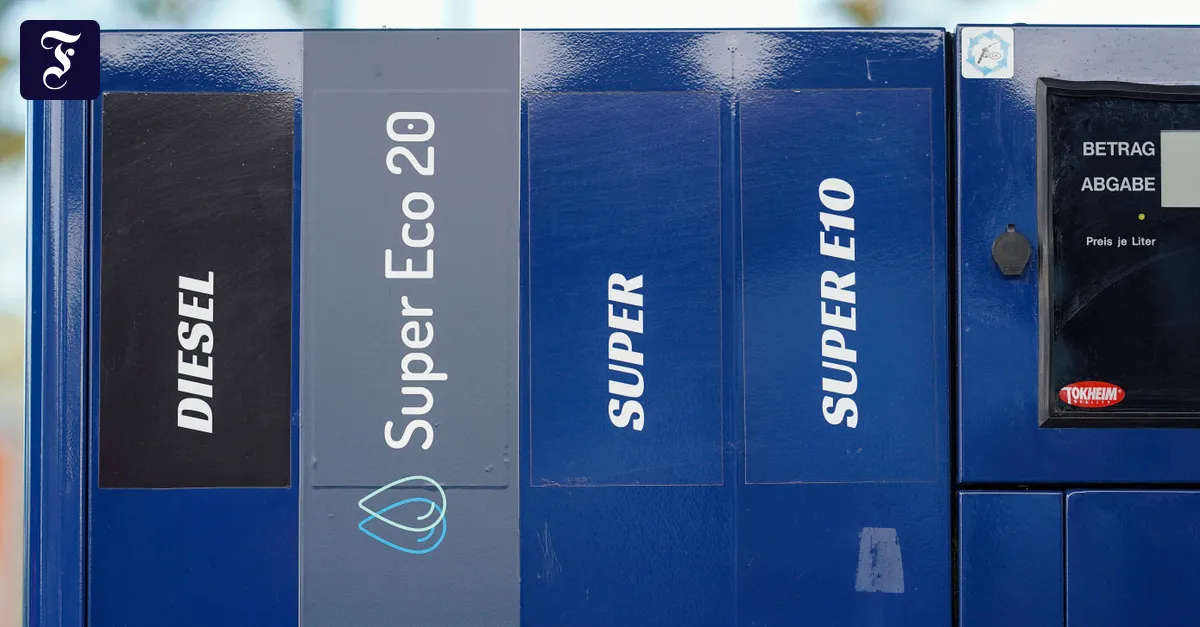
Around 15 years after the nationwide introduction of E10 fuel, the next step could soon come to E20 – at least if it goes according to Transport Minister Steffen Bilger. “At the moment, I am working with my French counterpart to increase the admixture of biofuels,” said the Christian Democrat of the “Augsburger Allgemeine” on the question of how he wanted to take climate protection into account instead. “For example, there would be E20 at the pumps.” The designations E5 and E10 indicate the maximum proportion of bioethanol in petrol. E20 would correspond to a maximum admixture quota of 20 percent. Bilger’s initiative is linked to the recent Franco-German push against a strict diesel phase-out by 2035. Chancellor Friedrich Merz (CDU) had summarized the agreement with Paris as follows: “The combustion engine end is then history.” E20 is already being tested All new E20 is not. According to earlier information from the ADAC, the fuel is already being tested in Mannheim. “The fuel with an up to 20 percent bioethanol admixture is, however, to be tested so far only in the context of a closed fleet test,” it said in the summer at the automobile club. The prerequisite for motorists to be able to fill up with gasoline with up to 20 percent bioethanol admixture (Super E20) is an adaptation of the quality standard for petrol (DIN EN 228), which currently only allows an ethanol content of a maximum of 10 percent, according to the ADAC. According to the automobile club AvD, motorists do not have to fear for their vehicle when using E20. "For vehicles that have already been approved by the manufacturer as E10 compatible without restrictions and have modern fuel systems, the use of E20 is also safe from a technical point of view," it said in a statement in spring. Representatives of the EU member states and the European Parliament had long agreed in 2022 that new cars in the EU should no longer emit climate-damaging carbon dioxide (CO2) in operation from 2035. Otherwise, there is a risk of fines. The EU Commission had proposed in December, more cars with combustion engine new. The European Parliament and the EU member states are currently discussing this. Without their approval, the plan will not enter into force. Germany and the car industry had long campaigned for a softening of the actually agreed-upon combustion-off. Berlin and Paris have now agreed on joint proposals for the future of combustion engines and electric cars. They would lead to the car industry being allowed to sell new combustion engines and hybrid vehicles even after 2035, without the threat of fines. The agreement could enable a majority in the Council of the EU states. Bilger called the combustion ban in its previous form a mistake. “The federal government delivers what it has promised: a correction of the previous course and more technology openness,” he said, according to his Ministry. Even after 2035, vehicles with internal combustion engines will be able to be registered and used if they use renewable fuels. Renewable fuels can continue to make an important contribution to climate protection in the future. Shared echo in the car industry of Germany’s largest car manufacturer Volkswagen called the joint position of Germany and France a strong signal for Europe and its ability to act. “The proposal from Berlin and Paris is a big throw,” said a spokesman for the VW Group. “France and Germany are proposing some useful flexibility in CO2 fleet regulation.” The president of the industry association VDA, Hildegard Müller, criticized, however, that the Franco-German agreement in relevant points still lags behind the necessary adjustments. “In the negotiations in the Council and in Parliament, there is therefore a need for further discussion and adjustment,” she said, according to the Association. As an example, Müller mentioned “the specific characteristics of the commercial vehicle sector”, which were not taken into account either by the EU Commission or in the Franco-German paper. Lower Saxony’s Prime Minister Olaf Lies (SPD), who sits on the VW Supervisory Board, assured Germany radio that no one had any doubt that the path to e-mobility leads. But the automotive industry must earn money to finance the transformation. We also need employment stability. Bilger sees a need to catch up on the charging network in other countries With the charging possibilities for e-cars, according to Bilger, it is not everywhere in Europe for the best. “Not everyone has a charging facility at home or at work,” the minister said. We are very well positioned in Germany with our public charging network. But other countries in Europe, for which the combustion ban should also apply, still have a lot of catching up to do in the expansion of the charging infrastructure. In many countries around the world, the switch to e-cars will take longer, but German car manufacturers should also export there in the future.
Source: FAZ ›




Comments (0)
No comments yet.