Dire straits: why Filipino sailors continue to brave troubled Middle East waters
Filipino seafarer Jay was on lookout duty aboard a vessel passing through the Strait of Hormuz one evening in August when drones swarmed overhead, darting past his ship and two others it was following. Within seconds, an explosion rang out from a tanker ahead. “That was traumatic for me when I saw that the tanker ahead of our vessel had been hit,” said Jay, whose real name has been withheld to protect him from possible employer retribution. The 29-year-old and his fellow crew members made it...
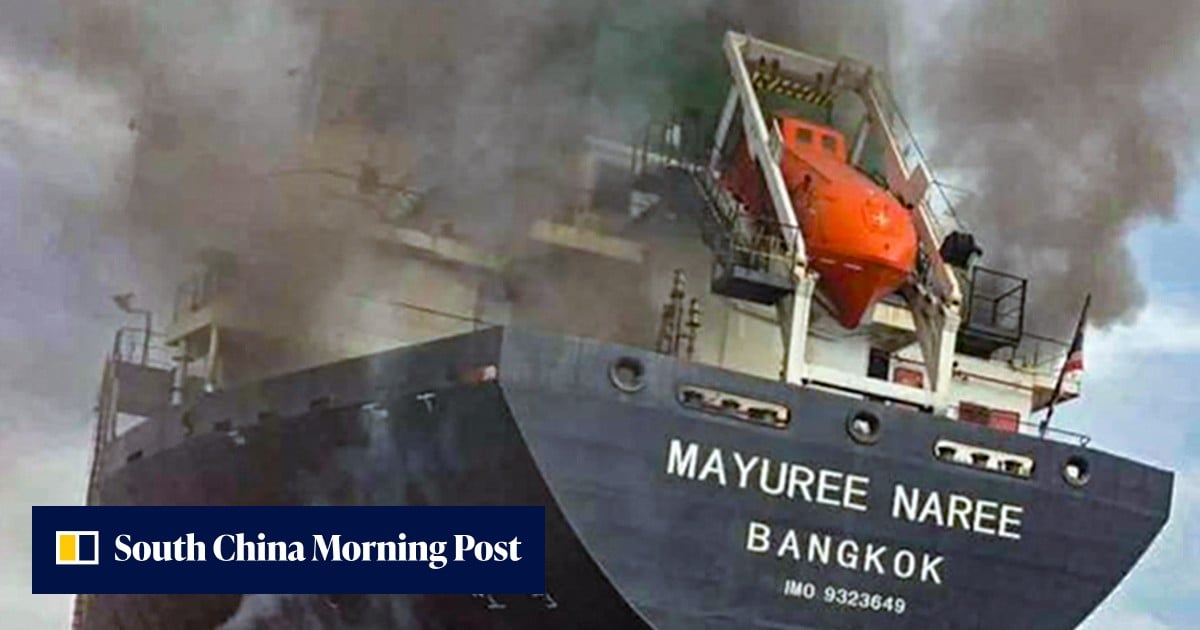
Filipino seafarer Jay was on lookout duty aboard a vessel passing through the Strait of Hormuz one evening in August when drones swarmed overhead, darting past his ship and two others it was following.
Within seconds, an explosion rang out from a tanker ahead.
“That was traumatic for me when I saw that the tanker ahead of our vessel had been hit,” said Jay, whose real name has been withheld to protect him from possible employer retribution.
The 29-year-old and his fellow crew members made it through the strait unscathed, but the experience stayed with him. “We never talked about what happened; it was done. We would move on and proceed to the next voyage,” he said.
For sailors like Jay, however, the danger does not end when a voyage is over. As conflict threatens the Strait of Hormuz and other maritime chokepoints in the Gulf region, these Filipino workers face a difficult choice: risk sailing through dangerous waters or refuse a voyage and potentially jeopardise their livelihoods.
The Philippines is the world’s leading supplier of seafarers, with more than 468,000 Filipino seafarers deployed last year, according to data from the Department of Migrant Workers (DMW).
In March 2024, DMW issued a memorandum setting out the right of Filipino seafarers to refuse to sail through high-risk areas, particularly the Red Sea, Gulf of Aden and surrounding waters, following an increase in piracy, hijackings and armed attacks on civilian ships.
Under the rules, Filipino seafarers who refused to sail through these areas are entitled to protections including repatriation help and two months’ basic wages. Recruitment and placement agencies also cannot bar them from future contracts or employment.
The memorandum was issued after Houthi rebels attacked a commercial vessel in the Red Sea that month, killing two Filipino seafarers and injuring three others.
Nearly 1,500 Filipino seafarers had exercised that right over the past three years, according to the DMW. In September, 10 Filipinos who refused to sail through the Strait of Hormuz returned safely to the Philippines.
Since the Iran war began in February, five Filipinos had died and one remained missing, Secretary of Migrant Workers Hans Cacdac confirmed in September.
Protection problem
Manila generally assesses potential threats to overseas Filipino workers (OFWs) and issues corresponding alert levels, according to Arnold de Vera, director of the workers and employees programme at the University of the Philippines Law Centre. “The worst cases justify a ban on deployment and, for those already there, mandatory repatriation,” he said.
However, much of their protection still depends on the recruitment agencies and foreign employers that hire them.
“Our system of regulatory protection for OFWs relies heavily on the statutory provision imposing a solidary liability between the foreign employer and the local recruitment and placement agency. By making them solidarily liable, the local agency can be made to answer to the liabilities attributable to the foreign employer,” de Vera said.
Many seafarers are also covered by collective bargaining agreements negotiated by unions and shipowners, which provide another layer of protection, according to de Vera.
Implementation remains a challenge, though, particularly when disputes end up in litigation. The division of responsibility for worker safety can leave seafarers in situations where exercising their right to refuse becomes complicated.
After Jay’s ship docked in Al Jubail, Saudi Arabia, he decided to exercise his right to refuse to sail, knowing that he would again have to transit the Red Sea and Gulf of Aden, both designated high-risk areas. “I sent an email to my company informing them that I would exercise my right to refuse. I also emailed the DMW and other concerned groups,” he said.
However, he and his fellow crew members were not allowed off the vessel. “It is very hard to be poor. My company said that it had filed for financial losses because its other ships had been attacked. We asked our company to increase our compensation if we would not be sent home but they failed to meet our demand … we continued to sail even after we exercised our right to refuse.”
In September, the family of a Filipino seafarer killed aboard an oil tanker attempting to pass through the Strait of Hormuz said that he had not been informed in advance that the vessel would transit the strait.
The DMW said that same month it was examining compliance with regulations. This Week in Asia also contacted the department for comment.
Jay said his employer had failed to address the psychological toll of the experience, focusing instead on completing the voyage. “They don’t even care about the mental health of their crew that has experienced this trauma. What they told us is [there will be] no crew change and [to] deliver the cargo,” he added.
He feared that his agency might not rehire him when his contract ended because his email to the DMW had included the name of his vessel and its route.
Family obligations
The prospect of losing future work was also a factor for Filipino seafarer Ronald Allan Ruiz, who transited the Strait of Hormuz despite the risks. “In the Red Sea, what we deal with is the pirates, the Somalis … the conflict between Iran and the US, and the nearby tensions, that is what changed things,” Ruiz said.
He and his fellow Filipino crew members had agreed to the voyage because of their families’ financial needs back home. They were also offered incentives for transiting high-risk areas, he said. “Even though you have the right to refuse to sail, [the financial need] doesn’t go away for our colleagues either. Maybe the office won’t rehire you – because, of course, the company deals with a big business.”
Although Ruiz felt his recruitment agency and employer had treated him fairly, he remained concerned about the uncertainty he might face if he returned home.
“There’s also what we call ‘if the price is right’. So sometimes even w…
Source: South China Morning Post ›


Comments (0)
No comments yet.