Export successes: How China's automakers are winning the markets
The car boom in China is not ending. An estimated 12 million vehicles export BYD & Co. this year. In many countries, the cars from the street scene are indispensable. A world trip.
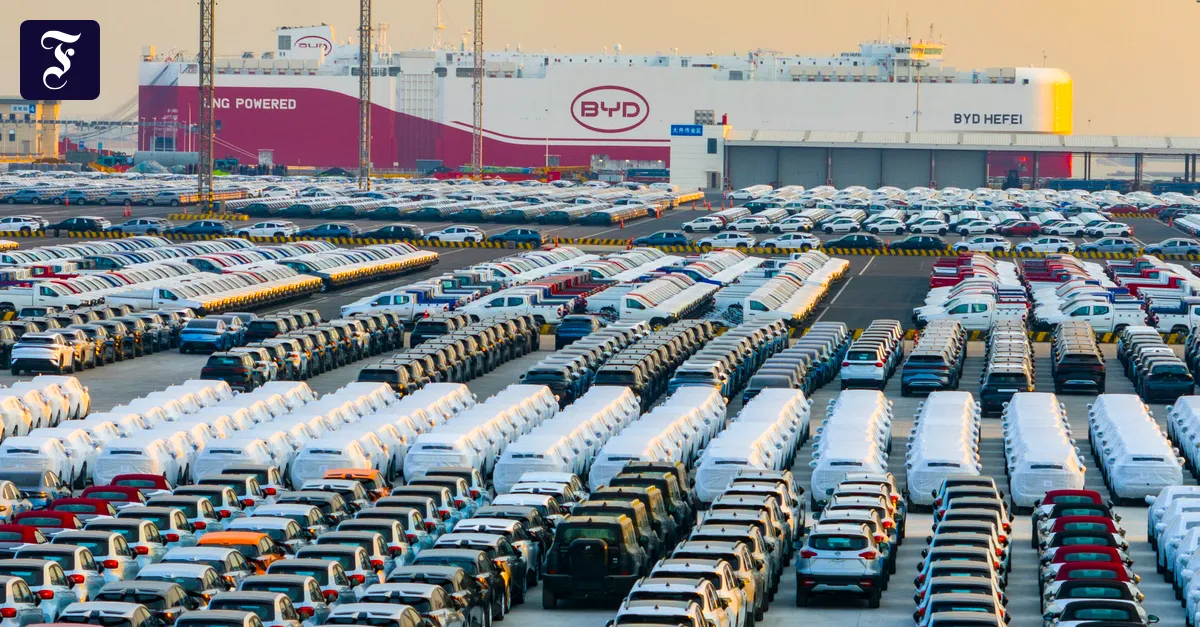
German car manufacturers like Volkswagen are trembling from competition from China. In the rankings of the world’s largest car manufacturers, BYD, Geely and SAIC continue to advance year after year. By the end of the decade, BYD, still number six, wants to push Toyota off the throne. The company has even acquired its own fleet of ships to bring its cars all over the world. The European Union has been protecting itself from Chinese electric cars with tariffs since 2024. Now Beijing and Brussels have agreed that China will only import half as many hybrid cars into the EU, with details still unclear. In Germany, a conservative car market, Chinese manufacturers are still struggling. But when Chinese travel around the world today, they experience what has seemed quite normal for Germans for decades: Wherever they go, the cars from home are already there. The world journey begins in China’s neighbourhood: Southeast Asia In Indonesia with its 280 million inhabitants, in Thailand, Cambodia and Malaysia, BYD is the undisputed leader in the e-car market. Nowhere else – outside of China – do Chinese companies build as many factories as in Southeast Asia. Together, they have a production capacity for one million vehicles a year – that is a quarter of the cars that can be sold in the region according to estimates until 2030. The large production volume makes the cars cheap. And because governments like Thailand still grant generous subsidies for e-cars, the Atto 3 SUV from BYD is no more expensive in Bangkok than in Shanghai. But not only in emerging markets, but also in Singapore, the most expensive car market in the world, China’s suppliers are plowing the market. BMW and Mercedes rank third and fourth among the best-selling brands. For two years, BYD has been ranked first. In August, the share of Chinese brands in the new cars was 52 percent. BYD alone earned 24 percent. At the end of September, the group caused a sensation in Singapore: cars at zero rate – as far as the down payment is concerned. The offer applies to drivers of driving service providers such as Uber or Grab. For the island nation that has made driving a luxury, this is tantamount to a revolution. Because the city state requires high license fees for car use via car manufacturers in order to prevent a traffic collapse. The Atto 3 costs the equivalent of 120,000 euros in Singapore, around 100,000 euros more than in China. 90,000 euros is the price for the license to use the car for ten years. It continues in Japan where the streets are firmly in Japanese hands. Every second new car is a Toyota. Japanese people like to buy Japanese and often stay true to their brand for a lifetime. Special approvals, safety tests or repair specifications make it difficult for foreign suppliers to enter the market. The granting of subsidies favors Japanese manufacturers. BYD does not stop this and tries with the little Racco. In July, the company introduced the mini car, which was developed for the Japanese market for kei cars. These are space- and energy-saving microcars, which account for a good third of annual car sales in Japan. BYD calls for the electric Racco the equivalent of 12,000 euros, a comparable Japanese car costs 13,000 to 15,000 euros. The next stop on the Pacific: North America The Chinese have a similar difficulty there as in Japan. The United States has closed its market with an import tariff of 100 percent and ban cars with Chinese software from 2027 on safety grounds. In Canada, Chinese brands with a market share of less than one percent are scarce. In January, Prime Minister Mark Carney agreed that up to 49,000 electric cars manufactured in China – including Teslas and other brands – could be imported into Canada at the regular tariff of 6.1 percent. The punitive tariffs of 100 percent introduced in 2024 will be eliminated for this quota, which is expected to increase by 6.5 percent every year. In return, China lowered its retaliatory tariffs on Canadian rapeseed from 85 to 15 percent. In Mexico five years ago, hardly any of China’s car brands knew. Their market share in the 133 million-inhabitant country was less than one percent. Now it is about 17 percent. Including cars manufactured in China for foreign brands such as General Motors, the Chinese market share in Mexico exceeds 20 percent. Even a tariff surcharge of 50 percent for cars from China, which Mexico has been imposing at the urging of the USA since the beginning of the year, does not stop the manufacturers. Especially models of BYD are now part of the streetscape in Mexico City and other cities. 25 Chinese producers are represented in the country. The further south you travel, the greater the influence of the Chinese In Buenos Aires at the beginning of October, it became clear how quickly China’s manufacturers are gaining a foothold. At the first Chinese car fair in Argentina, more than 20 brands presented their models. At the end of 2025, Chinese manufacturers barely accounted for 2 percent of the market, compared to 10 percent in August. The driver behind the import is the market opening under President Javier Milei. This year, the government introduced duty-free up to 50,000 electric and hybrid cars. The Chinese took the opportunity. BYD has only been officially in the country since the end of 2025 and is already among the leading ten brands for new registrations. Even greater is the success in Brazil, by far the largest car market in South America. The Chinese brands have visibly expanded their presence, reaching almost 57,000 cars sold in September. That’s more than a fifth of all sales, twice as much as a year earlier. BYD is now in fourth place behind Fiat, Volkswagen and Chevrolet. But the Chinese do not only sell in Brazil. BYD manufactures at the former Ford plant in Ca..
Source: FAZ ›


Comments (0)
No comments yet.