Researchers: The seabed is slowing down ice melt in Antarctica
The crew of the German research vessel *Polarstern* has made a discovery off the coast of East Antarctica: the seabed is helping to slow down the melting of the ice there. By Andreas Kegel.
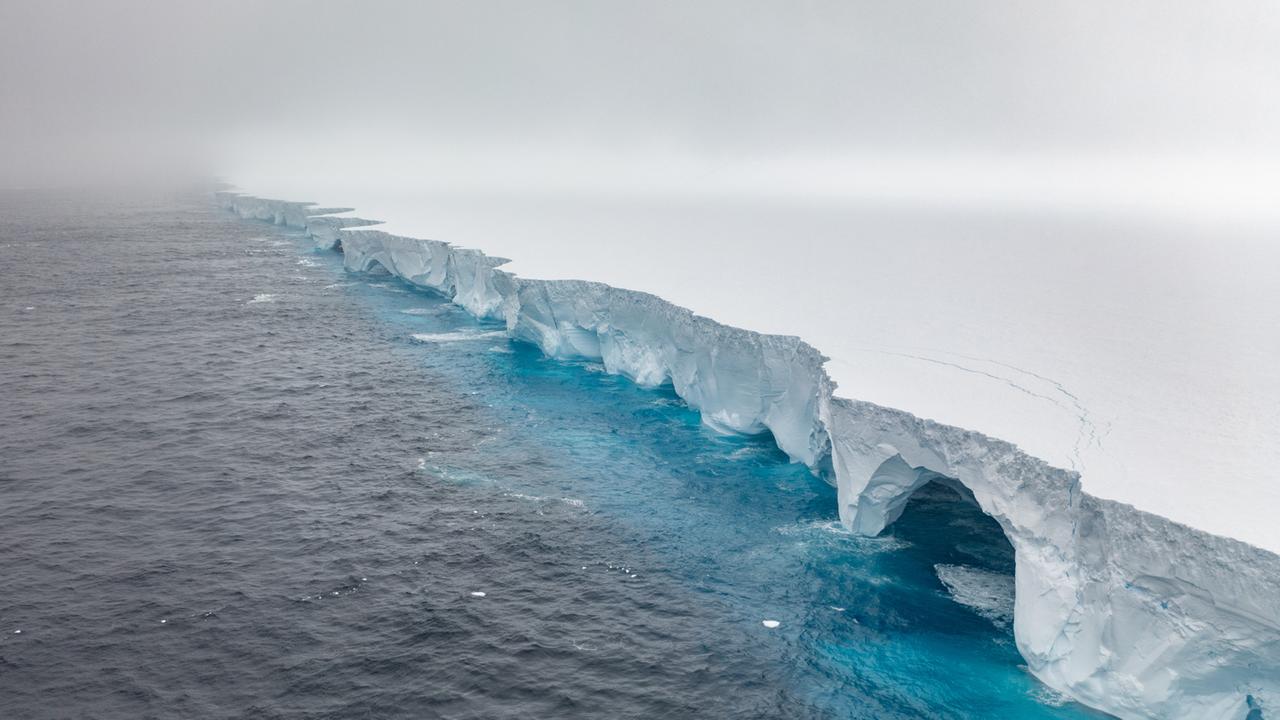
The crew of the German research vessel “Polarstern” has discovered off the coast of East Antarctica that the seabed helps to slow down the melting of the ice there. By Andreas Kegel, ARD Science Desk Antarctica is the Earth’s icebox: around 90 per cent of the world’s ice is stored at the South Pole. From 19 to 30 October, the “Commission for the Conservation of Antarctic Marine Living Resources” is meeting in Hobart, Australia. Its aim is to protect marine life around the continent at the South Pole. This is because the ice there is also melting due to global warming. This poses the greatest threat to everything from whales and penguins to microscopic organisms (krill) and is drastically altering their habitat. According to Sebastian Krastel, a marine geophysicist from Kiel, the ice continent loses an average of 150 billion tonnes per year. In the long term, this destroys the foundations of wildlife’s existence whilst simultaneously raising sea levels. Should this melting accelerate, billions of people living on the world’s coastlines could lose their homes, adds geologist Marcus Gutjahr from the Geomar Research Centre in Kiel. Seabed stabilises the polar ice Whilst the western part of the Antarctic ice sheet has been melting for decades, the eastern part remained stable for a long time. Until now, it was thought that this was mainly due to its higher elevation and the Arctic coastal current, which shields East Antarctica from warmer seawater. However, during their latest Antarctic expedition aboard the icebreaker ‘Polarstern’, the researchers discovered another factor contributing to this resilience: the seabed. Using echo sounder measurements off the east coast, Sebastian Krastel’s team mapped the seabed and discovered a 260-metre-high, 65-kilometre-long mound of sand, silt and rock that had been transported into the sea by the ice. This sediment wedge has stabilised the ice. The retreat of the ice was therefore slowed down at this point. Such geological formations are common in the Southern Ocean, says Krastel. However, this positive effect can at best mitigate the melting, not prevent it. East Antarctica is melting from below East Antarctica has long defied climate change. Average annual temperatures there remain a constant minus 55 degrees Celsius. But now the melting has begun here too. Global warming has altered wind directions and ocean currents. Warm water masses reach the coast as so-called circumpolar deep water and melt the glaciers from below. One example of this is the 130-kilometre-long Denman Glacier, whose ice tongue extends into the sea. “From a depth of 300 metres, the water suddenly becomes warmer and erodes the ice,” says Marcus Gutjahr. This discovery is causing concern amongst researchers: it shows that even this Antarctic region, which has long been resilient, is becoming increasingly vulnerable. Melting exacerbates global warming The Denman Glacier alone contains enough ice to raise global sea levels by 1.5 metres. Antarctic ice also has a direct influence on global average temperatures: ice and snow reflect solar energy back into space. This is known as the albedo effect. Seawater, on the other hand, is darker and absorbs heat. This leads to a chain reaction: global warming causes the ice to melt and turn into water; the albedo effect diminishes; the ocean absorbs more heat, thereby intensifying global warming. The coast of Schleswig-Holstein could become uninhabitable. The warming of seawater threatens the stability of the East Antarctic ice sheet. Without a rapid and significant reduction in greenhouse gas emissions, an irreversible process will begin: the ice at the South Pole will melt at an ever-increasing rate and sea levels will rise inexorably. Billions of coastal residents worldwide would be affected. This includes Central Europe: as early as 2100, the coast of Schleswig-Holstein could be flooded, large parts of the Netherlands uninhabitable, and Venice under water. This is the Intergovernmental Panel on Climate Change’s worst-case scenario for the year 2100, with sea levels rising by one to two metres.
Source: tagesschau ›




Comments (0)
No comments yet.