"Idefix" is set to solve the mystery of the moons of Mars
The Japanese MMX mission is set to fly to Phobos, one of Mars’ moons, from today, carrying the Franco-German rover ‘Idefix’. Once there, ‘Idefix’ is finally set to shed light on the origins of Mars’ mysterious moons. By Jan Kerckhoff.
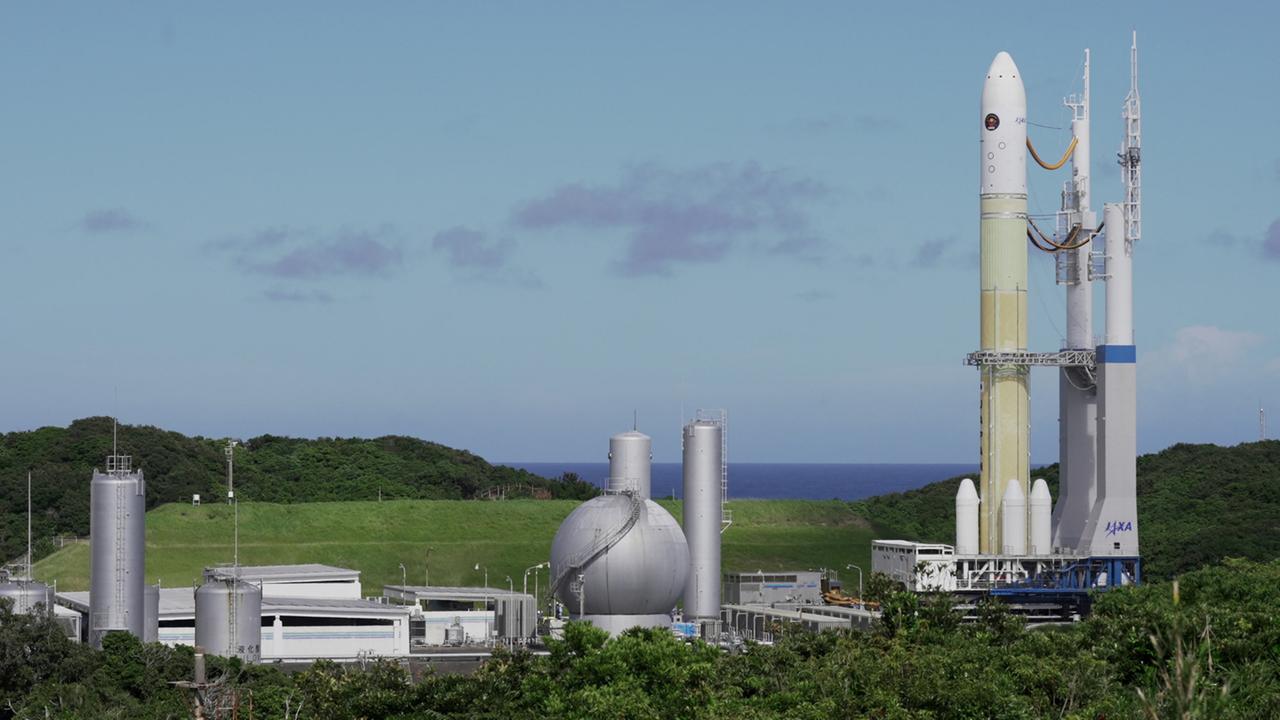
The Japanese MMX mission is set to fly to Phobos, one of Mars’ moons, from today, carrying the Franco-German rover ‘Idefix’. Once there, ‘Idefix’ is finally set to shed light on the origin of Mars’ mysterious moons. By Jan Kerckhoff, BR The Japanese space probe MMX (Martian Moons eXploration) is due to launch into space today at 21:41 CEST to solve the cosmic mystery surrounding the two Martian moons. Phobos and Deimos, with diameters of just 27 and 15 kilometres respectively, are irregularly shaped and appear to be made of different material to Mars itself. This contradicts the theory that they might have been torn from Mars following an asteroid impact. Another explanation is that the two moons are asteroids captured by Mars. However, their orbits around Mars argue against this, explains Stephan Ulamec, the scientific coordinator at the German Aerospace Centre (DLR) involved in the mission: “The orbits are almost circular. That doesn’t fit with the idea that an asteroid flew past and was then captured.” Complex navigation The MMX space probe consists of several modules: a propulsion module for flight and braking manoeuvres, as well as an exploration and landing module equipped with cameras and other instruments, and a rover called ‘Idefix’ on board. The third element is a return module with a capsule for the samples. MMX is scheduled to reach Mars in 2029, where it will manoeuvre into a specific orbit and investigate the moons. The landing module is set to land on Phobos. A very challenging undertaking, explains Ulamec: first, the MMX spacecraft must reach Mars’s orbit. It must then navigate to the vicinity of Phobos, a small celestial body with low gravity situated very close to Mars. Its orbit around Mars is therefore extremely low. This means the probe cannot enter a conventional orbit around Phobos. ‘Idefix’ deployment from a height of 40 metres The probe will therefore be placed into a so-called quasi-orbit. From this, it will release the ‘Idefix’ rover – which is around half a metre long – from a height of 40 metres above the moon’s surface, explains the ‘Idefix’ project manager, Markus Grebenstein of the DLR. That sounds dramatic, but it isn’t, because gravity on Phobos is 2,000 times weaker than on Earth: “We fall for about 70 seconds to cover those 40 metres, and then touch down on the surface. The impact is roughly comparable to a full crate of drinks falling seven centimetres onto a concrete floor.” “Idefix” will first take a few hops on the surface and then unfold its four legs, to which wheels are attached. The rover is a German-French design and the centrepiece of Europe’s contribution to the mission – and is named after the loyal dog from the Asterix comics. Because Phobos has extremely low gravitational pull, “Idefix”, weighing around 25 kilograms, will weigh no more there than an empty envelope, according to Grebenstein. That is why “Idefix” will travel at a maximum speed of eight millimetres per second, as at higher speeds it could take off. Communication with the rover severely delayed The link between Earth and the rover is complicated. “Idefix” does not transmit directly to Earth, but to the MMX probe. Radio communication therefore only works when the probe is, so to speak, within line of sight of Earth, says Grebenstein. “On average, it takes just over two days for the data to reach Earth. That is why – unlike with the Mars rovers – on this mission we have to assess the rover’s condition using old data,” explains the DLR project manager. This data is then used to simulate its current situation in order to decide whether ‘Idefix’ can carry out its next planned task or not. What ‘Idefix’ is set to achieve on Phobos Despite its small size, ‘Idefix’ carries several instruments. A Raman spectrometer analyses the chemical composition of the rock, whilst a radiometer measures the thermal properties of the surface. High-resolution cameras, including so-called ‘wheelcams’ mounted on the wheels, record the immediate surroundings, the flow of sand and the interaction with the chassis. Small blades or “ribs” are attached to the wheels; these are not only intended to improve traction but also enable conclusions to be drawn about the behaviour of the subsurface via the cameras. This allows, for example, the porosity of the material and its strength to be determined. ‘Idefix’ will then transmit its initial findings on the subsurface to the lander, enabling a safe landing site to be selected. The lander will then collect material from the surface of Phobos, pack it into a return capsule and send it back to Earth. The analysis, together with the data collected on Phobos, should then – in 2031 – reveal whether the moon is a captured asteroid or is in fact composed of Martian rock that was hurled into orbit by a massive impact.
Source: tagesschau ›


Comments (0)
No comments yet.