Vaccines heavily changed: Is the upcoming flu wave particularly violent?
Flu viruses are constantly changing. Therefore, vaccines also need to be adjusted regularly - and for this season this has been particularly extensive. Does this mean that we are facing a particularly severe flu wave? The most important questions and answers.
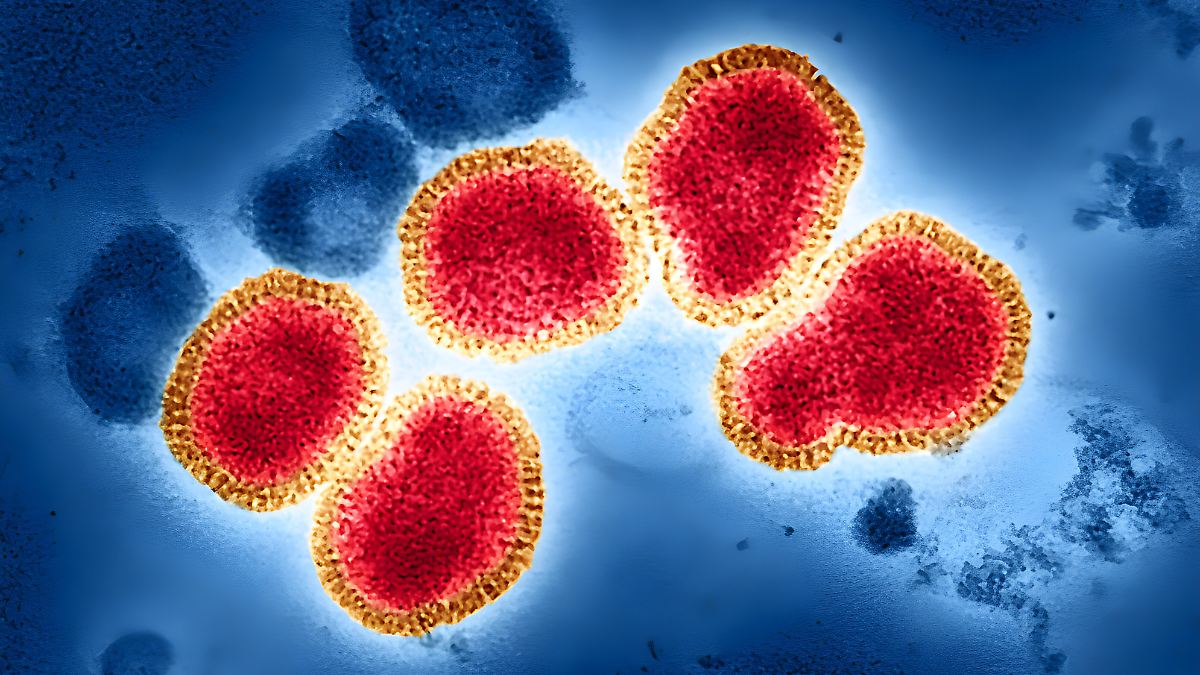
Every autumn, a spike against the flu - for some of the population, the flu shot is recommended, others can protect themselves if they want. The effect lasts several months and protects for the season. The situation may then be different again.
Why are there new vaccines against the flu every autumn?
Flu viruses, unlike other viruses, change continuously. The vaccines are composed of the antigens of worldwide circulating variants. This is why manufacturers adjust their vaccines each year to the virus strains and variants that are expected to circulate in the coming flu season, as the Paul-Ehrlich-Institut (PEI), the Federal Institute for Vaccines, explains on request. This is based on recommendations from the World Health Organisation (WHO) and the Committee for Medicinal Products for Human Use at the European Medicines Agency. They look at globally circulating variants of influenza viruses. In February, a prognosis for the virus variants prevailing in the following winter is usually made.
What adjustments have been made for the upcoming season?
For the 2026/2027 flu season, all three strains included in the vaccines were adjusted. This is based on the altered antigenicity of the circulating viruses - i.e. the recognizability of the viruses by the antibodies formed after vaccination, explains the PEI. Significant antigenic differences were observed for the circulating viruses compared to previous vaccine reference viruses. The vaccine has been adapted because all three strains have changed significantly in recent years, explains Leif-Erik Sander, director of the Clinic of Infectiology and Intensive Care Medicine at Charité - "with the aim of better adapting the vaccine to the circulating viruses".
Can conclusions be drawn for the upcoming flu season?
“I wouldn’t primarily conclude that we’re getting a much stronger flu season,” Sander said. With the still quite new influenza variant, A(H3N2) of the Subklade K, many people had already come into contact last year. In addition, the flu vaccine has now also been adapted to this. Last year there was a pronounced flu season with many patients and full hospitals, but overall the season was not exceptionally difficult. Even in the southern hemisphere, where winter is now ending, there was not quite such a severe flu season. ‘
The exact course of a flu season is not foreseeable in advance, informs the PEI. Actual vaccination protection depends on how well the strain adaptation at the time matches the actually circulating virus strains. But the age of the vaccinated persons and previous influenza infections or vaccinations also play a role. Vaccination protection decreases over time, so it also depends on the time of the flu infection. But also less effective vaccines prevent many cases of disease and influenza diseases are typically milder in vaccinated individuals.
Not necessarily. It still applies: "The flu wave always comes, you can basically set the clock after it." Every year many people die from it and it always leads to a high burden of disease, explains expert Sander. “But we don’t expect a particularly dramatic flu wave to roll towards us this year.”
For whom is a flu vaccination recommended?
The Standing Vaccination Commission (Stiko) recommends vaccination against influenza for people over 60 years of age as well as people with pre-existing conditions, pregnant women and residents of care facilities. It is also recommended for children and adolescents with certain underlying diseases. These include chronic diseases of the respiratory organs, cardiovascular, liver and kidney diseases, obesity and others. The influenza vaccination rates in children and adolescents with underlying diseases have been significantly too low for years, according to Stiko.
In the 2024/25 season, according to the Robert Koch Institute (RKI), only 34.5 percent of people aged 60 and older were vaccinated against flu, so more than half of this group had no vaccination protection. Sander emphasizes that the EU has as a target a vaccination rate of 75 percent, but Germany is regularly well below. "The adaptation of vaccines is important, but above all we need a better vaccination rate." Other countries have higher vaccination rates. According to the Federal Statistical Office, the EU average in the 2022/23 season was 47 percent with reference to the population aged 65 and over.
What is the situation with respiratory infections so far?
According to the RKI, the number of acute respiratory tract infections is currently at a moderate level and is mainly determined by cold viruses such as rhinoviruses and parainfluenza viruses and enteroviruses. The coronavirus load measured in wastewater (SARS-CoV-2) remains low, but there has been a slight increase for several weeks, according to the RKI weekly report on acute respiratory diseases. There is also a slight increase in influenza viruses.
Source: n-tv ›




Comments (0)
No comments yet.