IW Study: Skilled Labor Shortage Impedes Infrastructure Projects
The federal government aims to invest heavily in bridges, networks, and digitalization. However, according to a study by the Institute of the German Economy, there is already a shortage of skilled workers to implement the projects.
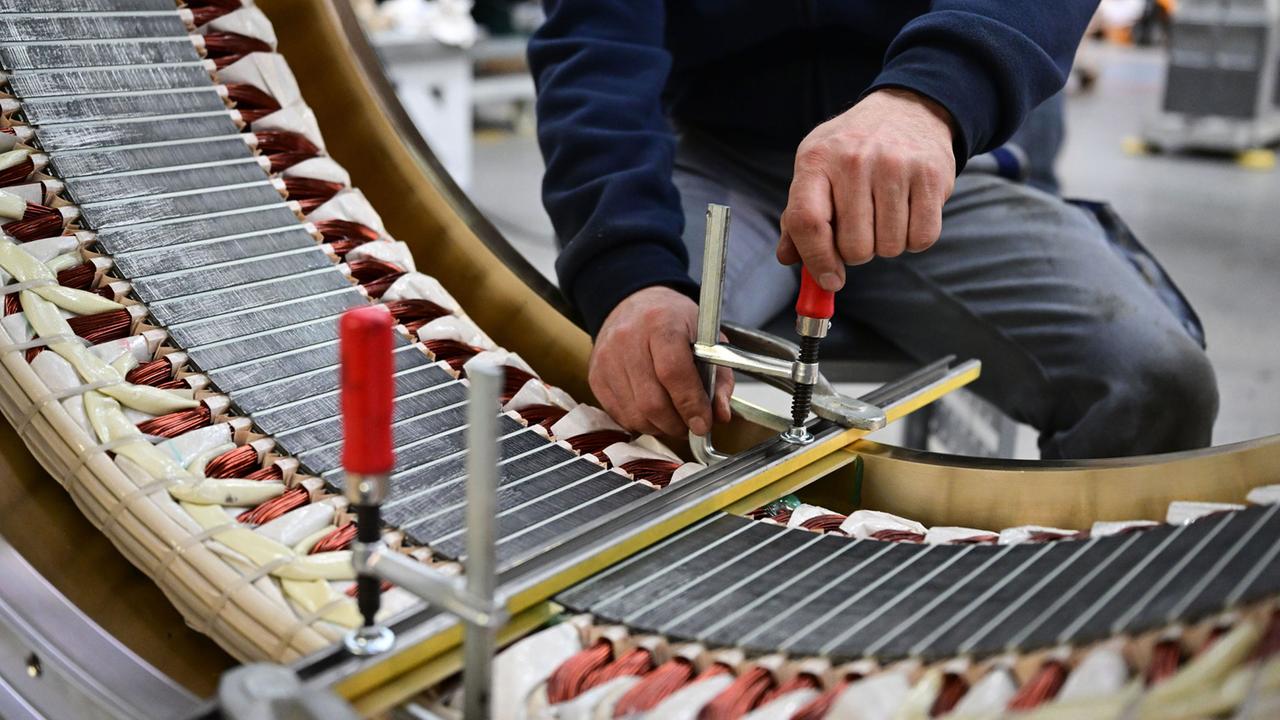
The federal government wants to invest massively in bridges, networks and digitalization. But according to a study by the Institute of German Economy, the specialists are already missing to implement the projects. The shortage of skilled workers could become a problem in the use of the 500 billion euros from the state special pot for the modernization of the infrastructure. Money alone does not create any capacity for implementation, according to a study by the Institute of German Economy (IW), which was published today. "Whether the projects succeed also depends crucially on the availability of sufficient qualified specialists to plan, build and operate them." And here there are question marks, especially for professions in the segments infrastructure, energy transition and digitalization. “If you count overlapping professions only once, between July 2025 and June 2026, an average of 148,047 specialists for the investment agenda were missing.” 44 percent of the skill gap across all professions thus belong to these three occupational groups. According to the Cologne researchers, the bottlenecks are greatest in technical activities for the physical implementation of infrastructure projects. "These include construction electrical engineering, sanitary, heating and air conditioning technology, electrical operating technology and mechanical engineering and operating technology." The majority of skilled workers with completed vocational training were missing. “The funds of the special fund are likely to trigger a further increase in the demand for these professions, while the supply of labour grows insufficiently without vigorous countermeasures.” Shortage of skilled workers remains a massive problem The German government, as well as leading economists and the International Monetary Fund, had recently significantly raised its forecasts for the German economy. In addition to good export figures, this is mainly due to state investments in infrastructure and defence. Gross domestic product is expected to rise by 1.3 percent this year, then by 1.1 percent in 2027. In 2028, it should then be slower by only 0.6 percent uphill. According to IW, the shortage of skilled workers, which is mainly due to demographic development and can only be partially compensated by immigration, is one of the biggest structural problems in Germany. “Unfilled positions mean initially lost value creation in the short term, but also less innovative power and economic growth in the long term.” In 2025, 54,000 apprenticeships remained unfilled across all professions and almost 40,000 applicants were left without care. Investment backlog also in the private sector "The fact that the state dissolves its investment backlog is right," said IW head of the economic cycle Michael Grömling. “For sustainable growth, however, public spending cannot replace private investment.” The fact that the German government wants to attract such funds to Germany with the investment summit starting this Monday is therefore in the right direction, because the investment mood of the private sector has been bad according to another IW study in recent years. Since the beginning of 2020, the German economy has lost billions in investments due to the Corona pandemic, the Ukraine war and the Middle East conflict. The companies invested around 470 billion euros less than would have been expected after the historical trend. The state has invested around 50 billion euros more. Taken together, this leaves estimated investment losses of around 420 billion euros. Private investment in the second quarter of this year was still more than ten percent below the 2019 annual average. Public investment is 20 percent higher than in 2019.
Source: tagesschau ›

Comments (0)
No comments yet.