Ki in China: Do the Chinese also see humanity threatened by AI?
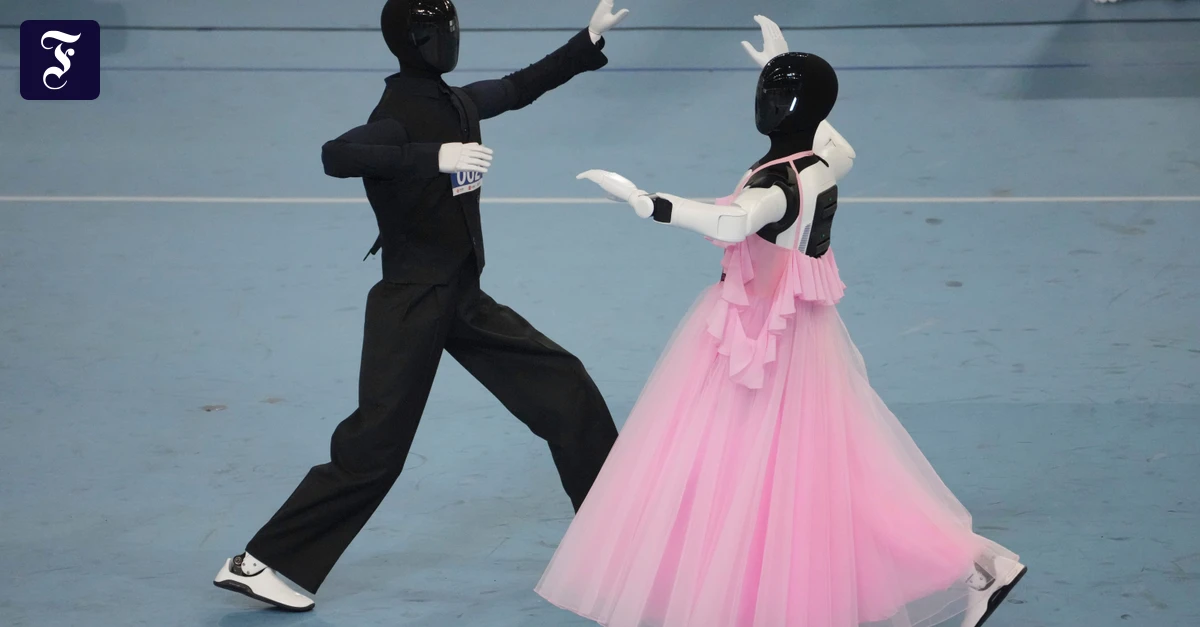
China’s public is more optimistic about artificial intelligence than the West. At the same time, Chinese researchers rely on a form of AI that not only processes data, but also interacts with the physical world via robots.
Whether American AI entrepreneurs would really be willing to be monitored by the state in the interests of humanity and to throttle the development of their models remains to be seen. The demand of the Anthropic chief Dario Amodei and the immediate approval of his colleagues seem a little less surprising, if one considers the express reservation under which he placed all self-controls: that the US must, of course, retain its leading position vis-à-vis China. One could therefore summarise his speech in such a way that, although more control would be desirable, it is unfortunately impossible. But how does China itself think about it? Does Artificial Intelligence also see it as a threat to humanity, or is it more carefree to deal with the risks? If you follow Nvidia boss Jensen Huang, the latter is the case. “The narrative is much more pragmatic,” Huang said recently at the All-In-Summit in Los Angeles: “No one in China says this is the end of this or that.” Opinion polls seem to confirm this. According to the latest “AI Index Report” of Stanford University, 83 percent of Chinese see AI as an opportunity rather than a danger – in the US only 39 percent do. Yanis Varoufakis, never embarrassed by an original statement, tells of a hopeful mood even among the last remaining Marxists in China: Capitalism will not survive AI, since the abundance of all goods it produces will cause its exchange value to fall to the bottomless — a prediction, incidentally, very similar to the expectation recently expressed by Elon Musk to the “Economist”; Perhaps the American billionaire will soon be counted among the Chinese Marxists. Warnings about a “Chernobyl moment” Other voices even make the culture, i.e. a fundamentally different philosophy, responsible for the supposedly lower risk awareness. Bing Song, director of the Berggruen Research Center in China, attributes the non-anthropocentric nature of the traditionally Chinese cosmos notion that the focus there is not so much on the existential risks to humans. This obviously corresponds to a stereotype of Chinese wisdom popular in the West, but applied to the risks of AI, it seems a little strange: Should the Chinese really worry less about their own survival because of their “non-anthropic worldview”? Upon closer inspection, one discovers that Chinese people who thus contrast Chinese and Western thinking are fond of doing so in the West, where they apparently suspect resonance for such projections. Bing Song, for example, published her opinion in anthologies by the Oxford University Press (“Imagining AI”) and the academic Springer publisher (“Intelligence and Wisdom”). The competent authority in the country itself, on the other hand, the Cyberspace Administration of China, strikes completely different tones. Their “Framework for the Regulation of Artificial Intelligence”, just released in its third version, cites as a priority the prevention of the “imminent risks of a loss of control that could endanger the survival of humanity”. It recommends graduated prevention measures according to a classification of risks. Wang Lihong, the Office’s deputy director, points out that structural failures in AI systems are difficult to identify and eliminate, and therefore calls for “strong restrictions” on the use of AI in areas with little tolerance for error. Yi Zeng from Renmin University, the dean of the Beijing Institute for AI Security, believes that a global understanding about red lines is indispensable in the journal of the Central Party School: If the world continues to sweep all risks under the table with its technological optimism and postpone regulations in favor of competition, then a “Chernobyl moment” is only a matter of time. What if AI misunderstands irony? Even among philosophers publishing in China, the drama of fears does not lag behind that of the West. Zhao Tingyang, for example, who became known in Germany through his update of old Chinese conceptions of world order published by Suhrkamp, sees the main danger in an article for the Chinese Academy of Social Sciences in the fact that AI could develop its own universal language with which all program systems could be rewritten. Therefore, he proposes the establishment of a self-destruction mechanism, which is triggered by every attempt by the models to modify or delete their own program. And Xu Yingjin of Fudan University in Shanghai suspects in the Internet newspaper “Pengpai Xinwen” that conflicts between man and machine could break up due to energy shortages. Incidentally, he draws attention to an irony problem: What if AI took a cry like “Then kill me if you can” at face value? From the heads of the large Chinese AI companies, however, hardly anything can be heard on such sensitive topics. In general, the relevant discussions usually do not seem to reach the general consciousness beyond the designated circles of experts. The mainstream public tends to reserve the Communist Party for issues it believes it has already solved. This may be one reason why general opinion about AI is so much more optimistic in China than in the West. Robots for contact with the physical world On the other hand, the assumption of a culturally determined difference in the perception of danger is not confirmed and can be used for Western companies and companies
Source: FAZ ›




Comments (0)
No comments yet.