Kolumba Cologne: Have you ever fallen in love with a watch?
The Kolumba Art Museum of the Archdiocese of Cologne opens its new annual exhibition: “Norm and deviation” shows how it is possible to escape the sensational pressure of the museum exhibition.
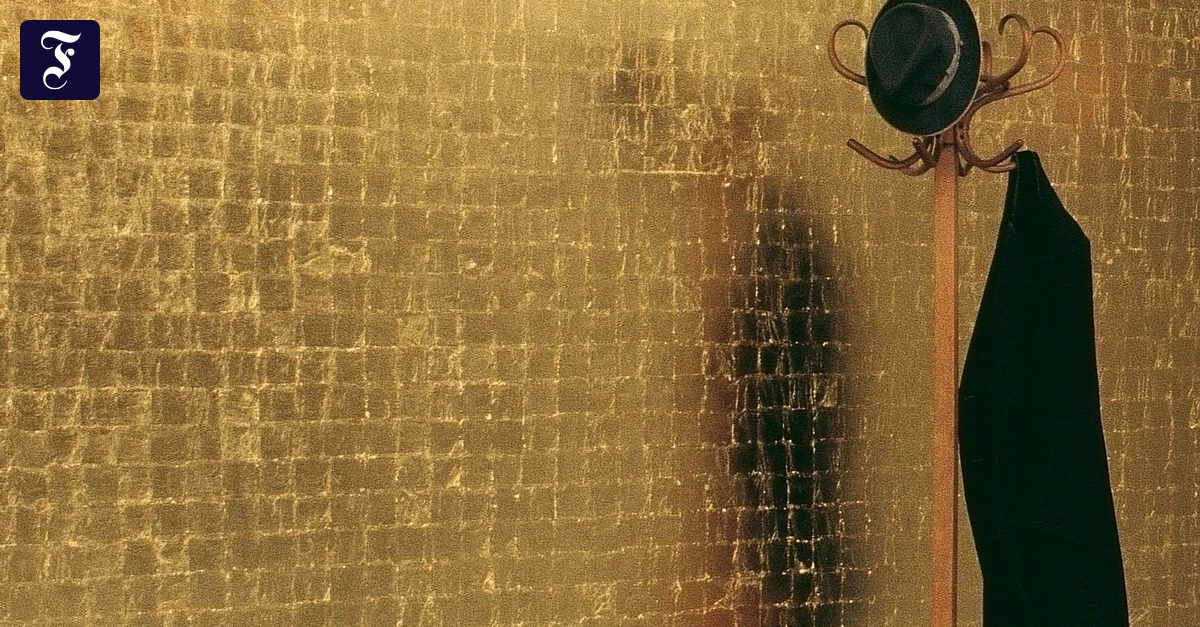
Even when entering the house, the special atmosphere of the house becomes noticeable – high ceilings, dark wood, leather. Kolumba – a “house for art” – was what architect Peter Zumthor called the building, which opened in 2009. The feeling that the rooms would breathe is not a phrase here. The materials, light and special acoustics of the house open the perception. We are trying to curate spaces in which art itself enters the room, said Marc Steinmann, who took over the management of the museum from his long-time colleague Stefan Kraus earlier this year. It is more about being touched than just the exhibition of individual works. Texts and titles cannot be found in the rooms. The first look is at the work itself. Each visitor receives a booklet with detailed texts that contextualize the individual works. The place is itself is a millennial construct. The foundation walls date back to a Roman house with an apse built in the seventh century. In addition, a church was built in the 9th century, which, several times enlarged, was finally converted into a five-aisled church. As visible as rarely do the times layer on each other. Zumthor set the new museum building on the church ruins. This was nevertheless preserved and, like a walk-in palimpsest, keeps the layers of the centuries open. Already here it shows how fragmentary time moves on, and the exhibition takes up these rhythms. Time – an extraordinary and complex construct “Achrony is not the indifferent juxtaposition, but rather an intertwining of the epochs according to the model of a tripod.” wrote the literary scholar and sociologist Elisabeth Lenk. Duration – this is not a measurable quantity, but a question of perception. Long looking can make the unexpected visible. Have you ever fall in love with a clock? asks Finnegan Shannon and thus also points to the standardization of time, which makes it difficult for people with disabilities to access tightly clocked everyday life. Once a year, the entire house is replayed from its own holdings. It is worth taking a look at the collection. This ranges from late antiquity to the present. Already in 2000, with the donation of the collector Carl Härle from Mülheim an der Ruhr, an extensive collection of medieval and baroque art went to the museum. The medium book is, not common for an art museum, the focus of the collection. With the donation of Renate Königs, an important collection of medieval book painting went to the museum in 2017. Most recently, in 2025, the entire publishing work of Josef Kleinheinrich entered the collection. In addition, there is always Art Brut. The museum accompanies artists for many years. In this exhibition, an oversized mobile by the artist Bärbel Lange was placed, on which line drawings move on felt, she calls them “protective animals”. Through the rooms sounds the ball track of the sound artist Manos Tsangaris. Activating a collection in this way requires a great deal of curatorial attention – which has been proven here. The exhibition lives from special pairings A series of photographs by Karl Hugo Schmölz shows Cologne in the post-war period, more precisely that day in 1948, when, on the occasion of the 700th anniversary of the cathedral foundation stone laying, a relic procession led on the proven medieval paths through the destroyed city. Like a wake-up call from the past, these grotesque images resonate into our present – where do hope and faith link? On the opposite wall hangs over head height a tricolor. Norm and deviation – here, besides time, a body image. The ancient Doryphorus occurs. Polylet’s spear-thrower from the 5th century BC still stands, more than 2500 years later, for a type of male body ideal. In the exhibition, he was contrasted with a photographic work from 1998: Duane Michal’s “Dr. Heisenberg’s Magic Mirror of Uncertainty”. A curved mirror image, the face distorts beyond recognition, allows no assurance, no certainties of the own image. The picture was “laid like a standard on reality,” wrote Martin Heidegger. Absence and irretrievable loss speak tragically from Jannis Kounelli’s spatial installation “Tragedia civile”. Hat and coat hang on a wooden wardrobe stand, an oil lamp burns, exudes light, warmth, the inherent smell and the feeling that someone has just disappeared here. The large-area golden leaf background, as it is known from representations of saints, sounds into the room – and meets there a remarkable collection of small sculptures by the artist Inge Schmidt, entitled “Winzlinge”. Hold by a thin string, she tied a black-colored lemon to a pedestal and called it “fruit” or grasped a twig with a string on a piece of wood in the work “half-brown tension.” In addition, the video work “Tai-Chi Karaoke” by the artists Anna Bromley and Michael Fesca shows the Slovenian philosopher Slavoj Žižek, telling a joke in six-fold slowdown. The distortion of speed fragments and alienates his words and gestures beyond recognition. The works of the exhibition tie a period of over 2000 years, but each thing and each relationship is inscribed with its own time and pace. These juxtapositions bring new, unexpected perspectives to light. Old and contemporary, religious and profane art are closely linked. The term “slow museum” comes up, but it is not quite true. Something that is permanent does not have to be slow. It has its time. Applying the standard of everyday speeds and range measurement to art simply leads their consideration into the void. Have you ever fallen in love w..
Source: FAZ ›



Comments (0)
No comments yet.