Louvre: Still no sign of the stolen Crown Jewels
A year ago, thieves stole the French Crown Jewels from the Louvre in Paris. The museum has since stepped up its security measures, but there is still no trace of the jewellery. By Cai Rienäcker.
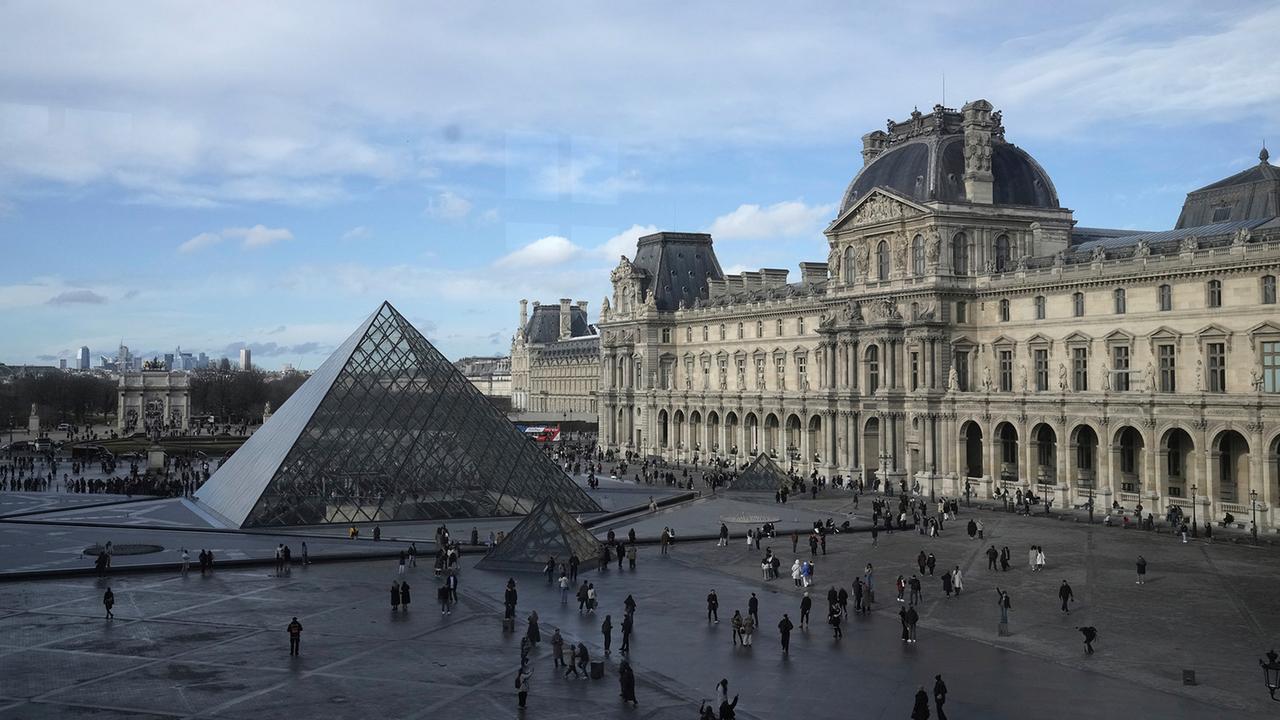
A year ago, thieves stole the French Crown Jewels from the Louvre in Paris. Since then, the museum’s security measures have been stepped up, but there is still no trace of the jewellery. By Cai Rienäcker The Apollo Gallery at the Louvre is once again teeming with visitors. At the far end of the imposing, 60-metre-long hall is the window with the balcony that made headlines around the world. At 9.34 am on a Sunday morning, the two Louvre burglars squeezed through one of the glass openings here. A year later, most visitors to the Louvre walk past the window without a second thought. Only a few French teenagers from the city of Tours stop to take a closer look; they know the story: “It was on the telly back then and made headlines everywhere.” And what goes through their minds now, standing right at the scene of the crime? “It all happened very quickly. It used to be packed in here, and now it’s empty.” Indeed, there isn’t a single display case left in the gleaming golden Apollo Hall. Extra space for remaining jewels soon to be provided A year later, the security measures around the Apollo Hall have been visibly improved. In front of the famous window with its balcony, there is now once again a thick iron grille – just as there was some 20 years ago. A modern camera is visible from the outside on the repaired window itself. Down by the road leading to the Seine, a corrugated iron fence has been erected, about five metres high and topped with extra-sharp barbed wire. Nevertheless, the other Crown Jewels from the Apollo Hall – those that were not stolen – will no longer be exhibited there for the time being. The new director of the Louvre is playing it safe. Christophe Leribault at the hall’s reopening in July: “As for the jewels themselves – the Le Régent diamond, for example – we now have to create a highly secure separate room. It will be some time yet before we can display the jewels.” Too many failures, misfortunes and mishaps Leribault, aged 63, has been in post since February. His predecessor, Laurence des Cars, had to step down because the Louvre, the world’s largest museum, had suddenly become synonymous with nothing but failures, misfortunes and mishaps. First came the spectacular Louvre heist, then there was water damage, ceilings threatening to collapse, weeks-long strikes and yet another large-scale ticket fraud. Appearing before a Senate committee this summer, the new Louvre director was forced to admit that, despite all efforts, the museum remained in an extremely critical state: “The Louvre is at the end of its tether,” the new director said, word for word. A new project called “Louvre Nouvelle Renaissance” is intended to breathe new life into the ageing museum. The cost: 1.2 billion euros. To prevent any further spectacular thefts in the meantime, the Louvre now also has a central security coordinator, known as Monsieur Sûreté. Where are the jewels? And does the new director still hold out hope that the stolen crown jewels will turn up again? “I hope so,” said Leribault on the French radio station France Inter on the anniversary of the Louvre theft. “After all, the stolen Renoir paintings from Cagnes-sur-Mer have just been recovered. And the Louvre burglars were apprehended immediately as a result of the police investigation.” But even a year after the break-in, there is still no real lead on the crown jewels stolen from the Louvre, which have a material value of 88 million euros. Some of the jewels were last seen in an underground car park in the Parisian suburbs. There is CCTV footage from the suburban town of Aubervilliers showing some of the perpetrators about an hour after they broke into the Louvre. Then the trail goes cold. Contradictory statements from the alleged perpetrators All four perpetrators believed to have been directly involved are already in custody. But their statements are contradictory. Michel Décurgis is a police reporter for the newspaper *Le Parisien* and has had access to many of the interrogation transcripts: “The jewellery is either still in France, not far from the Parisian suburb of Aubervilliers. However, the most likely scenario is that the jewellery has left France, either for Belgium or the Maghreb, and has been sold on there.” A trial date for the arrested suspects in the Louvre theft has not yet been announced.
Source: tagesschau ›



Comments (0)
No comments yet.