Using the gene "Crazy-one": How the deadly hospital fungus tricks drugs
A laboratory researcher accidentally lets samples of Candidozyma auris grow too long and thereby discovers the survival trick of the dreaded clinic fungus. This primarily threatens weakened patients in the intensive care unit and is also spreading in Germany.
A laboratory researcher accidentally lets samples of Candidozyma auris grow too long and thereby discovers the survival trick of the dreaded clinic fungus. This primarily threatens weakened patients in the intensive care unit and is also spreading in Germany.
A special mechanism helps the deadly hospital fungus Candidozyma auris to avoid treatment. A gene called "Crazy-one" is involved, reports a research team in the journal "Nature Communications". The fungus produces additional copies of its entire genome under drug pressure, increasing the likelihood that certain changes - such as those of the 'Crazy-one' (CRZ1) gene - lead to resistance.
'Candidozyma auris is rare in the general population but poses a deadly threat to patients in intensive care units,' explained lead author Hugh Gifford from the University of Exeter. The pathogen adheres to the skin of the patients and to the surrounding devices, it can be transmitted from person to person and is incredibly difficult to eliminate. "If the infection enters the bloodstream of a weakened patient, the mortality rate is 45 percent." For clinics, outbreaks in intensive care units are also costly and associated with significant impairments.
The team around Gifford had investigated why two seriously ill patients could not be cured despite treatment with an echinocandin. Echinocandins are a class of drugs that attacks the cell wall of the fungus, and are considered to be agents of first choice against such candidozyma infections. Until now, resistance to these agents was mainly associated with changes in the genes FKS1 and FKS2, but the researchers did not find such changes in the investigated cases.
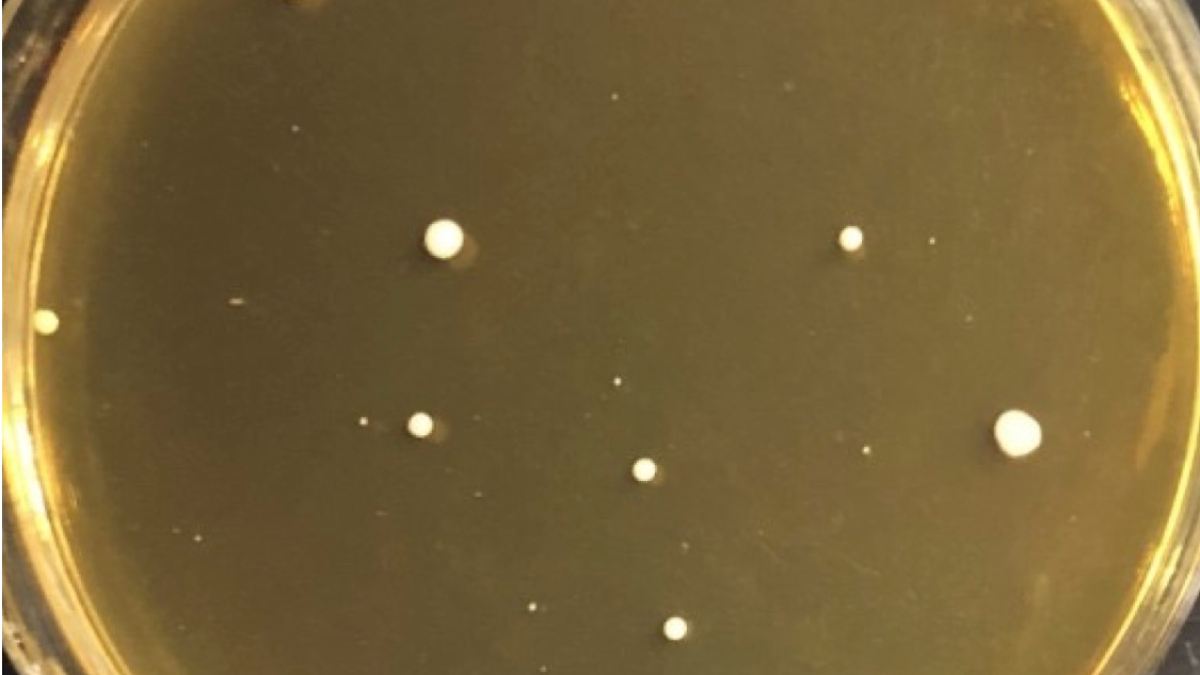
In the course of the analyses, chance came to the aid: A researcher accidentally cultivated plates containing candidozyma auris and the antifungal agent anidulafungin longer than intended, it said. Only then was it noticed that a tiny part of the cells had continued to grow over several days. With longer culture, two distinctly different colony forms emerged: small and large variants. The small ones grew slower, the big ones faster.
Tests showed that the deadly fungus had survived antifungal treatment by making additional copies of its entire genome, thus increasing its chances of mutating to escape the drug and survive. The faster-growing cells of the larger fungal colonies carried significantly more mutations in the gene CRZ1 than the parent isolates and the small variants. CRZ1 is associated with the stability and rebuilding of the cell wall. Further testing indicated that the cell wall response of the fast-growing cells to antifungal drugs was altered.
The researchers see the results as an indication that resistance cannot develop suddenly, but gradually: first more tolerance, then further genetic changes and finally more pronounced resistance. "Our discovery means that we now need to look for new ways to treat patients and eliminate this deadly fungus from hospitals," the researchers conclude. They now want to examine different options such as a combined use of different antifungal drugs.
Candidozyma auris - formerly called Candida auris - was first described in Japan in 2009, its origin is still a mystery. Since its occurrence, outbreaks have been reported on all continents, in total in more than 60 countries. It has been classified as a global threat to public health and is on the list of fungal pathogens with the highest priority of the World Health Organization (WHO).
According to data from the EU health authority ECDC, Germany is one of the EU countries with the most reported cases. Currently, there are relatively stable about 100 initial evidences of Candidozyma auris per year, said Oliver Kurzai, board member of the Institute of Hygiene and Microbiology at the University of Würzburg, who was not involved in the British study. There are always outbreak events and with the spread of the pathogen, especially in southern Europe, the probability of increased imports increases.
“We therefore have to fear that the number of cases will increase in the next few years,” said Kurzai, who heads the National Reference Center for Invasive Fungal Infections (NRZMyk). In Germany, there is now a reporting obligation for proof. Echinocandin resistance is currently rare in this country, they were found in less than five percent of the detected C. auris strains.
In the USA, meanwhile, the development is already worrying about another dangerous fungus: Cladophialophora bantiana. Infections with it are fatal in 60 to 70 percent of cases, as it is called by the US health authority CDC. The number of evidence in a clinical reference laboratory - at a low level - increased by about four times between 2023 and 2025. "The reasons for the apparent increase are unknown."
As a rule, the mold causes brain abscesses, as it is called at the Robert Koch Institute (RKI). Infections caused by C. bantiana occur worldwide. People are usually affected from the fifth decade of life. In Germany, infections with the fungus are still a rarity, said Kurzai. There is no systematic recording so far.
The possible causes for increases in fungal infection numbers are therefore varied, one factor being the improved diagnostic options. There is a plausible link with climate change, especially with warming and long droughts and droughts. “These result in molds potentially spreading better as the spores are transported by dust and soil over the air.” So far, however, this is only a hypothesis, a direct..
Source: n-tv ›




Comments (0)
No comments yet.