Climate Changes Preferable Coral, Expert Find Repair
The latest research found a method to speed up the replenishing of reefs that are bleach due to the climate crisis by infecting healthy coral algae.
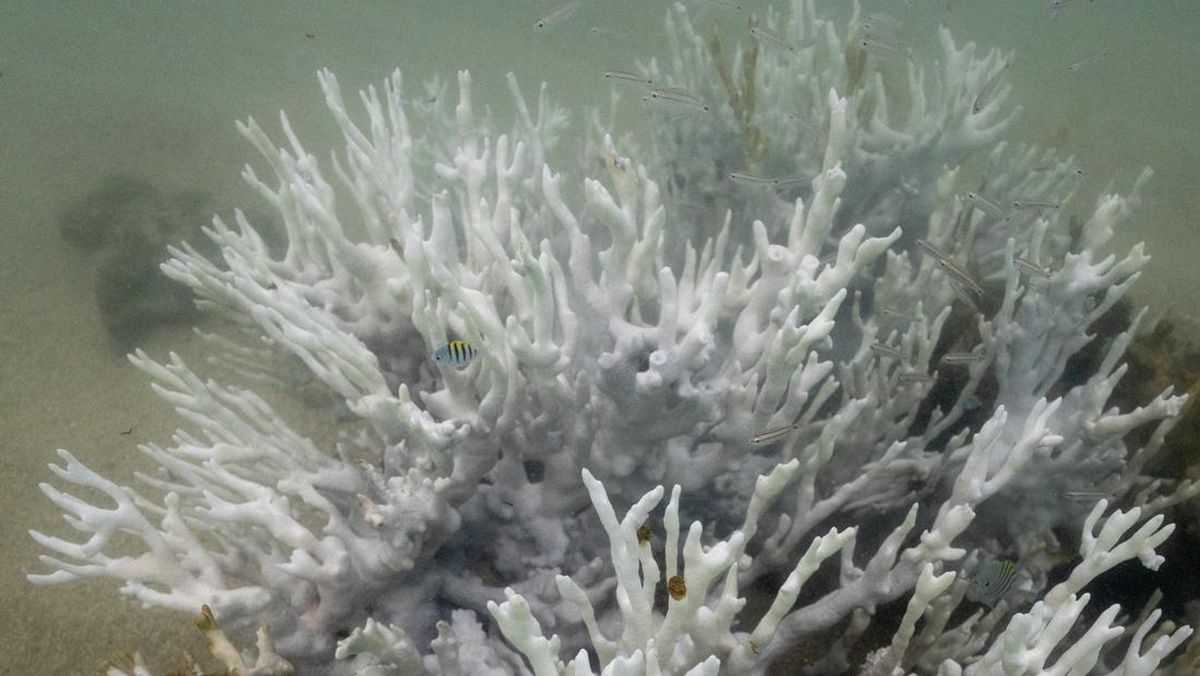
Climate crisis increases water temperatures that make coral reefs pale and unhealthy. The latest research found a method to accelerate the recovery of the coral reefs impacted this problem.
The color on coral reefs comes from algae that is useful to provide the energy they need to grow. However, the algae can escape and disappear as it warms its temperature.
Quoted from the Stanford Doerr School of Sustainability, the loss of algae on the reef made it pale, hungry, and vulnerable to dangerous algae invasion. After this condition, it will take months for the reefs to get healthy.
According to some estimates, coral reefs can disappear over the next few decades because of climate change that drives more frequent and intense heat waves.
The latest research published in the Science Advanced journal on Wednesday (14 / 10) found a way to return the bleached algae by sticking it to the healthy coral reef.
"Dangerous bacteria entered the reef through physical contact. We wondered what would happen if we used similar physical contacts to re-infect healthy algae from coral reefs," said Danny Collins, the lead researcher of research from Stanford Doerr School of Sustainability.
In his research, Collins collected 10 pairs of reefs that had bleached and still healthy from the same type or identical. Five pairs he put sticking to touch, while the other five were placed with a few millimeters slit.
The bleached coral reefs that are laid touch with the healthy recover fully in seven weeks, while the bleached coral reefs that don't touch the healthy end up dead.
"Their network will merge if it comes from the same clone. We see something similar in humans. The organ transplantation often works if the donor is an identical twin," said the marine professor at the Doerr School of Sustainability, Steve Palubi.
The researchers found microscopic channels in the coral network shortly after contact, creating a transport line between the corals. The algae and nutrients it produces flow through these channels.
They observed that duration affected the level of recovery, algae began to move from healthy coral reefs to bleached coral reefs within three days after they touched.
A couple of coral reefs separated after 5-7 days of contact were known to be able to receive enough algae to complete its own recovery. The reef took only seven weeks after it was separated to fully recover.
"Once algae enters the bleached reef, they not only spread, they flood the reef and start splitting at the fastest speed ever seen on the reef," said the Palumbi.
The bleached coral algae will multiply every four days after a week of being pasted with healthy coral reefs, roughly ten times faster than the growth of algae on a reef that's left over.
"The bleached coral reefs are often regarded as cases that cannot be saved because the recovery after heat waves is very slow, may not even happen at all," said Fiorenza Michei, a research advisor who is also the CEO of Stanford Center for Ocean Solutions.
Furthermore, researchers are planning on continuing their research to find alternative ways of passing algae to a bleached coral reef without ever having to be attached.
According to their estimates, it can be done by taking algae from a healthy reef long before the heat wave hits, then channeling it a huge amount into a bleached coral reef.
"This new insight opens the door to the possibilities and can lead to the breakthroughs we need to accelerate the reefs of the reef," said Michei.
Source: CNN Indonesia ›




Comments (0)
No comments yet.