US Midterms: How Prices Could Affect Midterm Elections
Inflation, cost of living, fuel prices: Many Americans blame President Trump for the high prices. For Republicans, this could become a problem before the midterms. by Carsten Kühntopp.
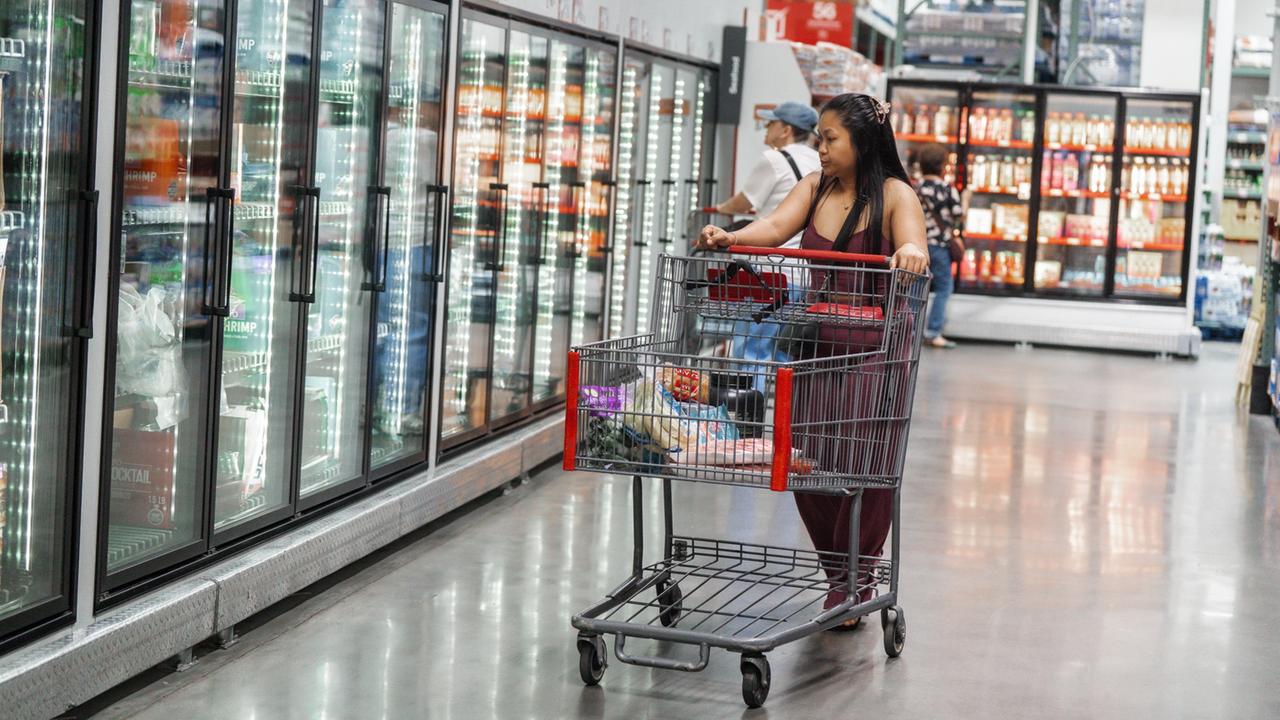
Inflation, cost of living, fuel prices: Many Americans blame President Trump for the high prices. For Republicans, this could become a problem before the midterms. From Carsten Kühntopp Autumn cool, but sunny it is this morning. Joe Losier goes door to door and knocks. If he is lucky, someone opens. Losier, a strong man in his fifties, works in a car factory. He is in the United Auto Workers union, UAW for short. Together with three colleagues, he is traveling in a suburb of Detroit. Small but well-kept single-family houses - classic middle class. At the door, Losier and his colleagues promote the candidates who support their union in the elections in November. Most of them are Democrats. Trade unionists only knock on members of the UAW. In Michigan, every election is narrow, every vote counts. Now it comes to mobilization. What moves the voters, Losier hears again and again: costs and affordability – above all, that is what the people are concerned about. Some are also concerned about health care. Or their pension. Or they are afraid for their jobs. That depends on the population. Losier: Many blame Trump for working hard, starting a family, buying a house and then living comfortably – this is increasingly hard to achieve. Trump’s tariffs have turned on the cost spiral, as did the war on Iran. This is also why the midterm elections are likely to become a verdict on the president, says Losier, even more than is customary in midterm elections anyway. When he asked who was to blame, most answered: “This is Trump!” He is responsible for the unjust wars, the price of gasoline, inflation and the high national debt. Trump blames others, but Trump and other members of his administration are not known to take responsibility when things do not go well. Although his election victory was almost two years ago, Trump is still trying to blame everything on his predecessor Joe Biden. Even Barack Obama, who has been out of office for almost ten years, is regularly used as a scapegoat. Biden and Obama have led the country into such a catastrophic situation that it is hardly possible to get everything back on track in just two years, Trump says. At campaign events, he explains that the inflation rate under Biden has been higher than ever in the history of the country. Currently, however, it is only 1.7 or 1.8 percent. Both are wrong, and the facts do not flatter Trump: On the last day of Biden’s term, the inflation rate was 3.0 percent, now it stands at 3.7 percent. At present, all opinion polls show that approval of President Trump and his administration is at a historically low level. The US economy was in good shape at the time Trump took office. It had come out of the COVID period so strongly as probably no other Western economy. A few days before the 2024 presidential election, Greg Ip, chief economic commentator at the conservative Wall Street Journal, wrote: “The next president is taking on a remarkable economic situation.” The "high quality" of recent economic growth will give the next inhabitant of the White House "tailwind". So Trump could have just let things go on like this, to brazenly claim after half a year that his policies have borne blatant fruit. Hardly anyone would have objected. Instead, Trump took two steps that worsened the framework for the US economy and triggered a price boost for consumers: In April 2025, he imposed tariffs on virtually the entire rest of the world. And in February this year, together with Israel, he launched a war of aggression against Iran. This led, among other things, to the closure of the Strait of Hormuz and thus triggered a global energy crisis. AI development pushes economy, yet the US economy continues to do quite bravely. Adjusted for inflation and extrapolated to one year, growth in the second quarter was 2.2 percent. Economists, however, speak of a "k-shaped economy", an economic development that resembles the letter K: one arrow points upwards, the other downwards. Everything remotely related to the expansion of artificial intelligence and the construction of data centers is driving growth. As well as the fact that high earners – the profiteers of the tax cuts Trump has continued – continue to consume with enthusiasm. But the other parts of the economy are weakening. Prices for refueling as a marker At gas pumps, a gallon of normal gasoline currently costs about 4.30 dollars on average, the equivalent of 1.01 euros per litre. The day before the start of the Iran war, it was $2.98 per gallon. And even more expensive is diesel fuel: a year ago, the price per gallon was about 3.63 dollars, now it is about 6.32 dollars. Not only that a high fuel price always leads to further price increases, for example in the case of food. For the Americans, the price of gasoline also has a great symbolic power. Like no other marker, they determine how good or bad they are personally. That is why Trump has also lost the confidence of the majority of citizens in economic policy. A problem for Republicans Trump had promised consumers falling prices – instead, he triggered new price increases. And this at a time when the Americans had just left the high inflation rates of the COVID period. So in the midterm elections, Trump and his Republicans face a dilemma: All in all, the landlord..
Source: tagesschau ›


Comments (0)
No comments yet.