Elections in the USA: What is important about the midterms
It is an important test of the mood for President Trump: In two weeks, the US citizens are called to the midterm elections. Who is elected, what topics determine the election campaign and what chances do the Democrats have? By E. Aretz and J. Unsöld.
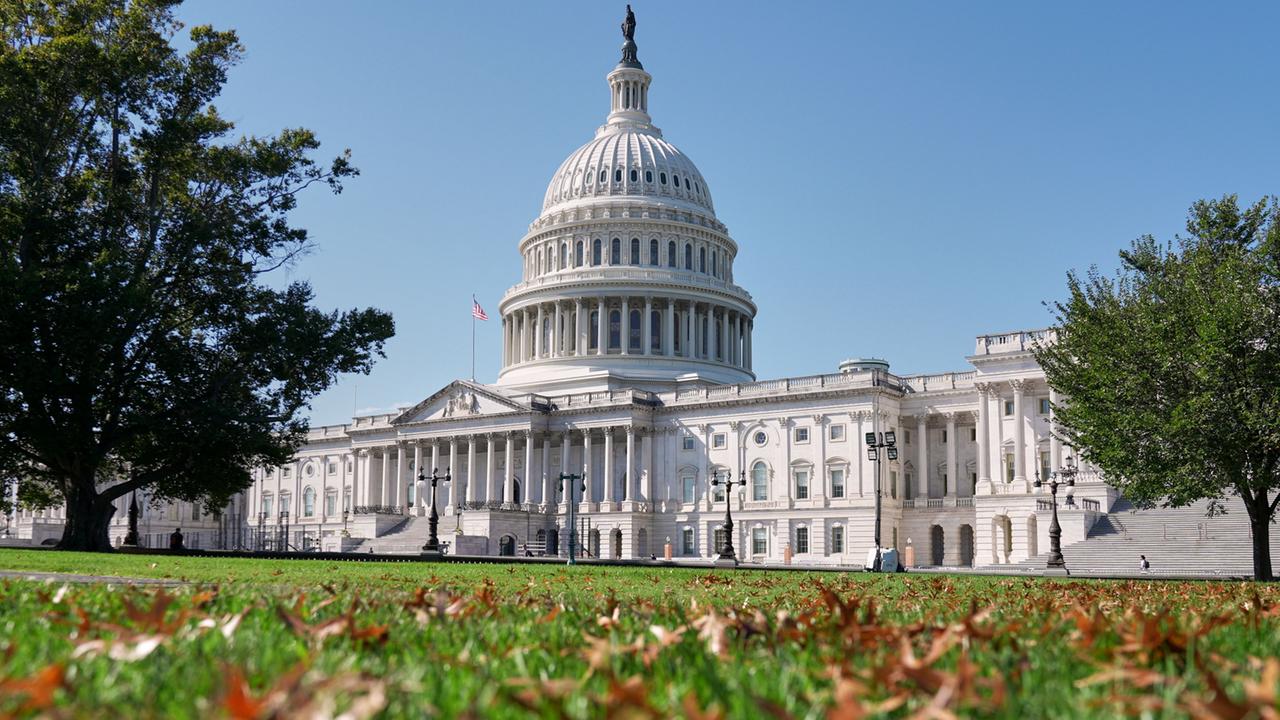
It is an important test of the mood for President Trump’s policies: In less than two weeks, the US citizens are called to the midterm elections. Who is elected, what topics determine the election campaign and what chances do the Democrats have? By Eckart Aretz and Jörn Unsöld, tagesschau.de What are the midterms? Every two years after a presidential election, the so-called midterms or “midterm elections” take place in the US, which are halfway through the four-year term of a US president – and are an important test of the mood for his politics. In the vote on November 3, all members of the House of Representatives and about a third of the Senate will be elected. Both chambers form the Congress, the US Parliament. In addition, the governors in 36 states and three territories (US foreign territories) will also be elected on that day, i.e. the heads of government of the states. Who gets elected, what does Congress do? Congress is composed of two legislative chambers, the Senate and the House of Representatives. The House of Representatives has 435 representatives, one parliamentarian each for one of the 435 constituencies tailored to the size of the population. The Senate consists of 100 deputies, the 50 states each two Senators – regardless of population size. The term of office of the Senators is six years. Every two years, about a third of the Senate is elected. This year, 35 new senatorial posts will be elected. The central task of Congress is to pass laws at the federal level. The House of Representatives and Senate, for example, decide on the budget and thus on the question of what the state spends money on. Each bill requires the approval of both chambers and must then be submitted to the President. Only with its signature a law becomes legally binding. The House of Representatives is currently composed as follows: 218 Republicans, 214 Democrats, 1 Independent, two seats are vacant. The Senate has 53 Republicans, 45 Democrats and two independents who have joined the Democrats. So the Republicans of President Donald Trump have the majority in both chambers since the last election in 2024, which helps him to get his plans through parliament relatively easily. What topics determine the election campaign? High costs of living - especially high fuel prices - are the central topic of the election campaign, often summarized under the term "affordability", in English "affordability". The Democrats in particular have tailored their election campaign to this topic. They accuse the US government of failing to meet its target of falling inflation. Trump’s tariff policy is another reason for the rising costs in people’s everyday lives. For the high fuel prices, they blame in particular the Iran war, which they reject in principle. The Democrats are, among other things, to reintroduce the state subsidies for health insurance, which expired in 2025. At the same time, they want to relieve lower income classes and, in return, tax top earners more. The Republicans, for their part, must defend the president’s economic course, although in recent months growing displeasure with Trump in the party has become clear. At the same time, they are trying to score with their core issue - the tough immigration policy - with their electorate. Trump himself bets that he as a person still has enough appeal among the voters. He completed numerous campaign appearances in the past – and made hardly redeemable promises: In the event of an election victory of his party, he announced a direct payment of 5000 dollars for every adult US citizen. Whether he can convince once again with his performances those who do not count among the determined followers of the MAGA idea, will be wise. There are also Republican candidates who see his appearances in their constituencies as more of a burden given his poor poll scores. Where are exciting races to expect? Given the poor polling of President Trump, Democrats hope to achieve a majority in at least one of the chambers. In the Senate, they would have to win four seats, which are currently held by the Republicans - and at the same time defend all their previous seats. On the basis of surveys, the US media has identified about 13 states in which it is open which of the two parties will ultimately prevail. CNN is one of those states in which the race for Senate posts is likely to be particularly close North Carolina, Ohio, Alaska, Maine, Texas, Michigan, Iowa, New Hampshire, Kansas and Georgia. It is striking that in the Republican states of Alaska, Iowa, Kansas and Ohio, the Democratic candidates can have legitimate hopes of winning the Senate seat. In Ohio, for example, Republican Senator Jon Husted is on the defensive – his Democratic challenger Sherrod Brown blames him for the unpopular settlement of data centers across party lines in the state in the Midwest. In Texas, too, Republicans worry about losing a safely believed seat. Her candidate Ken Paxton is considered Trump loyal, but is said to have complained to Republican donors, according to the New York Times, that after a Trump campaign appearance in Dallas, his approval ratings fell – in favor of James Talarico. The 37-year-old could succeed in winning a seat in the Senate for the first time in more than three decades for the Texas Democrats. Those interested in politics must also look at Kansas: If the Democrats won there, it would be historic: Most recently they won a seat in the US Senate there in 1932. In the House of Representatives..
Source: tagesschau ›



Comments (0)
No comments yet.