How Lusatia Plans to Tackle the Shortage of Doctors
Germany is facing a shortage of thousands of general practitioners, especially in rural areas. Brandenburg aims to counter this with a new state medical training program in a region that is particularly affected by structural change. By J. Piwon.
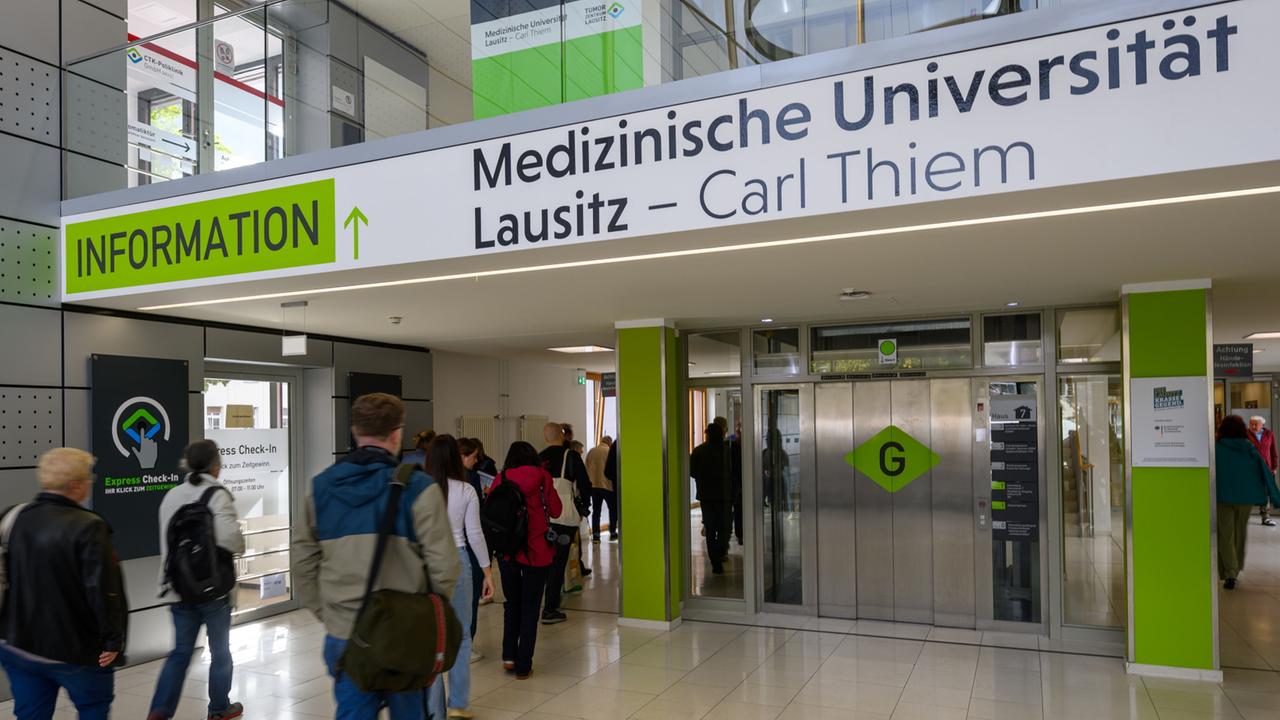
In Germany, thousands of family doctors are missing, especially in the countryside. Brandenburg wants to counteract with a new state medical education, in a region that is particularly affected by structural change. By Jacqueline Piwon, rbb The shortage of family doctors is becoming an increasingly pressing problem in Germany. Around 5,000 family doctor seats are currently unfilled according to the Kassenärztliche Bundesvereinigung. Especially in the countryside, it is increasingly difficult to find successors for medical practices. In addition, almost 40 percent of primary care physicians are already 60 years or older and are expected to retire in the coming years. In Brandenburg alone, according to the state government, there is already a shortage of family doctors in 21 of 46 regions, or there is a threat of undercare. Every third family doctor in the country is at least 60 years old, every sixth even older than 65. Brandenburg gets its first state university medicine With the new Medical University of Lausitz - Carl Thiem wants to counteract Brandenburg. It is the first state university medicine in Brandenburg. The fact that a medical university is completely newly founded is a rarity in Germany. Only two years ago, the Medical University of Lausitz was founded – as part of the structural change in the former coal region. The federal government and the state are funding the project with a total of 3.7 billion euros. At the beginning of October, the first 38 students began their training here. This is a special start for them. With an average of 24 years, some are already professionally experienced, others start immediately after school. From nurse to medical student Justus Gutsche originally wanted to become a professional footballer, he jokingly tells on the stage of the festive enrollment. Instead, he decided to train as a nurse at the Carl Thiem Clinic in Cottbus and subsequently gained professional experience. Especially the direct contact with people and the opportunity to positively influence their lives inspire him about medicine, he says. When he learned about the plans for a medical university in Cottbus in 2024, it was clear to him that he wanted to study there. Now, according to his own words, he can ride a bicycle to university in ten minutes. Alma Freigang has also deliberately decided to study at the new university. “I didn’t want to be so far away from home,” she says. Cottbus was her first choice. The first year includes a total of 26 women and 12 men. They come from all parts of Germany, eleven of them from Brandenburg. According to the plan, many of them will later decide to work as a country doctor, because they are not only urgently needed in Lausitz. One of the focuses of the new university is therefore the early practical relevance. Already in the first semester, the students have contact with patients. Part of the concept is also cooperation with general practitioners in the region. From the third semester, students are to learn in the practices of the region. Quota should bring doctors to the country So that in the future more young doctors remain in Brandenburg, the state has also decided a country doctor quota. From 2027, four study places per year are to be awarded to applicants who undertake to work as a family doctor in an underserved region of Brandenburg for ten years after their studies and specialist training. Later, ten percent of the study places are to be awarded via the quota. Anyone who does not fulfill his contractual obligation must expect a penalty of up to 250,000 euros. In the selection of students, not only the high school grade plays a role. An aptitude test as well as practical experience in medical or nursing professions are also taken into account. But the quota alone will not be able to solve the shortage of doctors. First of all, it concerns only a few places of study. And until the first students have completed their medical studies and the subsequent specialist training, about ten years will pass. The Kassenärztliche Vereinigung Brandenburg therefore also sees the municipalities as responsible. For young doctors to move to the countryside, living conditions must be right – with housing, childcare and schools.
Source: tagesschau ›



Comments (0)
No comments yet.