Postage stamps become more expensive: Why the postage increases from 95 to 115 cents
The Post Office increases the price of stamps. Here are the most important questions and answers about the biggest price increase so far.
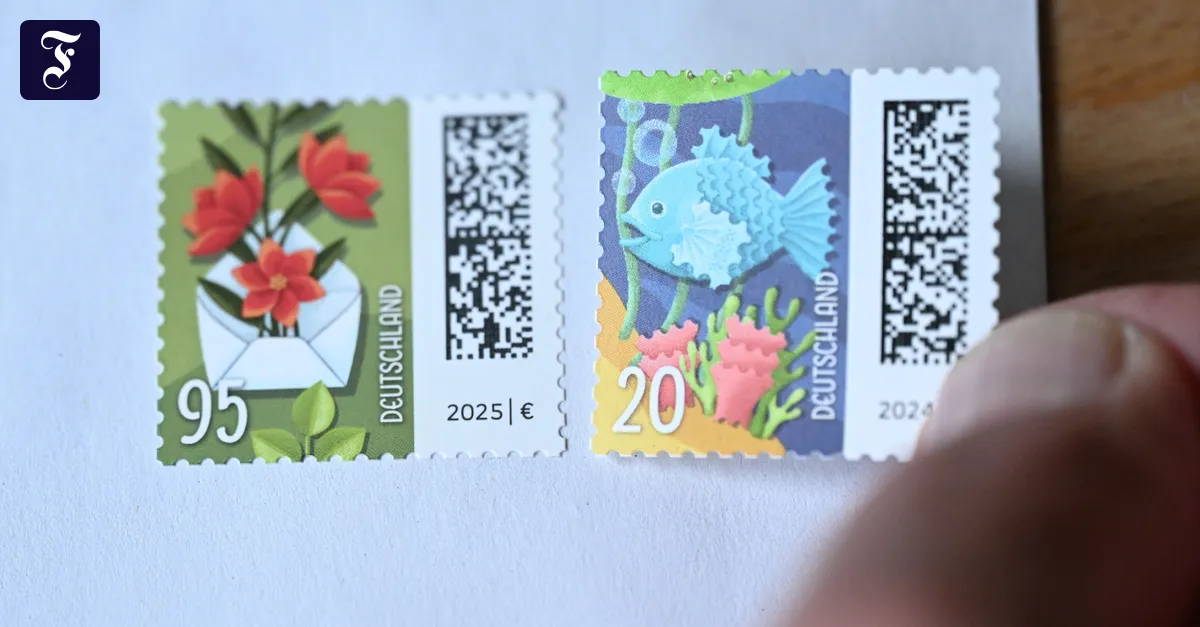
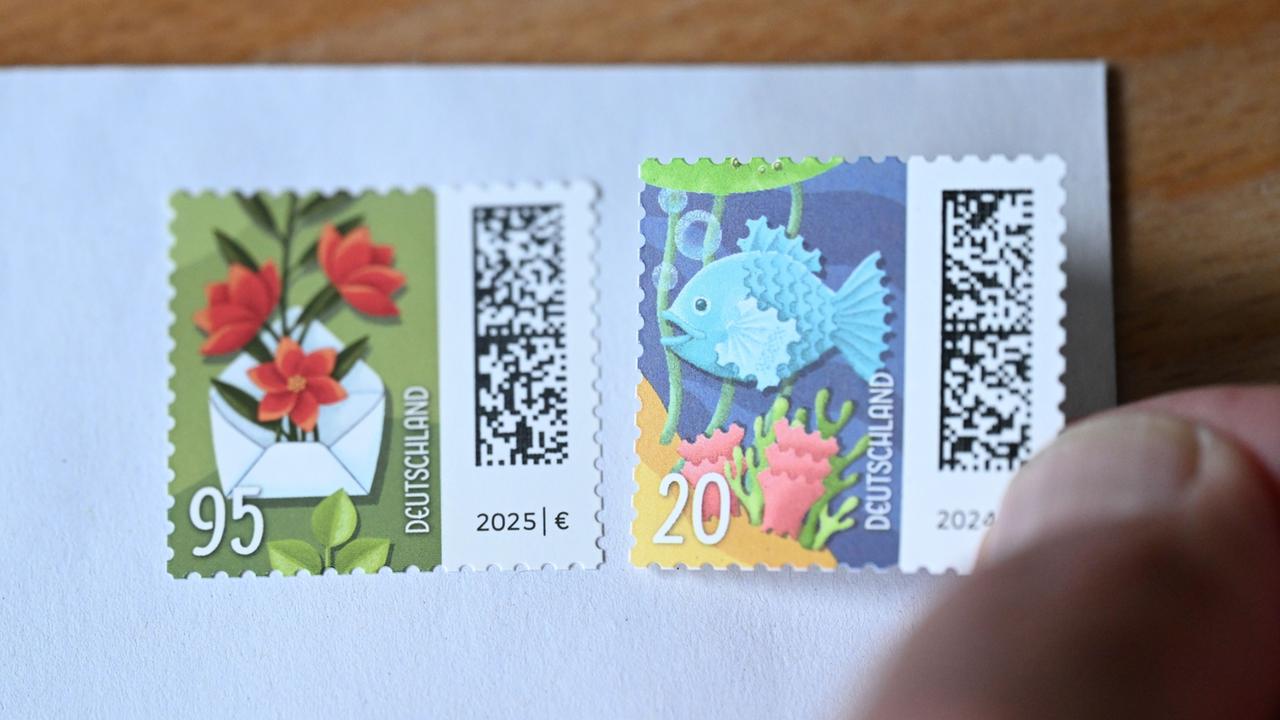
Deutsche Post wants to raise the letter postage more than ever before. A corresponding project was announced by the logistics company in Bonn. An overview with the most important questions and answers. How much does Porto rise? So far, the domestic shipping of a standard letter weighing up to 20 grams and a postcard costs 95 cents, in the future it should be 20 cents more. At 1.15 euros, the value would be more than twice as high as in 2012, when it was still 55 cents. Other types of letters will also become more expensive, the compact letter weighing up to 50 grams will become more expensive by 15 cents to 1.25 euros, the large letter by 55 cents to 2.35 euros and the maxibrief by 2.10 euros to 5 euros. The price of registered mail remains unchanged. The new prices apply for the years 2027 and 2028. In addition to the letters, packages will also become more expensive, but the post office has not yet announced their planned porti for private individuals. In addition, business customer mail will become more expensive. Are the price increases already decided? No, Post requires the approval of the Federal Network Agency for the validity of the new Porti. The authority had proposed last week a price increase margin of 20.35 percent and thus as much as never before. The figure of 10.48 percent from 2025 has almost doubled. This means that the income for sending all letters that are expected to be sent may increase by this percentage. How this margin is applied to the individual letter types is determined by the post office. However, the Federal Network Agency is still checking this and calculating whether the Yellow Giant has also remained within the scope. In the list of planned porti, it is noticeable that the increase in the large letter (plus 30.6 percent) and Maxibrief (plus 72.4 percent) is enormous. The fact that the overall average of 20.35 percent is still reached, explains a post speaker with the different weighting of the letter types – in one there are more shipments, in the other fewer. In addition, there are “structural effects” and changed dimensions: The large letter will be larger to a certain extent, with which it will take over part of the current Maxibrief quantities in the future – this is ultimately a price reduction. Why is it getting more expensive? The network agency and Deutsche Post justify the rising prices with the falling volumes of letters in the digital age – people and companies are increasingly relying on digital communication. During their holidays on the Baltic Sea or in the Black Forest, many people prefer to send selfie photos via messenger services instead of buying a postcard, franking it and taking it to the mailbox. Even the Christmas wishes and the New Year greetings now often end up on the smartphone and not in the mailbox. Companies also use more digital channels for their advertising and invoices. At the same time, Swiss Post must continue to maintain a comprehensive network of mailboxes and branches for the whole of Germany. “If fewer and fewer letters pass through this infrastructure, the cost per letter inevitably increases.” It also invests around one billion euros each year in the postal and parcel network, such as electric vehicles and vending machines. How much does the price increase affect consumers? Private households spend only about four euros a month for letter and parcel services – the Post refers to this already somewhat older average value of the Federal Statistical Office. The planned additional burden is monthly only 75 cents, it says of the yellow giant. In addition, letters sent by companies become more expensive – if their costs increase, they will often be passed on to consumers. It is also conceivable that the structural change is accelerated by the significantly higher prices: companies are saddling with digital communication because the mailing is too expensive. Who looks in the mailbox to find a letter of his insurance or his craftsman, should also look in his mailbox. How does politics react? From the policy, understanding is signaled for the planned price increase. The letter quantities have now fallen sharply, says the SPD member of the Bundestag Sebastian Roloff. “It is important that we can continue to ensure the high-quality supply throughout Germany at moderate prices.” The comparison with our neighboring countries shows in terms of prices and quality, “that we are still doing well”. In fact, letter mail is still relatively cheap in Germany. In the Netherlands, the postage for a standard letter is 1.40 euros, in Belgium at least 1.58 euros are due. In France it is 1.52 euros – there it is already clear that the postage for a standard letter at the turn of the year rises to 1.67 euros. What else are the requirements for the letter market? Separately to the postage, there is a requirement that 95 percent of the letters submitted today must be with the consumer after three working days. After four working days, 99 percent must have arrived. The regulation was relaxed in 2025. For some consumers, late letters cause frustration.
Source: FAZ ›


Comments (0)
No comments yet.