The New Way to Press Giant Snake Population: Aim for The Queen · Global Voices
South Florida has a giant snake problem becoming a pest. This area is a habitat for large population of Burma pitons.
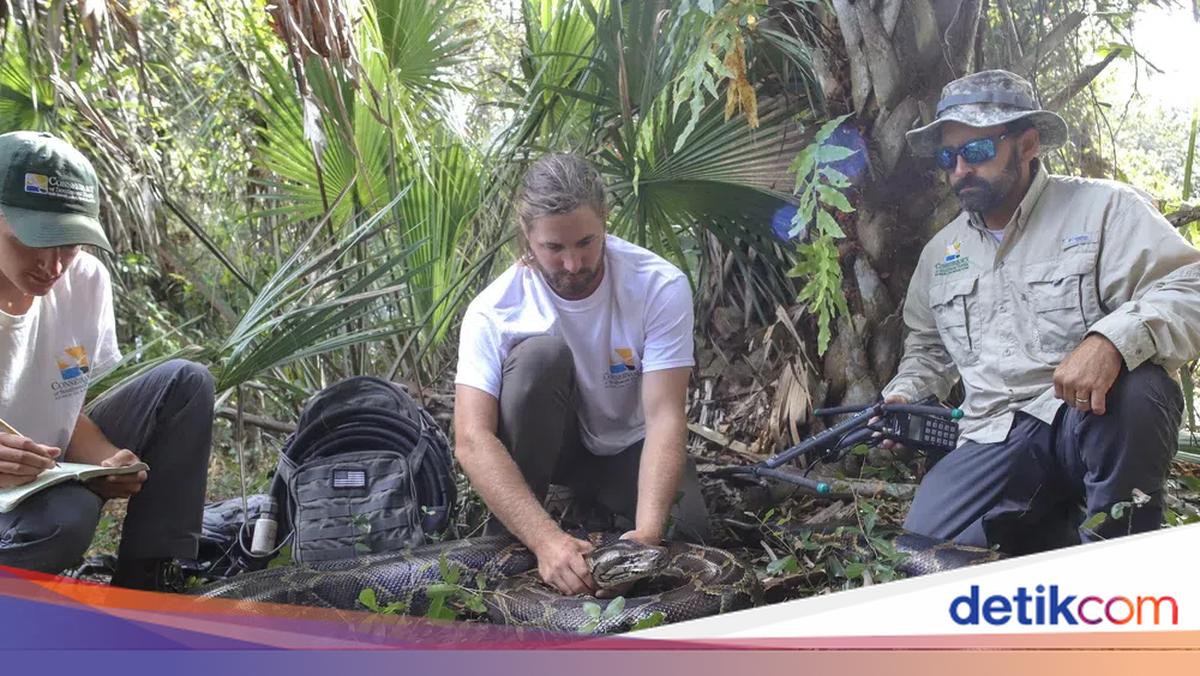
South Florida has a giant snake problem becoming a pest. This area is a habitat for large populations of wild Burma pitons, invasive species that prey on mammals and local birds.
The attempt to get rid of these pitons is essentially focused on capturing as many snakes as possible, instead of targeting certain individuals. But that might change soon.
A new study of research Institute of Food & Agricultural Sciences, University of Florida, developed a device to help pitons hunters identify snakes with the biggest influence on population growth. By getting rid of individuals whose growth rates are high, long-term effects are far more impacting.
"Our research once considered all Burma pitons contributing equally to the population, but getting rid of the biggest females we've ever caught is very different from getting rid of little snakes that probably won't survive until next year," said the ecologist Alex Romer, the lead author of the study.
The population of Burma pitons in Florida particularly began with an exotic pet trade explosion in the 20th century. Many of them escaped or were released by the owner who was unable to or refused to care for.
Today, US Geological Survey estimates indicate that there are tens of thousands of Burma pitons in the Greater Everglades area alone. These snakes are not venomous but can grow up to four and a half feet or so and often eat endangered native species.
In order to address this situation, researchers in the study developed the Berbot Blocking Index (Weighted Removal Index / WRI), which sets an ecological value on every captured piton.
"The idea is that a large female may be worth 100 ecological points of arbiter, whereas a small snake may only be five. This tells you how
Hopefully, the piton-casting program under the Florida State contract will benefit from the use of the WRI tools to measure the impact of each arrest, so the work process is structured and effective.
This study also found an attempt at evasion could produce better results at some point. Generally, fewer snakes are caught in January and February for example, but snakes caught at such a time range are likely higher as male and adult females.
"If you just count the number of pitons that the contractors arrested, in January and February didn't seem so important. However, when inserted in demographic damage, those months suddenly seemed much more important," the paparazzi.
Source: Detik ›




Comments (0)
No comments yet.