COP17 on Biodiversity: Tracing the Wood Thieves in Armenia
As of Monday, representatives of almost 200 countries will be consulting on the 17th. UN Conference on Biodiversity on how to achieve its self-imposed goals. On the way with environmentalists in the host country Armenia. by Norbert Hahn.
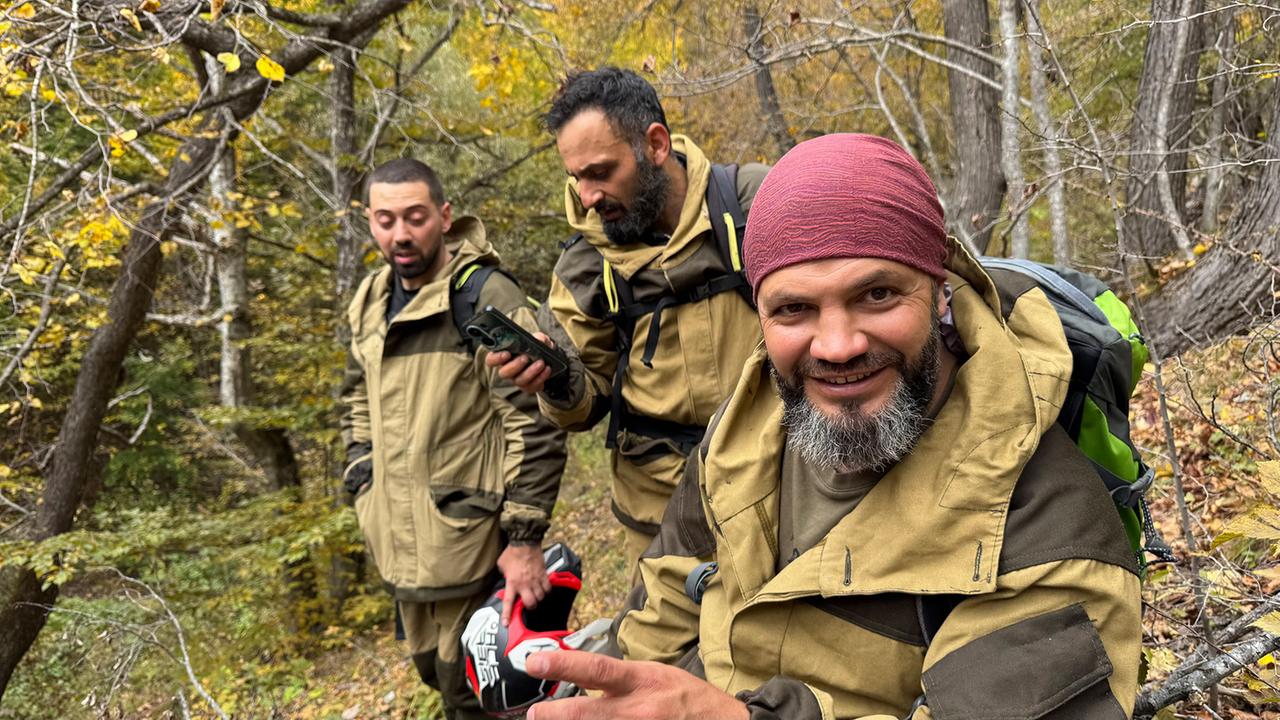
As of Monday, representatives of almost 200 countries will be consulting on the 17th. UN Conference on Biodiversity on how to achieve its self-imposed goals. On the way with environmentalists in the host country Armenia. From Norbert Hahn Gor Hovhannisyan is waiting on the edge of Dilijan National Park. With his two rangers, it should start right away - on the search for illegal loggers. This time: a new app on the mobile phone that processes satellite images into red pins on the mobile phone map. They are pinheads that describe places where a tree felled. Either by itself - or with the use of tools. AI offers a new technology here that should make it easier for the small team to protect the valuable mixed forest. "Thirty years ago, 21 percent of Armenia was covered with forests," says Hovhannisyan. Now it’s officially seven percent, just a third. These are only the official figures. I think it's actually less than five percent. Hovhannisyan founded his NGO ten years ago. Back then, hunting illegal loggers was even more risky than it is today. For the first three years it was very dangerous. Once our volunteers were beaten up by villagers for 20 minutes, says Hovhannisyan. Another time I took my daughter to school when a man unknown to me came and said, Next time you might not find your daughter at school. Hovhannisyan is a persuasion worker, he loves the forest, even if he cannot live from conservation. Around 30,000 euros are granted by the CNF, the Caucasus Nature Fund Foundation. Hovhannisyan still has a handful of other jobs - otherwise the family man would not make ends meet. The search for illegal loggers is time-consuming, but the new AI technology shows initial success. The first tree stump, to which the mobile phone leads him, has apparently fallen using a chainsaw. On the way to the next marker on the mobile phone, the team meets a car, the dark green color suggests a forest vehicle - but in it, sits a private citizen. In the full stern: freshly sawn wood. The driver explains that everything is legal - Hovhannisyan does not believe him and photographs the number plate. Funding also with German funds finds such as these are a success for Hovhannisyan, whose constant controls deter illegal loggers. And also a success for the CNF, which achieves a lot with little money. “It’s one of our most successful projects,” said CNF leader Arman Vermishyan. In his office, he travels with his finger over a map of the region and describes the funds with which the CNF supports projects in the region: Armenia receives 1.4 million annually, Georgia two million. In each subsidy, the respective state must raise at least half itself. The CNF was founded in 2007 by the German Ministry of Economic Cooperation, the German WWF and the conservation organisation Conservation International. “The majority of our funds are German money,” says Vermishyan. Everything is connected with the funds to promote nature conservation as an overall project. If the forests are stable, the flora and fauna helps overall. Thus, the CNF promotes the resettlement of the Maral deer, a Caucasian red deer. The species was practically extinct in Armenia. We now have 31 animals here, 22 we have already released. Among them are eight babies,' says Mher Sadoyan, project coordinator at WWF. WWF is also involved in the resettlement of the Caucasian leopard, of which hardly more than 40 live in the region, about a dozen of them in Armenia. Everything is related: The forest must provide protection for the deer, the leopard in turn also lives from the deer. Simple connections, but the states of the world struggle with the protection of nature. Less than half of the world’s countries are on track with their own national biodiversity targets, said UN Secretary General António Guterres in Yerevan ahead of the opening of the two-week conference bringing together nearly 200 States Parties to the UN Convention on Biodiversity. “This bad news means that the war against nature is not yet over,” Guterres says. According to experts, up to one million animal and plant species could be threatened with extinction in the coming decades. It is a struggle that tires activists like Hovhannisyan and often makes them doubt. Meanwhile, the app on his phone has identified two suspected sites in the Dilijan National Park, which show fresh saw traces. The wooden transporter from the morning turns out to be a wooden thief - another car was not on the road here. Hovhannisyan now has a new case: "I have his license plate, and the man now has a big problem." That these problems around more conservation will be solved by the thousands of politicians and guests of the COP17 conference, Hovhannisyan has long since ceased to believe. He sits on a steep mountain embankment and looks frustratedly at the large tree stump in front of him. The hope of politics has given way to cynicism: We now have the conference in Armenia and our leaders will talk about the beautiful plans and pictures and the great future. That we will plant ten million trees and the dinosaurs will come back, whatever they say, no one believes that. These and other reports can be seen in the European magazine - on Sunday at 12.45 in the first.
Source: tagesschau ›


Comments (0)
No comments yet.