Country diary: A species brought to the edge of extinction, recovering in the fens | Mark Cocker
Ouse Fen, Cambridgeshire: The great egret’s story is remarkable, as is the conversion of this low-grade agricultural land into one of the richest wetlands in BritainIn keeping with this region’s summer of torrid heat and drought, the field by the path was an expanse of burnt, dead thistles. What was totally unexpected were the 13 great egrets among it. Ironically, the birds may well be here as a consequence of the climate crisis, but their appearance in a parched brown expanse felt strange.First, they are creatures of freshwater marsh and routinely hunt fish. Second, great egrets are...
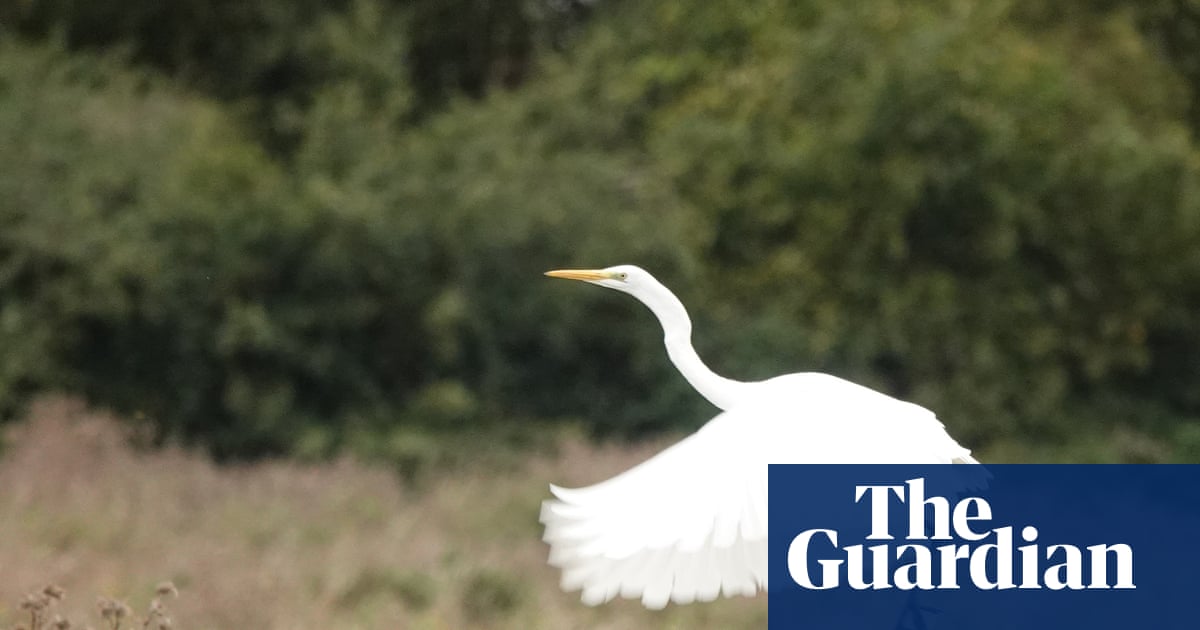
Ouse Fen, Cambridgeshire: The great egret’s story is remarkable, as is the conversion of this low-grade agricultural land into one of the richest wetlands in BritainIn keeping with this region’s summer of torrid heat and drought, the field by the path was an expanse of burnt, dead thistles. What was totally unexpected were the 13 great egrets among it. Ironically, the birds may well be here as a consequence of the climate crisis, but their appearance in a parched brown expanse felt strange.First, they are creatures of freshwater marsh and routinely hunt fish. Second, great egrets are the size of grey herons, but pure white, aside from lemon eyes and dagger-like beaks of pale autumnal orange. What was weirdest of all was the gestalt whole; the way they threaded through that horizon of brown, long necks extending and retracting like winding snakes, and all this gleaming intensity focused on catching voles. Then a bird would fly, the white rope of its neck rising, followed by a ragged cloak of wings, turning eventually to the stolid beat of heavy flight. Continue reading...
Source: The Guardian ›

Comments (0)
No comments yet.