German Jazz Festival: Without ideological burden of proof
Jazz orchestra and rock guitarist, does that fit together? At the German Jazz Festival in Frankfurt, there were surprising encounters and spectacular individual performances. The audience was more than right.
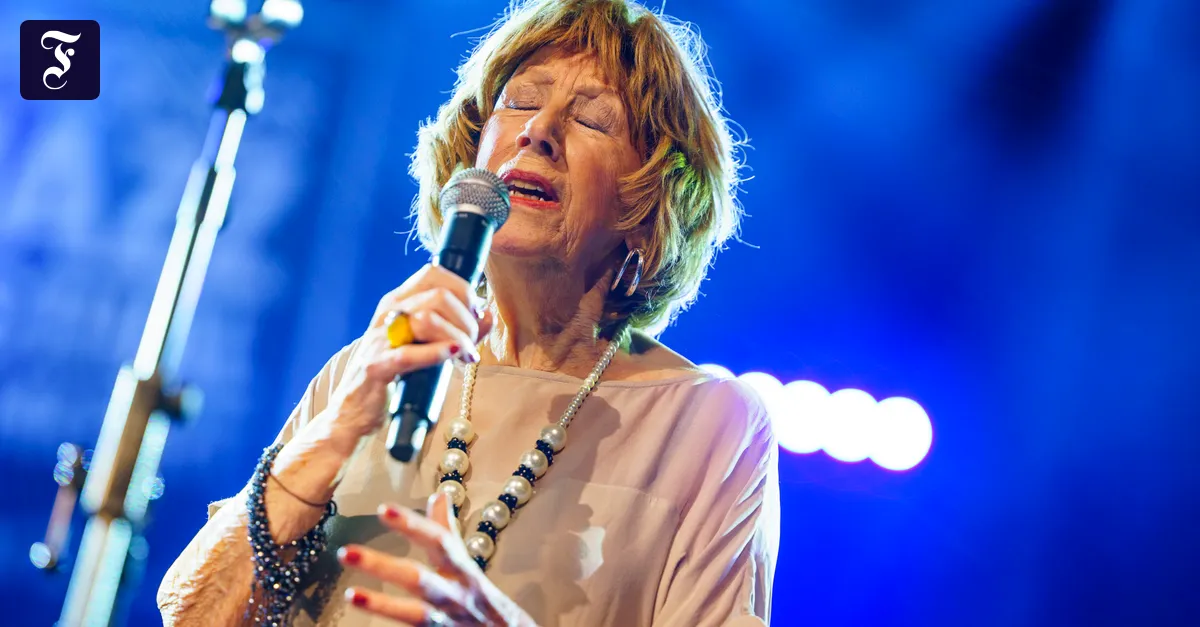
What happened to jazz? Are there no more aesthetic upheavals, no more trench fights between mainstream and avant-garde? Does no artist have more desire for provocations with denatured sounds or attacks on drums? Where are the booists? Why are there no more banners being rolled out calling for radicals: “Down with the repressive four-quarter measure!”, “Jazz music for everyone!”, “More jazz, less green sauce!” At the German Jazz Festival Frankfurt, the dinosaur among the international events of this kind, after all already 73 years old, but never really questioned, probably always classified as systemically important as some credit institutions, you could experience amazing things. The concerts were full, the audience applauded frenetically. There was no mass flight after the breaks, no displeasure and certainly no scandal. In fact, that must give us food for thought. The organizers of the Hessian Radio probably recognized this in advance and printed an attempt at an explanation in the program booklet: “In times when one rubs oneself in disbelief in the face of the political world events, to live gratefully in the still reasonably reasonable Europe, a look at the jazz landscape, etc. offers.” The creativity of the artists is unbroken That sounds plausible. The exhausted reasonable seem to no longer want to get upset about too much or too few blue notes. Surely there are other reasons for this undiminished jazz pleasure: an attractive program, professionalism of the presentation, knowledgeable and tolerant audience. Last but not least, it is due to the fact of the music itself. She has long since passed her rehearsals from the Kaputtspiel phase of free jazz and popular fusion music. The playing skills through ever more complete jazz education offered everywhere have now led to a high technical level. Above all, however, the creativity of the artists seems to be unbroken, after the ideological burden of proof for proper composing was also removed from their shoulders. Even a mocker like Frank Zappa would have to be amazed to find that jazz is not dead, does not even seem or smell bad. This was already the case at the unusual opening with Christof Lauer in the foyer converted into a jazz club in front of the broadcasting hall of Hessischer Rundfunk. This giant of the tenor saxophone requires no players, no effects devices, no tablet for scores and no Bluetooth pedal to turn to embark on its odyssey through the maze of sound possibilities. Without a network of predetermined ideas and without a double ground of harmonious structures, he develops from the moment a fantastically closed improvisation. Lauer masters all registers of jazz articulation, knows the sound limits of his instrument, is washed with all waters of jazz style. But what's great about his game is that he doesn't have to convert anything into incessant bubbles of ideas and refinements. You can literally feel him wrestling with the material, banning himself from the clichés of jazz phrasing and always knowing what he has already played, how it fits with what he could add, and how it all turns into a musically meaningful form. It was an early, uncompromising inner musical highlight of the festival, although not intimidating in its discreet sound, rather encouraging to the following event. For example, on the young guitarist Finn Heine, winner of this year’s jazz scholarship of the city of Frankfurt, who showed with his band Discovery Collective and the tenor saxophonist Darius Blair in clarified-looking jazz improvisations how naturally talented musicians today know how to deal with modern jazz forms and enrich them through popular sounds. The fact that they then seemed somewhat lost during their appearance with the project “Sketches of Frankfurt” in the broadcasting hall of Hessischer Rundfunk is probably also due to the size of the compositional claim. Since the transitions between the urban sound episodes do not come smoothly, the sound tableaus seemed too uniform melancholy, basically lacked the musical stamina to create a characteristic city portrait that seems memorable. Light and shadow were also close together during the meeting of the HR big band with the guitarist Ali Neander, founding member of the Rodgau Monotones and avowed jazz fan. Nothing against the Neander compositions cleverly arranged by Rainer Tempel for large ensemble and certainly nothing against the rock jazz groove of Neander’s guitar solos on the one hand and the stylish answers of big band musicians like Oliver Leicht on the alto saxophone, the pianist Sebastian Scobel or the bassist Hans Glawischnig on the other. But the combination of jazz orchestra and rock guitarist did not really work. The Englishwoman Emma Rawicz was more convinced, who with a collection of her own pieces also recognized herself as a stimulating arranger for the as always phenomenally agile and highly motivated HR big band and at the same time as a competent conductor with elegant tenor saxophone phrases. Later she appeared again with sensitive accompaniment on the soprano saxophone as a guest of the duo of Norma Winstone with the young pianist Elliot Galvin. The now 85-year-old singer is simply phenomenal with her bell-pure intonation and a dreamlike phrasing, with her warm voice clearly articulated into the deepest old regions. Without all the frills or hints of show elements, these are demonstrations of high song art and stylish jazz singing alike, and also with the wonderful country song “The Streets of Dallas” by Steve Swallow as a winking encore. It was the worthy conclusion of a great jazz f..
Source: FAZ ›

Comments (0)
No comments yet.