Germany’s dwindling attraction for investors
For international corporations, Germany has been less and less attractive for years. They avoid the location completely or in half planned investments, such as the pharmaceutical company Eli Lilly in Alzey. The consequences are serious. by Axel John.
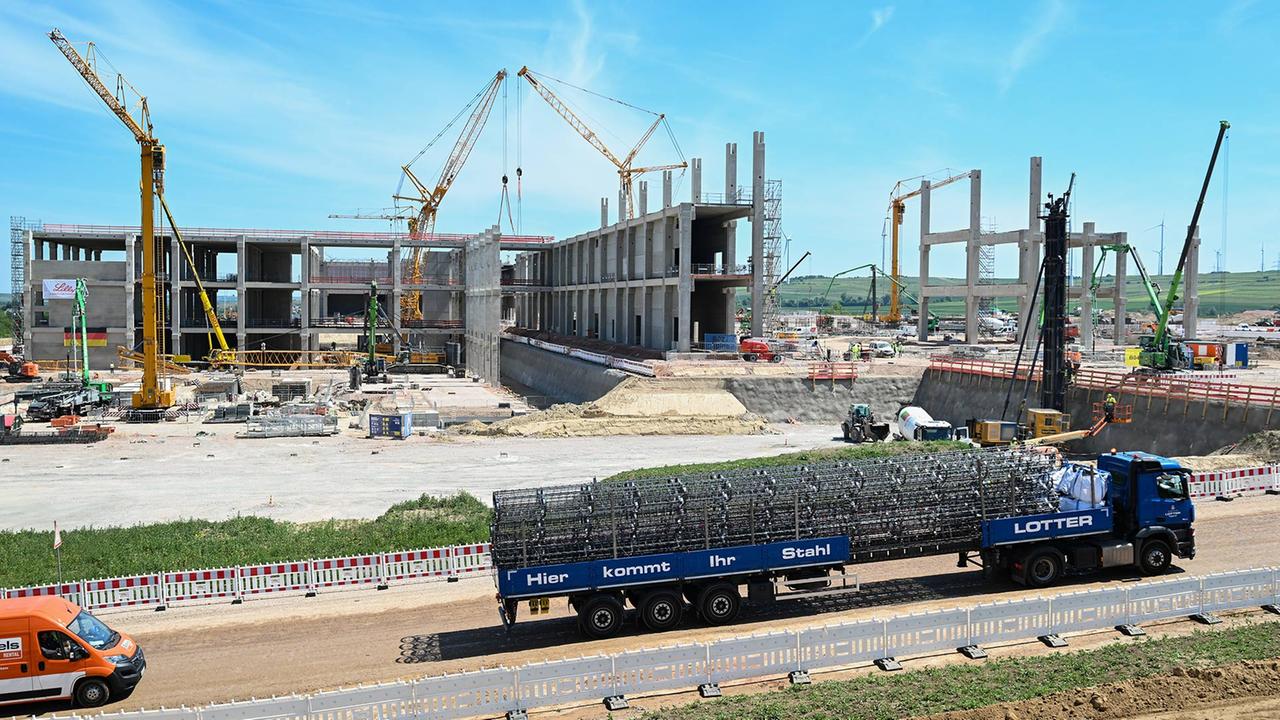
For international corporations, Germany has been less and less attractive for years. They avoid the location completely or in half planned investments, such as the pharmaceutical company Eli Lilly in Alzey. The consequences are serious. By Axel John It is still a megaproject. In Alzey, Rhineland-Palatinate, the pharmaceutical company Eli Lilly is building a huge plant. But instead of two billion, only one billion will be invested, instead of around 1,000 jobs, it will probably only be about 500. At the beginning of June, the company halved its investment amount. The reasons given by the Group were the austerity measures in the health care sector just approved by the Federal government and worse conditions. "It's a warning sign" "I was also surprised by the cutback plan," says Steffen Jung. He is the Mayor of Alzey. For more than two and a half years Jung had adjusted to the mega investment with the city - new roads, apartments and daycare centers planned. "Nevertheless, it remains an outstanding settlement for Alzey and the entire region," says Jung. But: For the mayor, the massive cut is a fundamental problem that goes far beyond Alzey. I also see Lilly Germany’s decision as a wake-up call to the Federal Government. It is a warning sign. It is now the task of the Federal Government to enter into talks with companies and to make Germany attractive again for corresponding settlements. Fewer and fewer investments Alzey is not an isolated case. In other regions in Rhineland-Palatinate, too, the economy is investing less and less in the location. For example, the chemical group BASF from Ludwigshafen has been relocating parts of its production to China for years. This year there were other Job messages: Pharmaceutical company Boehringer Ingelheim has announced that it will completely cut its planned investments in Germany amounting to 900 million euros. The funds are now mainly going to the US and Asia. And a planned battery factory in Kaiserslautern will no longer be built. The battery manufacturer Automotive Cells Company (ACC) abandoned the multi-billion-dollar project. The main reason is the weak sales of e-cars in Europe. Small and medium-sized enterprises are also affected by the development - such as the machine manufacturer Minitec near Kaiserslautern. The company with its 270 employees manufactures special plants. Business customers include the automotive, food or construction industry. The current situation is challenging. We give everything to keep our sales stable, says Tobias Doll, one of the three managing directors. The need is actually great. From many discussions with our customers, we get the feedback that they are very keen to invest. But under the current framework, they don't do that because the thing doesn't pay off in the end. This also applies to the company itself. In addition to the plant, another hall is planned for 15 million euros. There are also new jobs, says Doll. But for the time being, this investment project will fail. “If the framework conditions change and we can calculate more predictably here, we will also invest in such a hall.” Hardly any fresh capital International investors make a big arc around Germany. This is also evident from several recent studies. How great the need for investment is, shows a recent study by Allianz Research. Since 2019, Germany has built up an investment gap of up to 730 billion euros compared to the US. In the rest of the eurozone, on the other hand, investments increased by 6.7 percent and in the US by 20.2 percent. Public spending could not close this gap, the paper says. The mobilisation of private capital is crucial. A recent study by the Kreditanstalt für Wiederaufbau (KfW) warns: 92 percent of companies see fundamental investment needs – for example in digitalisation, infrastructure and modern facilities. Especially larger medium-sized companies with a staff of at least 50 employees are holding back. High energy costs, excessive bureaucracy and high tax burdens are repeatedly cited as the main reasons. "Vote of distrust for the location" With regard to investments in Germany in recent years, economic expert Daniel Stelter draws a grim conclusion: For more than 20 years, companies in Germany have been net savers. They invest less than their profits. This is a dramatic vote of no confidence for the location, or as I would say, an investment strike, Stelter said. He refers to another study by management consultancy McKinsey, according to which net investments in Germany have fallen to almost zero percent of gross domestic product. Usual are values of two to four percent. The result: The capital stock of the economy, that is, the means of production of the national economy, decays. This will reduce productivity progress, but we would urgently need it in view of demographic developments and distribution conflicts. Stelter does not think much of the Berlin summit: "Anyone who wants to be attractive for investments should focus on the framework conditions that benefit those who are already there." The international investors will come by themselves. Mayor Jung has not yet given up hope that the pharmaceutical company Eli Lilly will still make its originally planned investments in the long term. The construction of Lilly is currently being implemented as a whole. The infrastructure then exists. If the general framework conditions improve in the future, the plant can be ramped up and the jobs created in full
Source: tagesschau ›


Comments (0)
No comments yet.