Donaueschingen: Salary inquiries at the audience are musically salaryless
The audience of the Donaueschinger Musiktage booes against its own silliness. But in principle, the level of new orchestral works is better than in the previous year.
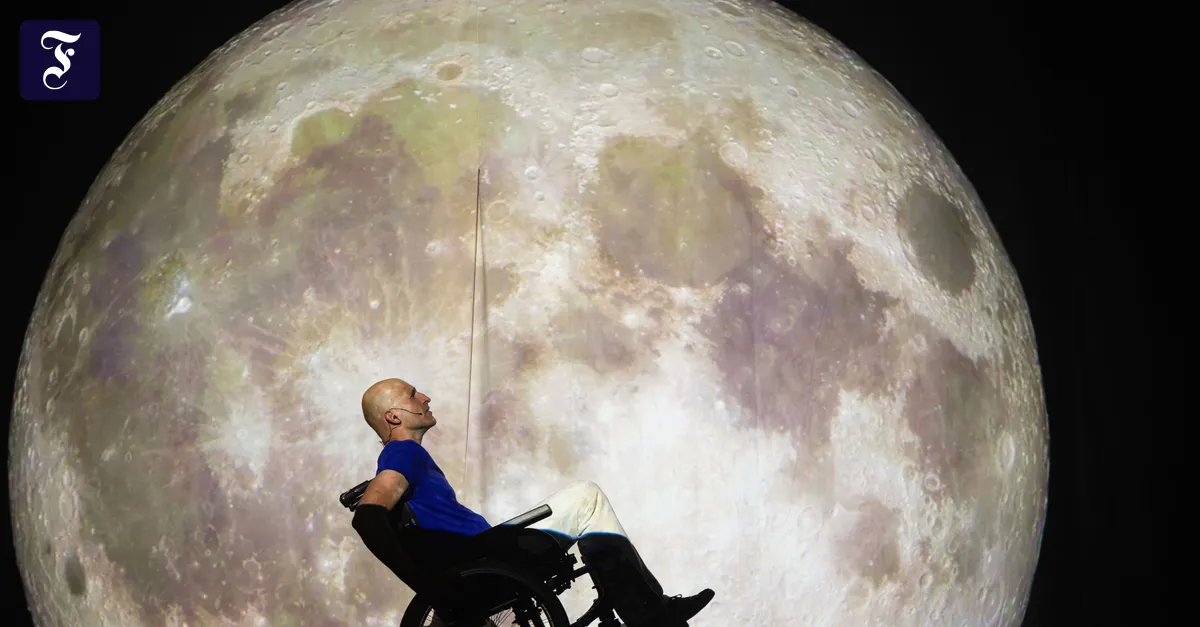
If in the opening concert of this year’s Donaueschinger Musiktage with the SWR Symphony Orchestra one had the impression that the premiered composers (Hannah Kendall, Stefan Prins, Igor C Silva, Natascha Barrett) would gradually lose the music in front of all electronics, orchestral instruments such as teapots and walkie-talkies, used playing techniques and improvisational specifications for the soloist trumpeter and conductor Brad Lubman, so you could go home after the final concert. They still exist, the composers who can write for orchestra. Principal Conductor François-Xavier Roth seemed surprised by the quality and diversity of the works and gave the concert the status of a “masterclass”: by Noriko Baba, who continued the Carnival of the Animals with her “Bestarium Musicale VI”, including two squeakers among the drummers. By Mauro Lanza, winner of this year’s orchestra prize, with the rhythmic virtuoso number “We’ve actually been in this place before”, whose level of difficulty Roth comes close to Stravinsky’s “Sacre”. By Fabien Lévy, who gave the orchestra a splendid “tailor-made suit” (Roth) and – as a studied ethnomusicologist – refers to the African Hindewhu from papaya branches with self-built flutes. Finally, by Clara Jannotta, who with all kinds of additional instruments and discreetly used electronics evoked orchestral poetry and emotionality, in a world – so the title – that is pure blue (where you are transformed utterly and forever)((Amen)). The day before, Enno Poppe had resonated Rebecca Saunders’ piece “thirst” for 18 strings with the ensemble: a flaming commitment to art. For society, art means the same thing as breath for the human body, so the composer’s conviction. And what she starts with the strings, the concerting violins and double basses, how she organizes starts and courses, alternates between “motivic work” and abstract passages, flutters up flagoles and makes Glissandi strive upwards, gives each voice an unalienated, recognizable individuality, increases the intensity and ends the whole thing through a unison in a wonderful, quiet final chord, that can be compared with the “metamorphoses” for 23 solo strings by Richard Strauss. In any case, “thirst” also invokes a tradition that blows into our present as a long breath of art. Ann Cleare could not keep up in the same concert. Her “Dream Machine”, heralded as a sonic portrait of the human brain, was thought of brain death rather than dreaming. At least it provided for many listeners for a healthy morning sleep. Cleare was not booed. This kind of public expression, which had long since passed in Donaueschingen, met with Brigitta Muntendorf, who provoked many with her “Last Show”. It is spicy, however, that the listeners basically booed themselves. The subtitle of the piece is called “Q&A (Questions and Answers, Questions and Answers) for Ensemble and Audience” and was commissioned by CONNECT – The audience as Artist, the association of European ensembles and organizers of new music, with the aim of understanding the audience as an active part of the artistic process. "Last Show", premiered by Ensemble Modern under the direction of Chinese conductor and pauker Xizi Wang and subsequently in London, is an experimental arrangement about listening. The audience is asked to connect to a network via smartphone so that they can answer questions via a voting tool, which are asked by an AI voice after the ensemble pieces (it is the cloned voice of the composer). This could have resulted in statistics about this year's Donaueschingen visitors if, yes, more participants had succeeded in actually connecting to the network and if it could not have processed the votings very quickly. For the first question, “How do you feel at the moment?”, 335 votes went through, for the question of the average annual salary, it was only 69. However, the technical problem cannot have triggered the aggression alone. Overlooked it became obvious that Muntendorf plays with our media constitution, it also leads us with the questions on the ice: What else is the question of the salary, if the attention to what is heard should be measured? A mirror of our media behaviour is held up to us when we are asked to immediately evaluate everything we hear, think, feel. And Muntendorf also plays with ambivalence: that we participate and at the same time get angry about it. The motto of the festival, “Polyphonies” in the sense of pluralism and multi-perspective, included rather naive sound installations and intermediate forms such as the stage and video performance “UR!” by Simon Steen-Andersen and his musician/actor/speaker Michael Schmid on Kurt Schwitter’s “Ursonate”. Or the horror film-like “Museum Factory” by Steven Kazuo Takasugi for percussion trio, sculptural instruments, video and electronics, an acoustic and acting torture action, expression of our apocalyptic obsessions and fears. While the Belgian-born Stefan Prins, who has been regularly represented in Donaueschingen since 2012, had spread relatively unsuccessfully over the “madness” of the world in his “Madness Machines” with well-known electronic means, Takasugi over-fulfilled this ideological target with shock elements. On the other hand, there was no better contraindication than two works for organ and brass in the Donaueschinger Stadtkirche, also as a concert installation
Source: FAZ ›



Comments (0)
No comments yet.