EU energy policy: More CO2 certificates, more lax natural gas rules – and yet rising energy prices
In the fight against rising energy prices, the European Union allows exceptions to its climate protection rules. It cannot eliminate the existing scarcity.
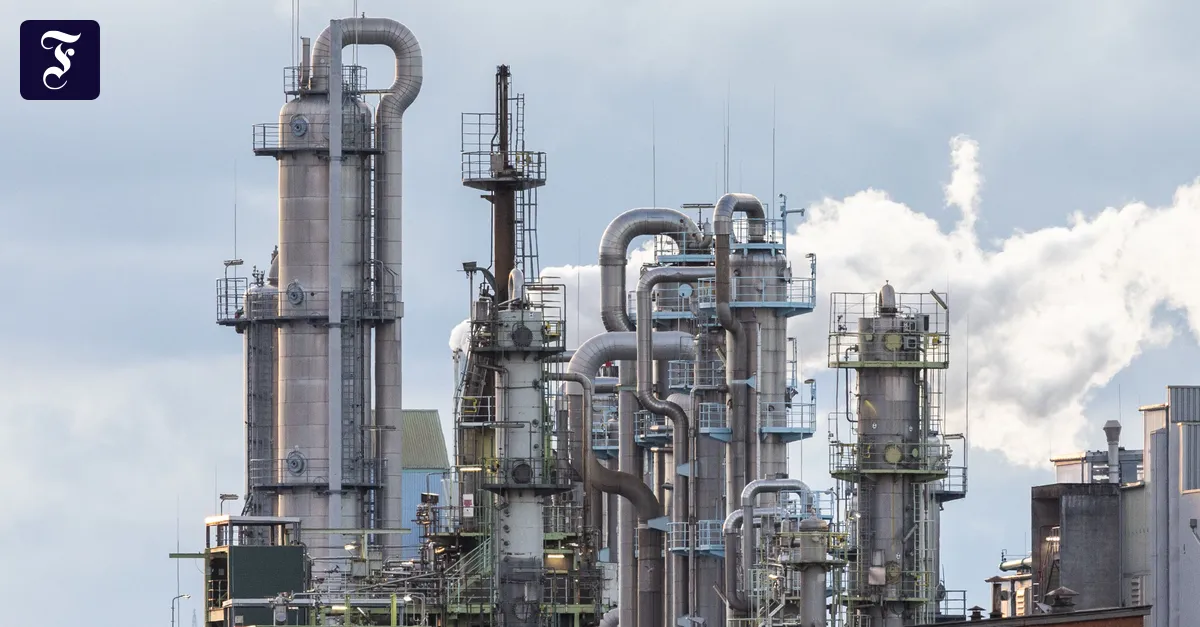
Set aside something in good times to use it in distress: This principle is also familiar to the European emissions trading system for energy production and industry, referred to by experts ETS1. It includes a “market stability reserve”, i.e. an account on which unused emission rights are parked. They can be released later to counteract strong price fluctuations in trading these rights. However, the existing legislation stipulates that by the end of 2030 all certificates exceeding 400 million tonnes of CO2 will be deleted. According to F.A.Z. information, the EU Commission, the European Parliament and the environment ministers of the member states have agreed to suspend the deletion. In the coming decade, an upper limit of 800 million tonnes is to be allowed on the account. The heads of state and government of the Member States had called for the agreement after they had spent hours arguing about emissions trading at the EU summit last week. If the quantity of allowances not deleted is fully used in the coming decade, this would correspond to a share of about 1.3 percent of the EU’s greenhouse gas emissions in 2025. However, the influence on energy prices, which gave the impetus for the discussion at the summit, will also be quite small: although the current trading prices for the right to release one tonne of CO2 are about seven percent higher than one year ago at around 85 euros and well above the economic low of 54 euros in February 2024. However, the merit-order principle is particularly relevant for the electricity prices that consumers pay, according to which the marginal costs of the last connected power plant determine the market price. Here, especially the increased natural gas prices are noticeable. In addition, the buildings and transport sectors, which are also relevant for consumers, are not included in the ETS1. There will soon be a trading system of its own, the ETS2, whose start date the EU had postponed last year from 2027 to 2028 – also justified by acutely high energy costs. The EU had already agreed in the summer on a market stability reserve valid for the ETS2. During last week's summit, some countries pushed for another postponement, and Estonia even called for its complete abolition. This was opposed by a group of northern European states. Germany, on the other hand, which has already established national emissions trading for fuels as well as natural gas and heating oil, advocated the compromise formula finally found: The EU Commission should review the ETS2 with regard to its design and safeguards. The fact that consumer prices for fuels, heating oil and natural gas in Europe have risen sharply in many places during the year is largely due not to the long-term effect of emissions trading, but to the physical scarcity of raw materials on world markets. In order to counteract this, the European Union will at best remain slightly mitigating measures in the short term. One of them, the postponement of reporting obligations on climate-damaging methane emissions, has been on its way through the institutions since last week. If Parliament votes for the EU Commission’s proposal on Thursday, natural gas importers will not have to provide data on emissions in their supply chain until calendar year 2028. Otherwise, this would already be mandatory for the coming year. A quick implementation is likely, even if the European Parliamentarian Christian Ehler (CDU) says: “One year is far from sufficient.” The EPP Group will propose a three-year postponement in the legislative process. Refinery capacity is scarce Refining capacity plays an important role in fuel supply. It has decreased in recent years. According to Fuels Europe, more than 100 refineries have been closed in the EU and the UK since 2009. Production in the remaining 72 companies cannot be increased in the short term, but can only be better exploited. The EU Commission had announced in the course of the planned release of strategic diesel and oil reserves, to create a framework for this. In particular, maintenance work should be better coordinated. What a legal regulation might look like in view of the predominantly privately operated refineries could be discussed on Wednesday at a meeting of the Oil Coordination Group. More imagination should show the EU Commission to enable short-term energy price reductions, it says in the environment of the Polish government. Although the call was aimed at emissions trading, it can be found elsewhere in the conclusions of the EU summit. The Commission is ‘invited’ to take further measures, taking into account the specific circumstances in the Member States, in particular the different electricity prices. Meanwhile, Dane Dan Jørgensen, the Commissioner responsible for energy, is relentlessly pleading to reduce dependence on imported fossil fuels. “Our strategy for this is clear: renewables, nuclear power, diversification and energy efficiency,” he said in Bratislava on Monday.
Source: FAZ ›


Comments (0)
No comments yet.