Protests in France: “Macron hasn’t found the right answers”
France is in shock following the weekend’s unrest. Has Macron underestimated the level of discontent in the country? Political scientist Ross discusses the allegations against the President – and what options he now has.
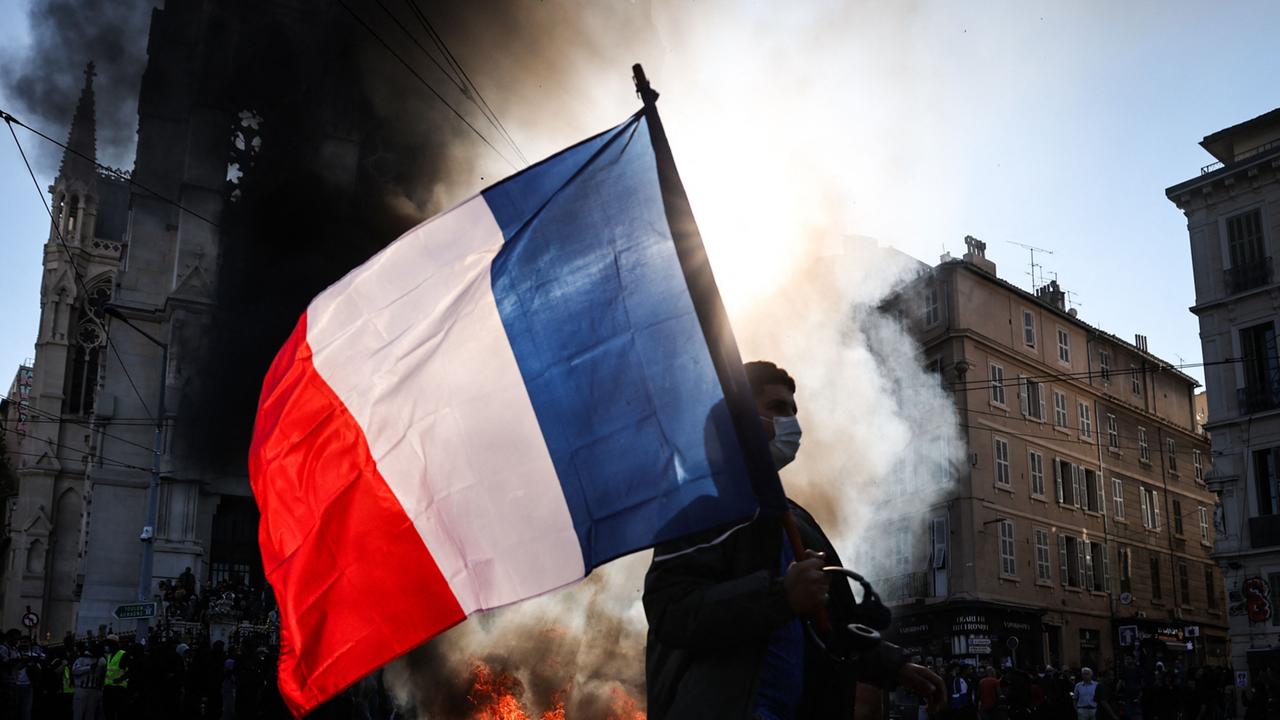
France is in shock following the weekend’s unrest. Has Macron underestimated the level of discontent in the country? Political scientist Ross discusses the allegations against the President – and what options he now has. tagesschau24: Are the weekend’s protests typical of French protest culture? Do they form part of a long history of resistance, or is this a new phase? Ross: On the one hand, they certainly form part of a long historical tradition. Even in recent history, there have been repeated outbreaks of such unrest – most recently, for example, in 2018 during the ‘Yellow Vests’ protests, in 2023 following the killing of a 17-year-old during a traffic stop, or in May this year after Paris Saint-Germain won the Champions League here in the capital. But what happened at the weekend did indeed mark a new level. If you look at the figures for the shops that were looted, the damaged symbols of the Republic – they showed the burnt-out town hall in Limoges – and also the number of law enforcement officers injured, then you can certainly say that this was an escalation in this series of events. Jacob Ross is a political scientist and works as a France expert for the German Council on Foreign Relations (DGAP). His specialism is French foreign and security policy. “These are very different groups” tagesschau24: The people who rioted and looted: How can they best be described? Ross: One must make a very clear distinction between these groups. On the one hand, there are the school pupils and university students with whom these protests began in mid-September. I believe they have raised legitimate concerns regarding the provision of facilities in their schools and within the education system. Then there is a second group on which the government, and the domestic intelligence services, are now focusing very heavily: far-left, autonomous left-wing groups that have infiltrated these school protests and are now becoming increasingly violent in city centres. And then there is a third group. These are young people, often from migrant backgrounds, from the suburbs of France’s major cities. They appear to be seizing every opportunity to infiltrate such large-scale events, then committing arson, attacking the police or looting shops. These three groups are, in fact, very different, with completely different concerns. “Accusations against the French President” tagesschau24: Let’s turn our attention to the more peaceful group for a moment. These protesters are deeply dissatisfied with many of French President Macron’s domestic policies. Is he failing to take these issues seriously enough? Ross: That is the accusation levelled at the French President. His presidency actually began with this. Very early on, at the end of 2018 with the ‘Yellow Vests’ movement, he was accused of being the face of an out-of-touch, arrogant capital-city elite that, on the whole, is largely oblivious to the problems faced by ordinary French people across the country. On Saturday, too, alongside the school pupils’ protests, there were broader, more social demands – for example, regarding the rising cost of living. And also regarding petrol prices, which have gone up. In recent years, this criticism has focused very strongly on Macron personally and on his government. However, I do not believe that this will disappear if Macron is voted out of office as president next spring. “Failed to find the right answers in many areas” tagesschau24: Has the President underestimated the depth of the discontent, as is now also evident from the outcome of the protests? Ross: I do believe that Macron and his government were once again taken by surprise by the scale of the violence at the weekend. As you’ve already mentioned, Interior Minister Laurent Nunez offered his resignation yesterday – in light of the truly serious fact that the state lost control in certain situations in several French cities, and the state’s monopoly on the use of force by police forces was no longer guaranteed. I believe that, over the course of his nearly ten-year term in office, Macron has failed to find the right answers in many areas. He now faces a record that is highly controversial, particularly in terms of domestic policy, and one that those vying to succeed him will have to deal with. “No good answer is likely to follow” tagesschau24: Let’s look at a solution to the immediate problem. What options does Macron actually have to accommodate the protesters, given that France’s public debt-to-GDP ratio stands at around 120 per cent? Ross: Yes, whatever comes next won’t be a good answer. But there is one option we can rule out with relative certainty. And that is to throw more money at these problems and demands. There is a debate as to whether the issues in education and social policy are actually down to a lack of money or whether other factors are at play. The fact is that, in education policy for example, France has repeatedly spent a great deal of money in recent years – including funds specifically earmarked for socially deprived areas. And in recent days, in the wake of the protests, it has often been schools, buildings or public libraries that have gone up in flames. I believe – and I also fear, to some extent, with a view to the upcoming presidential election – that money will no longer be the solution, and that two political projects are competing with one another, each offering voters rather ideological and very hard-line political platforms. On the far right, there is Marine Le Pen, who stands for law and order. And on the far left, there is Jean-Luc Mélenchon, who says: ‘We must move towards a sixth, new republic, which will be built to a much greater extent on immigration and on social integration.’ To achieve this…
Source: tagesschau ›
Comments (0)
No comments yet.