Germany news: Hackers release AfD party emails
Germany's far-right AfD has launched an inquiry after the release of thousands of emails following a cyberattack. Also, investors pledged billions for Germany at a major summit in Berlin. DW has more news from Germany.
Germany's far-right AfD has launched an inquiry after the release of thousands of emails following a cyberattack. Also, investors pledged billions for Germany at a major summit in Berlin. DW has more news from Germany.
This is a round-up of top stories from and about Germany on Tuesday, October 20, 2026:
Tired of missing our real-time updates? Click here to add us as a Preferred Source on Google. Then tap the "Star" or "Preferred" to keep DW News at the top of your feed.
Germany's far-right Alternative for Germany (AfD) said on Tuesday that it was looking into the theft and subsequent online publication of emails stolen by unidentified hackers during a cyberattack last month.
An AfD spokesperson said the hackers had targeted a hosting provider used by the party and appeared to have copied data from a small number of mostly inactive email accounts.
"The recent online publication of what is presumably a portion of this data is currently being investigated," the spokesperson said. "A preliminary assessment can only be provided once this investigation has been concluded."
Although the spokesperson did not say how much data was stolen, an earlier report by the mass-circulation daily Bild put the number of AfD-linked emails published at more than 420,000.
According to Bild, the material published included not only emails sent by party figures such as co-leader Alice Weidel but also bank statements, academic certificates and membership lists.
The website hosting the material was offline by Tuesday afternoon.
However, archived versions showed a volume of 281 gigabytes of data under the headline "The party's own records, unedited."
The emails and other materials published have not yet been certified as authentic by any independent body.
The AfD, several state chapters of which have been classified as "confirmed right-wing extremist" by regional branches of Germany's domestic intelligence agency, has been topping recent national opinion polls and made gains in recent state elections.
Some politicians and civil society groups have called for it to be banned, arguing that the party is a threat to democracy, an accusation the party has rejected.
While Berlin hosts a summit on investment in Germany, an increasing amount of US capital is flowing into Germany's traditional industrial firms and family-owned businesses.
As many business owners struggle to find successors, more companies are becoming acquisition targets.
Read all the details here: Why US investors are snapping up Germany's famed Mittelstand
German economic confidence — like that across the eurozone in general — deteriorated in October, according to experts at the Mannheim-based Center for European Economic Research (ZEW).
The ZEW's monthly economic confidence index fell to a three-month low on Tuesday, down to 28.1 from 34.7 in September. That is nearly two points lower than forecast.
"Private consumption and investment remain weak because of high energy prices: They put real incomes under pressure, increase production costs and keep inflation higher for longer," said ZEW President Achim Wambach.
"The German economy," added Wambach, "is slowly emerging from stagnation, but the recovery is not self-sustaining."
The biggest losers in this latest index were banks, insurers, the service sector and the telecommunications industry.
Winners were seen in the metal manufacturing and electronics industries.
ZEW compiles its monthly surveys from interviews with banking, insurance and financial industry experts and businesses on their expectations for economic and capital market developments.
The ZEW's index is considered a key indicator for Germany's economic development.
Tuesday's survey was based on interviews with 178 analysts between October 12 and 19, 2026.
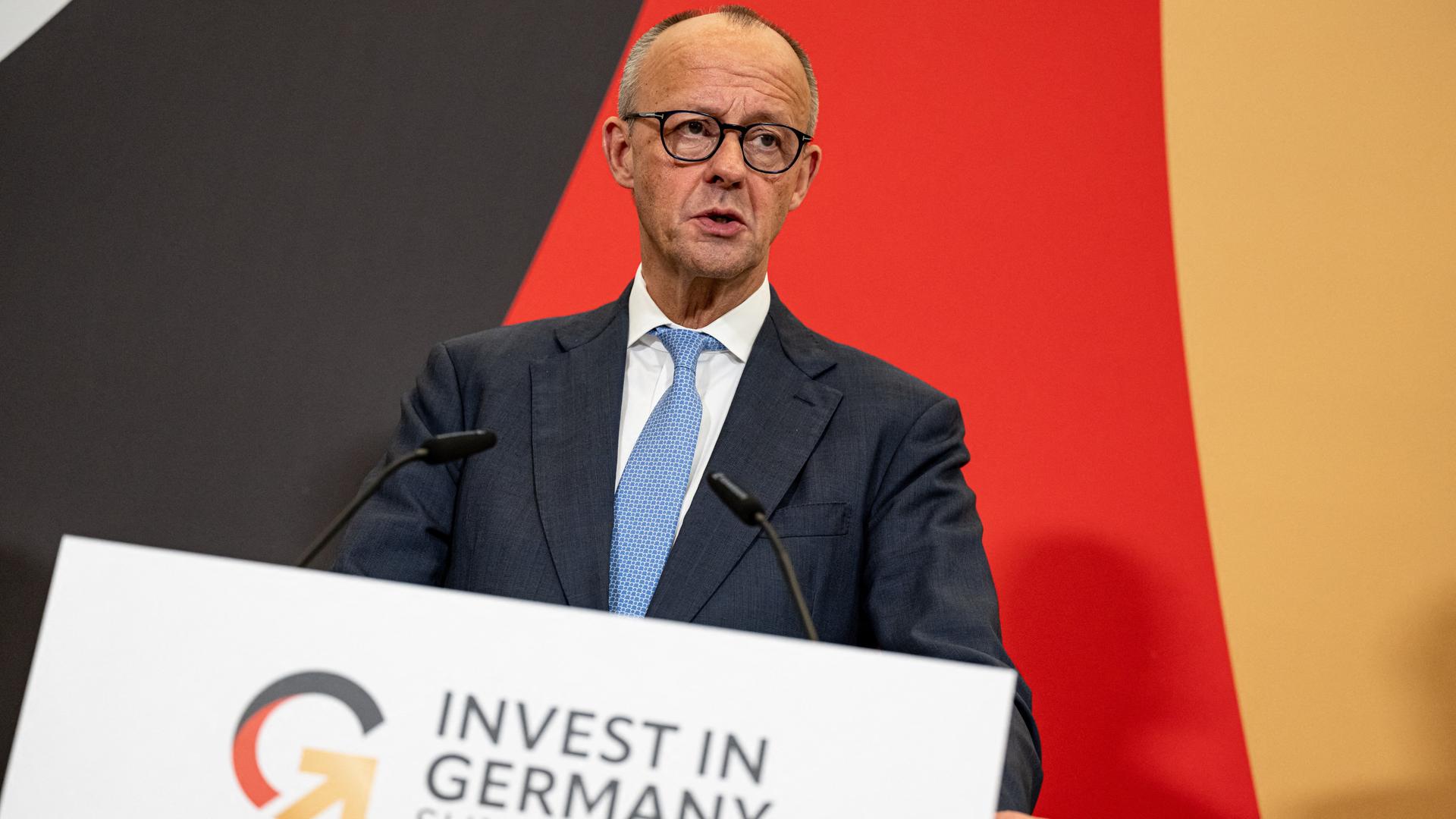
Chancellor Friedrich Merzhas indulged in an abundance of the most common cliches about his country and compatriots while trying to portray Germany as the ideal place to do business at an investment summit.
"Germans are hardworking, going to bed early, rising before dawn," he told the domestic and international guests at the Invest in Germany Summit.
"Worst traffic is in the morning between 6 and 7," he said.
"On holidays, we are first on the beach, spreading towels before breakfast. If we agree on delivery dates, we stick to it. If you invite friends from Germany for dinner at 7, we will arrive at 6:58.
"We are reliable, predictable, precise, and unsurprising," the chancellor continued. "We are, in short, what investors like most."
Finance Minister Lars Klingbeil also used blunt humor in his appeal to potential investors, saying in his speech simply: "I want your money."
Both pitches appear to have succeeded, with investment commitments worth billions made at the summit.
More than €225 billion ($252.5 billion) has so far been pledged in investments in Germany at a summit in Berlin attended by top business leaders, German Economy Minister Katherina Reiche said on Tuesday.
Reiche did not give any details about the commitments made so far, but told broadcaster Deutschlandfunk that the figure only included deals above a volume of €100 million.
Among those planning to invest in Europe's largest economy is online retail giant Amazon, which said it intended to pour some €16 billion into Germany next year for various schemes.
The company said these would include "the expansion of data centers and AI infrastructure, high-speed satellite internet through Amazon Leo, new logistics projects across the country, and a major new production slate by Prime Video."
"Germany is a hub of innovation and one of the most attractive investment opportunities in Europe," David Zapolsky, Amazon's chief global affairs and legal officer, was quoted as saying in a statement.
"That is why we have invested more than €100 billion here since 2010, and why we plan to invest an additional €16 billion in 2027. We want German businesses, communities, and creators to have the infrastructu…
Source: DW ›

Comments (0)
No comments yet.