Gustav Falke died: criticism as self-experiment
In the judgment, the standard is always the interesting thing. Gustav Falke had learned the tools of criticism by studying Hegel. At the age of 68, the philosopher and music writer died in Berlin.
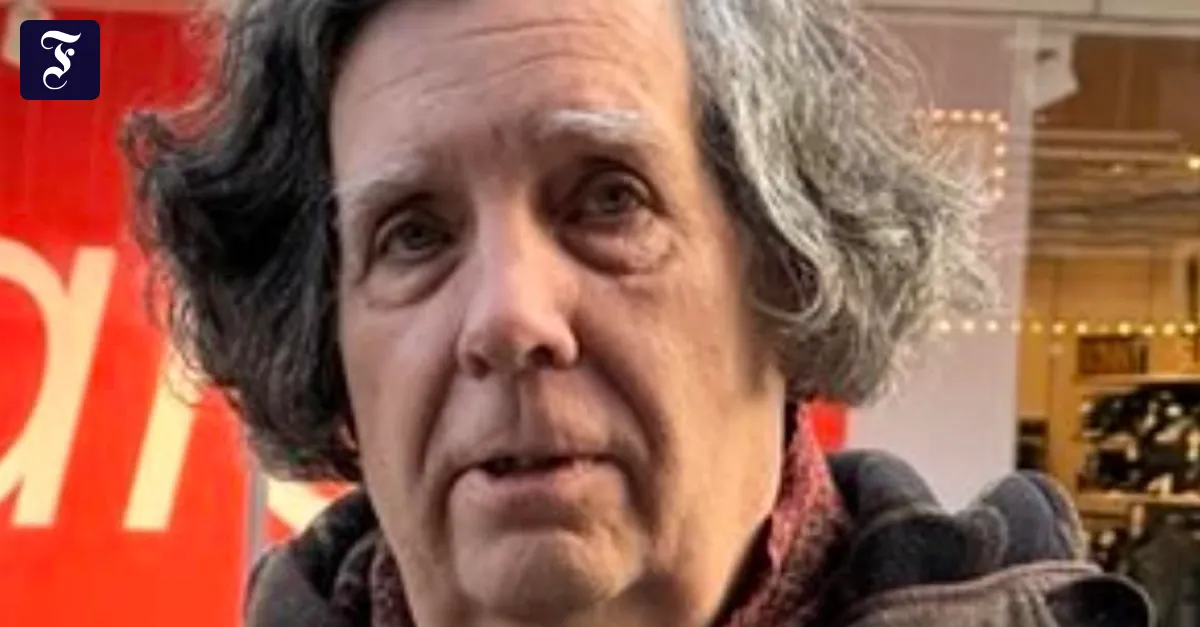
Are the Viennese the best orchestra in the world or are they the Berliners or perhaps one of London’s top sound bodies? Such information may be expected from music critics, although it is not easy to say what the audience receiving it should do with it. Nevertheless, Gustav Falke tried them out when he was able to hear the Berliner Philharmoniker, the Wiener Philharmoniker and the Philharmonia Orchestra in Berlin concerts in February 1995. The “solved, soft play” of the Viennese, “which could seem almost negligent, but it is not”, distinguished Falke from the “mystical train”, which the Berliners “produced the stepless approach of the tones, their intermingling”, and then set apart from both the style of play of the Londoners, in which “the musical figures, motifs, phrases, melodies, very sharp, almost overplastic drawn”. “In any case, to whom the comprehensibility of the figures is of the highest artistic value, who stands on the side of the former in the dispute between disegno and colore, will give the contract to the Londoners.” The critic could thus decide the contest and even mark his judgment quite sharply, almost overplastic, but only by revealing his criterion as one of the conceivable criteria. Typical of Falke’s efforts to train the formation of criteria was that he used the theory of another art for comparison. He made it clear that in this game of value, it depends on the scale and even only the scale. “Such questions are interesting only insofar as they require the explication of aesthetic norms.” In the same article, he also applied this maxim to “the controversy: Dietrich Fischer-Dieskau or Peter Schreier”. A performance of the “Beautiful Magelone” by Johannes Brahms with Daniel Barenboim on the grand piano gave him the occasion for the beautiful observation “that screamers do not need irony to save themselves from naiveté”. Each performance is a sum of decisions For two years Gustav Falke provided the position of rapporteur from Berlin concert halls in the F.A.Z. column, which Hans Heinz Stuckenschmidt had held for decades. One will find in Falke’s critiques no unspeakability topoi and no superlatives or, more precisely, no elatives, no top notes without a scale of comparison, no catching anew by the assertion that one has never heard a piece so fresh or rough. Falke had grown up in Hamburg and had experienced Günter Wand as chief conductor of the NDR Symphony Orchestra, so that in 1995 he was able to agree with Hans Zender’s verdict that Wand was the best German conductor, referring to the change in Wand’s late style. In his hometown Falke listened to German studies with Karl Robert Mandelkow, at the TU Braunschweig he received a doctorate on Hegel’s “Phenomenology of the Spirit”. His “parallel philology” was quite controversially received in Hegel research, but the usefulness of this method for the critic Falke cannot be denied. He recorded every performance as a chain and sum of formative decisions, because he compared everything that had been heard with what had been heard before. In 1996, at the Second Symphony of Brahms under Nikolaus Harnoncourt, he emphasized a leveling of the tempo differences between the movements, which contradicted both the performance tradition dating back to the premiere and popular ideas of Harnoncourt’s style. He highly praised the consequence of this homogenizing design and then raised a reservation, almost as an addendum: “Whoever conceives of criticism as a self-experiment will quickly have noticed a steady decline in concentration overwhelmed by uniformity.” After two years, Falke resigned because he did not want to submit to the maxim of the music editorial team at the time, that criticism should focus more on novelties than on the repertoire. Strategic surgery arouses discomfort Until 2010, Falke remained a permanent employee of the Feuilleton’s nonfiction department, and in this field he also practiced criticism as a self-experiment. He began his review of the book by the philosopher Martha Nussbaum on justice and the good life in 1999 with instructive questions: Reviews are always also the evaluation of a self-experiment. Where did I follow up? Where did I get into browsing? And why? Although the book is a collection of essays, it met with the same expectation as a symphony: “There must be an underlying, ultimately aesthetic, perception of inner cohesion, not even of the text, but rather of the underlying thought.” In this case, the self-experiment had caused an “unease”, a quarrel with the whole without objection to individual arguments. Falke explained his reaction with the impression that the then already world-famous author “operated strategically”, the selection of her examples and authorities from the outset by her political intention. Criticism was a social business for Falke, even if he pursued him privately, with comments on newspaper texts, which he sent on art postcards without salutation. He embarrassed the gastronomy critic of another newspaper when he asked him aloud in the restaurant at the beginning of the test dinner how such a criticism should be approached. Falke’s curiosity was not limited to texts or works of art, but also extended to the system of needs. For our column he also provided reasoning reports from the immediate and wider surroundings of his Kreuzberg apartment with a particular interest in the consequences of migration as well as glosses about the wine glass or the roast, which has to be eaten in society, although his compactness is contrary to today's taste of disintegration. All four books of Falke, about Hegel, Brahms, Bach and Mozart, are published in Berlin
Source: FAZ ›



Comments (0)
No comments yet.