Mineral Downstreaming Remains Key to Boosting Economic Performance
The mineral downstream processing programme is key to investment in Indonesia. The focus is on developing the value chain from mining to high value-added products.
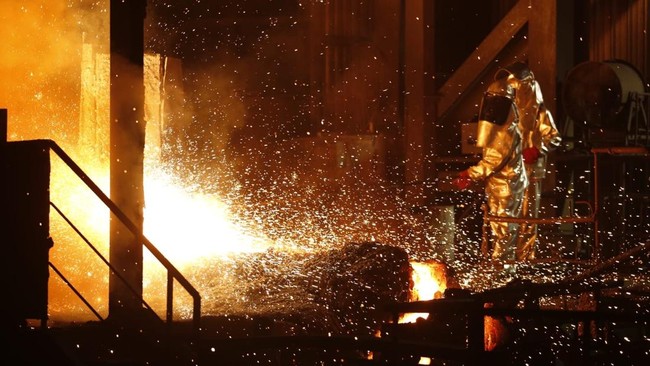
Jakarta, CNBC Indonesia – The mineral downstreaming programme is the main driver of investment and a key government strategy for building a national industrial base. The government will no longer focus on the export of raw materials, but will instead promote the development of the mineral value chain from the mining sector through to the production of high value-added products.
The Minister for Investment and Downstream Processing and Head of the Investment Coordinating Board (BKPM), Rosan Roeslani, said that downstream processing is one of the key contributors to national investment. According to him, this sector has contributed around 30 per cent of Indonesia’s total investment, with a value reaching US$61 billion – an increase of 7.2 per cent.
“We are home to some of the world’s most significant reserves of nickel, bauxite, copper and other strategic critical minerals. Our aim is to build up the industry. That is why downstream processing remains a key pillar of our economic strategy,” said Rosan in a written statement on Tuesday (20 October 2026).
Rosan explained that the direction of Indonesia’s downstream processing is now shifting from merely building mineral processing facilities towards the creation of an integrated industrial ecosystem. This ecosystem links the mining, processing, manufacturing, clean energy and technology sectors, thereby multiplying the added value derived from mineral wealth.
One example of the development of strategic mineral value chains can be seen in the steps taken by the MIND ID Group. The MIND ID Group’s downstream strategy covers a number of strategic commodities, particularly nickel, bauxite-alumina-aluminium, and copper.
This development is designed to ensure that mineral commodities do not stop at mining activities or intermediate products, but can provide greater benefits for the domestic economy. Indeed, the recycling industry has already been established as part of a commitment to supporting a circular industrial ecosystem in Indonesia.
In the nickel sector, downstream development is aimed at strengthening the national electric vehicle ecosystem. Through the Indonesia Battery Corporation (IBC), the MIND ID Group is part of the effort to build an electric vehicle battery supply chain that links Indonesia’s mineral resources with the battery and electric vehicle industries.
In addition to nickel, the value chain is also being strengthened for bauxite and aluminium. Through the development of the processing industry, the production chain is being directed from bauxite to alumina and on to aluminium, which can be utilised to support the needs of the national manufacturing industry.
Meanwhile, in the copper sector, downstream development forms part of efforts to strengthen the utilisation of strategic minerals to support various industrial sectors, ranging from electricity and electronics to manufacturing.
“There are three key areas. Firstly, electrification, ranging from mining to battery cells and electric vehicles. Indonesia is now producing battery cells at two large factories in partnership with Hyundai, CATL and IBC, our state-owned enterprise, which began operations in phases in August,” explained Rosan.
Source: CNBC Indonesia ›


Comments (0)
No comments yet.