Coalition: One foot above the abyss
The next elections are only in the spring. Can the coalition finally get calm in its government action? Or is a desperate SPD leaving?
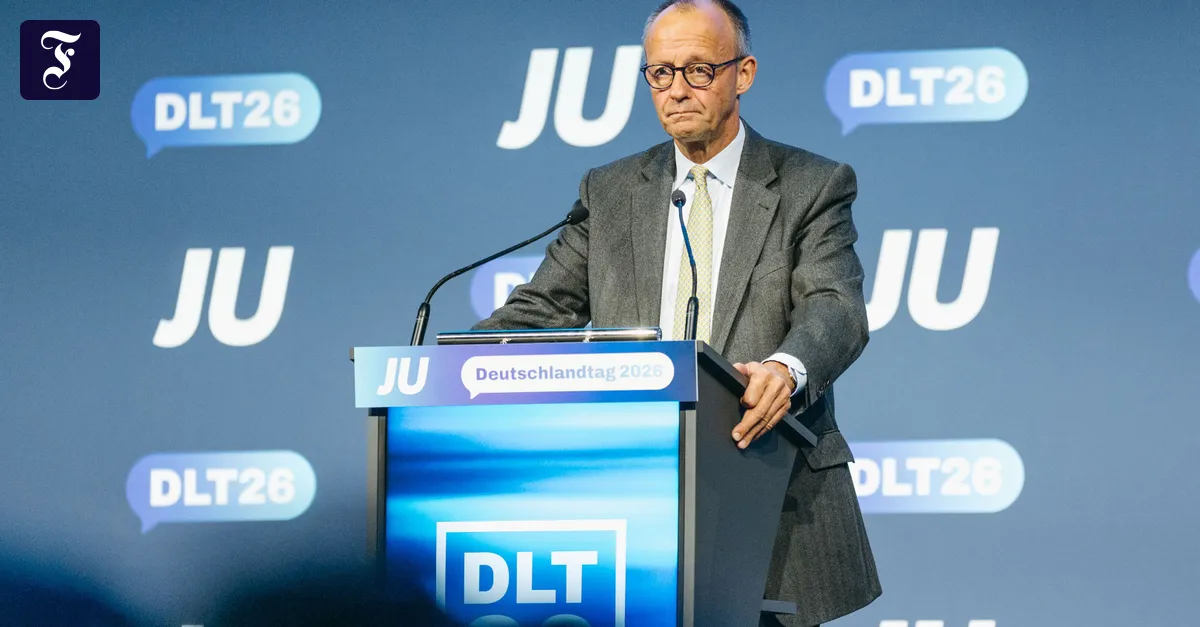
The year Helmut Kohl became Chancellor, Friedrich Merz celebrated his 27th birthday. He could see how Kohl, later celebrated as Chancellor of Unity and great European, was under fire in his first years. The Conservatives and the Party’s economic wing were disappointed that Kohl neither took a hard turn in economic and social policy nor drove away the spirits of 68 in dealing with the German past. Now that was more than four decades ago, and there are enough differences to the equally difficult start of Merz with a lot of criticism from its own ranks. In two major questions, however, the situations are similar. At that time, the CDU and CSU were already concerned that a democratically legitimized (i.e. elected) party could establish itself to the right of them. Today, that concern is a reality. And Germany was so afraid of an attack from Russia that first a social democratic and later a Christian democratic chancellor fought for the stationing of a large number of additional American intermediate-range missiles in Western Europe. Even today, the concern about an aggressive Russia determines German foreign policy. Pension is not the biggest problem for the coalition Even without hoping for 16 years of chancellorship, Merz can learn from that time. In a very demanding situation for the country, the party and his own chancellorship, he must above all prove one thing: perseverance. He seems to have. Even though he has recently made clear through occasional bumps how much he longs for a glimmer of hope, his determination to continue with this coalition remains unbroken. This is not to be underestimated in view of hitherto unimaginably poor polling figures for the Party and Chancellor, still weak economic growth, which is also debt-driven, and too low a pace of reform. The crucial problem for Friedrich Merz, however, is not even one and a half years after his election as Federal Chancellor, that he does not know whether he can rely on his troops. The main difficulty is not the content, even if one takes the most sensitive issue at the moment, pension policy. Everything comes to a head on the attractive topic of the tee-free pension after 45 contribution years. An agreement can be envisaged. Either the possibility is abolished in principle, as politically agreed in the summer, but there are broad exceptions and hardship rules. Or the possibility remains, but is considerably restricted in the practical application. As with the Bürgergeld: The name was changed, but the substantive changes remained manageable. In any case, the new Minister of Labour Alexander Schweitzer seems determined to find a way. Compared to the substantive challenges that the Union and the SPD would face if they entered into the adventure of an alliance with a radical party on the right or left, that would be a small thing. For both a cooperation of the CDU and the CSU with the AfD and an alliance of the SPD with the Left Party would – to name just one topic – call into question the foundations of German foreign and security policy. I would rather have a pension compromise. The cooperation between Merz and Klingbeil has been damaged But such factual arguments have not yet been sufficient in view of the crash of both coalition partners in elections and polls to ensure stability in the government alliance. The nervousness is too great. In the CDU, the awareness protects that any criticism, if not immediately, then indirectly, hits the Chancellor, even before too harsh attacks. The Germany Day of the Young Union at the weekend showed this. It is true that there is a lot of noise in the Union, and criticism is voiced without or with a microphone. But something that would even come close to a coup plan is not in sight. The Social Democrats seem to be a step further. In any case, some people in the Union worry that this is the case. The Chancellor’s initially good cooperation with his vice-chairman Lars Klingbeil has been damaged since Klingbeil’s attacks on the CDU in connection with the resignation of Labour Minister Bärbel Bas. To the outside world, the SPD leaders assert that they wanted to achieve success with this coalition. But whether a battered SPD chairman, driven by Merz critic Manuela Schwesig, is not pushed in the direction of an alliance with the Left Party and the Greens, now seems open. In Berlin and Mecklenburg-Western Pomerania, things are heading in this direction after the recent state elections. After all, it is now until April until the elections are re-elected. Perhaps this will provide some more lasting reassurance than before. Sometimes insight arises when the abyss is not only in sight, but one foot already hovers over it.
Source: FAZ ›


Comments (0)
No comments yet.