Labor and the Coalition are poised to take a reckless gamble on AI. Haven’t they realised community support has collapsed? | Edward Santow and Sarah Sacher
Australian workers expect the government to act to protect them from AI harms. There is a clear reform solution at handGet our new political email, free app or daily news podcastAustralia’s major political parties are edging towards rare consensus. Labor and the Coalition increasingly want to take a major bet on artificial intelligence. Yet, just as the parties are coming together, the Australian community is running the other way.Last year, only 30% of Australians believed the benefits of AI outweighed the risks. In 2026, community trust in AI appears to be falling even further. Con...
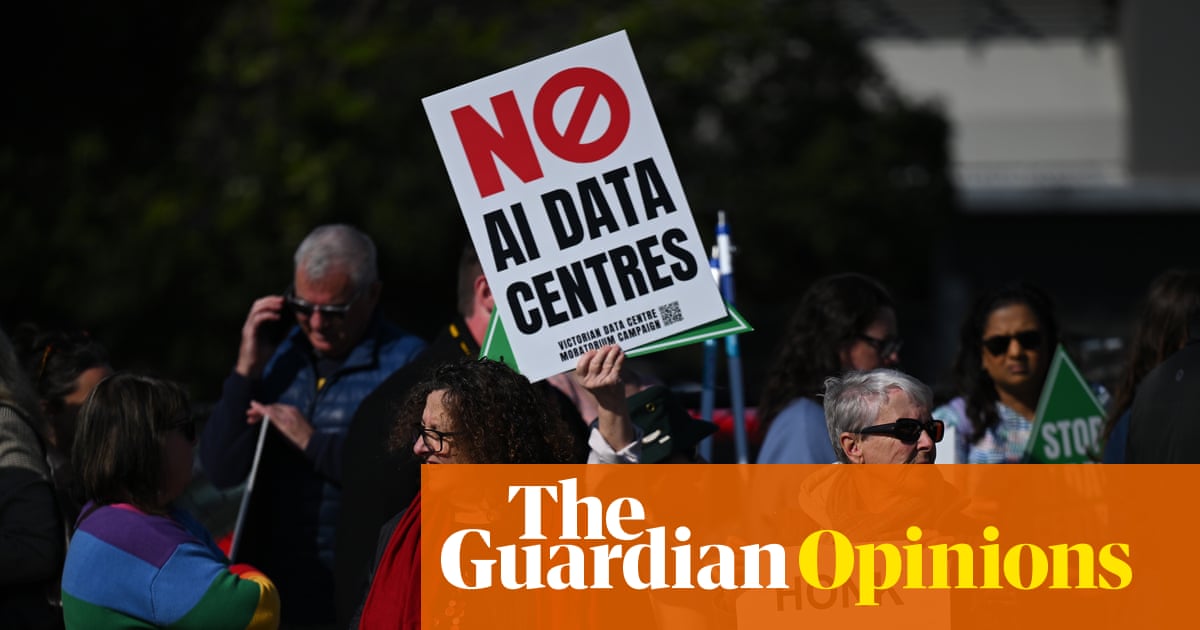
Australian workers expect the government to act to protect them from AI harms. There is a clear reform solution at hand
Get our new political email, free app or daily news podcast
Australia’s major political parties are edging towards rare consensus. Labor and the Coalition increasingly want to take a major bet on artificial intelligence. Yet, just as the parties are coming together, the Australian community is running the other way.
Last year, only 30% of Australians believed the benefits of AI outweighed the risks. In 2026, community trust in AI appears to be falling even further.
It was an unusual step for our parliament to form a joint select committee on AI. It signalled that the decisions being made now on datacentres and how we adopt AI could define our economy, environment and society for generations.
As a fresh round of hearings starts this week, the committee members must confront the gulf between the politics of AI and the stark reality on the ground. Some parts of the business sector are urging us to prioritise innovation and AI adoption, which is often another way of saying: “Do a better job of selling the upside of AI.”
Whether you’re an AI optimist or a sceptic, this is a terrible idea. Sam Altman, Dario Amodei and the other titans of Silicon Valley have a golden megaphone to spruik the benefits of their technology. Australians don’t want our elected representatives to do the same thing – especially when the technology is already bringing both opportunity and harm.
This doesn’t mean being blind to the benefits of AI. On the contrary, Australia is among the highest users per capita of Anthropic’s Claude and other generative AI applications. But we must also be clear-eyed about potential risks. And, crucially, we don’t see a compelling response to our concerns from government or the AI companies themselves.
Take the impact of AI on work. Our community is asking practical questions. How will AI impact our jobs, and the jobs of our children? What is the government doing to ensure the AI systems used in Australian workplaces are safe?
Our new report, Drawing the Line, lays out how AI is propelling the rise of harmful tech-enabled worker surveillance. Often workers are unaware of the extent to which they are being monitored – including through their work devices and phones, and via software such as Microsoft Teams.
Unlike some of the hypothetical (and frankly terrifying) risks that the joint select committee on AI has already covered, such as AI-enabled biological weapons and engineered pandemics, this is happening today.
Australian supermarket workers are already being pushed to meet AI-generated productivity metrics that force them to work harder and faster under the threat of punitive repercussions – putting them at risk of injury and workplace accidents.
Remote workers are already being subjected to intrusive surveillance software capable of watching everything they do on their screen – including audio recording conversations they have with their families.
Rideshare drivers are already being penalised for road conditions and customer complaints that are unrelated to their performance, which can result in their account being deactivated and days of work lost.
Workers are being quietly crushed by commonplace AI-powered surveillance tools that have crept into our workplaces and home offices. And the impact is real. Think, for example, of the young woman who reported being sexually harassed by a boss that required her to be on video at all times. Or warehouse workers driven to suicidal ideation due to relentless micromanagement by machine.
Our workplace laws don’t protect workers from unreasonable surveillance. Nor do they give employers clarity about what types of monitoring are lawful.
Unlike existential risks from AI, which are outside the Australian government’s direct control, this problem could be addressed through straightforward law reform.
We urge the government to update the Fair Work Act to require any worker monitoring be “fair and reasonable”. This builds on the government’s commitment to require all personal information covered by the Privacy Act to be handled fairly and reasonably.
Australian workers expect the government to act to protect them from AI harms. There is a clear reform solution at hand. This is not a hypothetical future risk – let’s address it now.
Source: The Guardian ›


Comments (0)
No comments yet.