New EU strategy: A separate plan for the Arctic
What is happening in the Arctic climatically, economically and militarily is of enormous importance for Europe - the EU now wants to follow up with action. Today she wants to present a strategy for the region. By T. Spickhofen.
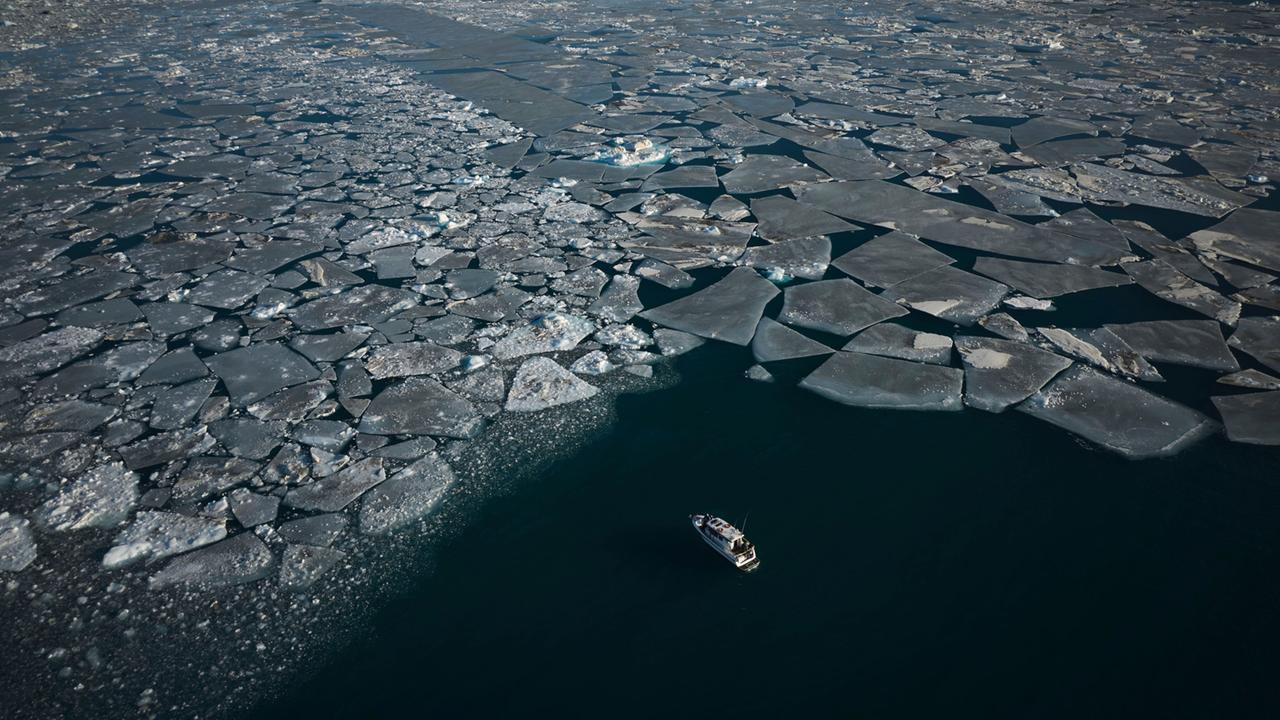
What is happening in the Arctic climatically, economically and militarily is of enormous importance for Europe - the EU now wants to follow up with action. Today she wants to present a strategy for the region. The High North and little attention: "This is over," promises Chancellor Friedrich Merz. At the Arctic summit a few weeks ago in Lapland, the German head of government speaks of the “now most critical” area of Europe. Because the Arctic has now become the scene of a geopolitical showdown. The ice around the North Pole is melting, and the region is rapidly gaining in importance. Soon, in the coming decade, the existing sea routes will be more usable and new trade routes will emerge. Raw materials in the Arctic are also becoming more accessible, for example the suspected large deposits of crude oil and natural gas, and metallic substances such as iron, copper and nickel can also be found here. Especially under Greenlandic soil are so-called rare earths, which are important for future technologies and the European energy transition. What is happening here, EU Council President Antonio Costa explains at the same summit, "this is not just a regional matter, but one for the whole of Europe". However, the region is gaining in importance not only economically, but also militarily. The US, now in agreement with Denmark, wants to expand its presence on Greenland. Russia restarts old Soviet military installations in the Arctic. The Russian aggression is not only taking place in Ukraine, but also in the Arctic, says the German Chancellor: This region has become a geopolitical hotspot. Russia is building military capacity here, and it is using its presence for hybrid activities – every day. And the Arctic can also play an important role for the digital future of the old continent. 90% of data traffic between Europe and Asia is currently via cable in the Red Sea. "This is error-prone and not very redundant," explains Annegret Bendiek from the Stiftung Wissenschaft und Politik. Therefore, it is obvious to put alternatives in the Arctic. This would reduce the latency in data transfer, which is of great importance for stock market trading, for example. And with a new infrastructure in the far north, goals of sustainability, infrastructure and security could also be made possible in the European interest. So this could also be a model for a partnership approach in times when international cooperation is under heavy pressure, says Bendiek. 'The EU, of course, plays an increasingly important role in transarctic cable connections, especially because it can combine these different objectives from research to infrastructure balancing, security policy to climate protection and also underpin this financially.' In addition to the possibilities of strengthening European interests and European influence, the scientist sees the opportunity of an EU Arctic strategy above all in "ensuring stability in the Arctic" in view of changes in the Gulf Stream and associated climatic challenges. This applies to all states in the northern hemisphere. “The risk of a collapse of the Gulf Stream system is now so acute,” warns Bendiek, “that Iceland has officially classified it as a national security threat.” A better digital infrastructure in the Arctic would also enable "a stronger early warning possibility for all coastal states," explains Bendiek, and that would also help Europe at heart. "Europe's northern neighbourhood", the EU calls its Arctic strategy. Five years ago, the EU gave itself a first kind of Arctic strategy with a 20-page paper. The focus was on economic and climate policy aspects, research and development. This strategy has now been revised in the light of the rapidly changing geopolitical situation.
Source: tagesschau ›




Comments (0)
No comments yet.