Just how dangerous is the carbon monoxide shrouding Indonesia’s skies?
NASA satellite imagery shows high concentrations of carbon monoxide in Indonesia’s atmosphere, which could potentially cause poisoning. Find out about the risks and symptoms.
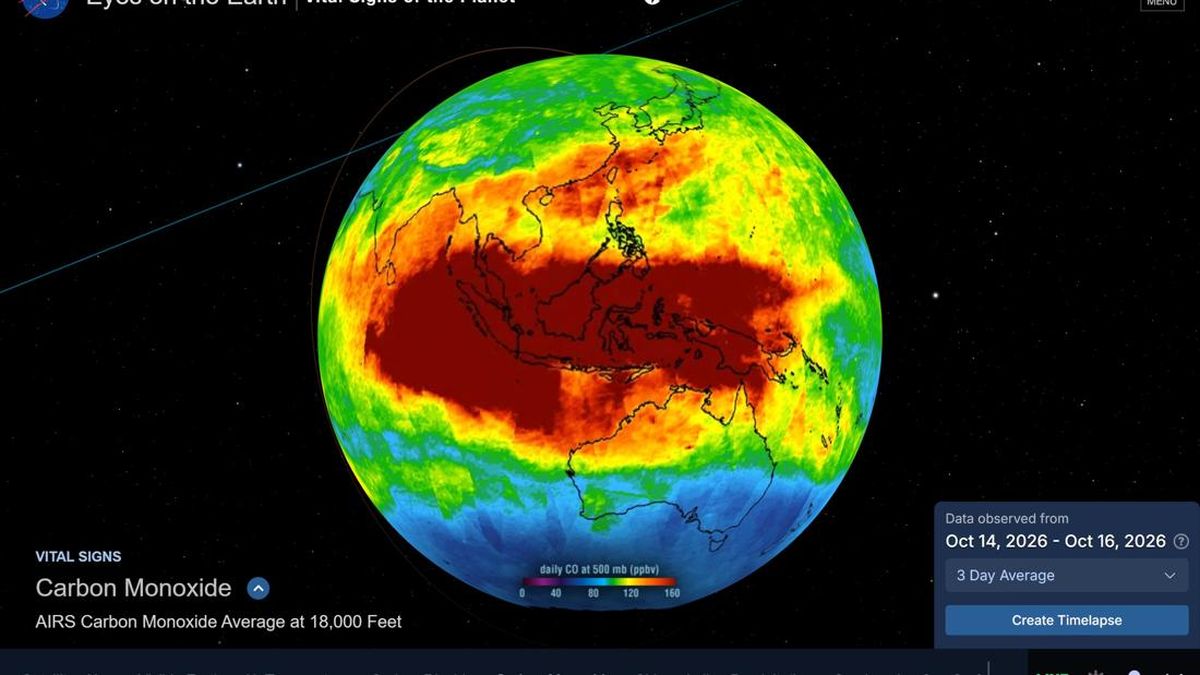
NASA satellite imagery shows high concentrations of carbon monoxide (CO) in Indonesia’s atmosphere. This colourless, odourless gas is known to interfere with the supply of oxygen to the body’s organs, potentially leading to fatal poisoning.
The NASA data shows concentrations at an altitude of around 5,500 metres, which is not yet sufficient to determine the risk of poisoning to the public.
According to CNNIndonesia.com’s monitoring on Friday (16 October), the map on NASA’s Eyes on the Earth platform shows a deep red colour dominating the atmosphere above Indonesia, from Sumatra to Papua.
This colour indicates that CO concentrations are at the upper end of the mapping scale. These high concentrations of CO in Indonesia’s atmosphere have been detected since early October.
The spread of this gas is believed to be linked to forest and land fires (karhutla). NASA cites forest fires as one source of CO, alongside motor vehicles, volcanoes, and the incomplete combustion of wood and fossil fuels.
So, how does carbon monoxide harm the body?
According to the Ministry of Health’s website, inhaled CO can bind to haemoglobin, the protein in red blood cells that carries oxygen. This bond forms carboxyhaemoglobin, or COHb.
The formation of COHb impairs the blood’s ability to transport oxygen. Consequently, the body’s tissues may experience a lack of oxygen, or hypoxia.
Similarly, the Food and Drug Supervisory Agency (BPOM) explains on its official website that haemoglobin forms a stronger bond with carbon monoxide than with oxygen. This condition can disrupt the function of organs that require large amounts of oxygen, particularly the brain and heart.
The Ministry of Health also states that exposure to CO can exacerbate a lack of oxygen supply to the heart muscle, particularly in people with a history of coronary heart disease.
The danger of this gas is difficult to recognise as its presence cannot be detected by colour or smell. The BPOM refers to carbon monoxide as a ‘silent killer’.
The symptoms of poisoning can also resemble those of other illnesses, such as headaches, nausea, vomiting and fatigue. Exposure to this gas can also cause dizziness and shortness of breath.
In more severe cases of poisoning, victims may experience confusion, visual disturbances, loss of coordination, and even a loss of consciousness. These conditions can progress to seizures, coma and death.
The risk of carbon monoxide exposure can also arise indoors. The Ministry of Health cites gas cookers, kerosene-fuelled heaters, and leaking stoves or flues as sources of CO in the home.
The Indonesian Food and Drug Authority (BPOM) has also highlighted the danger of vehicle exhaust fumes entering the passenger compartment due to leaks and inadequate ventilation. A vehicle’s engine running in a closed garage can also be a source of poisoning.
If poisoning is suspected, the BPOM states that first aid involves moving the victim away from the source of CO and administering pure oxygen. Medical personnel must attend to the patient immediately, whilst ensuring the safety of those providing assistance.
Source: CNN Indonesia ›




Comments (0)
No comments yet.