How France and Italy react to the riots
Curfews, anti-terrorist soldiers, new decrees: France and Italy have responded to the riots over the weekend. This should prevent unrest in the future.
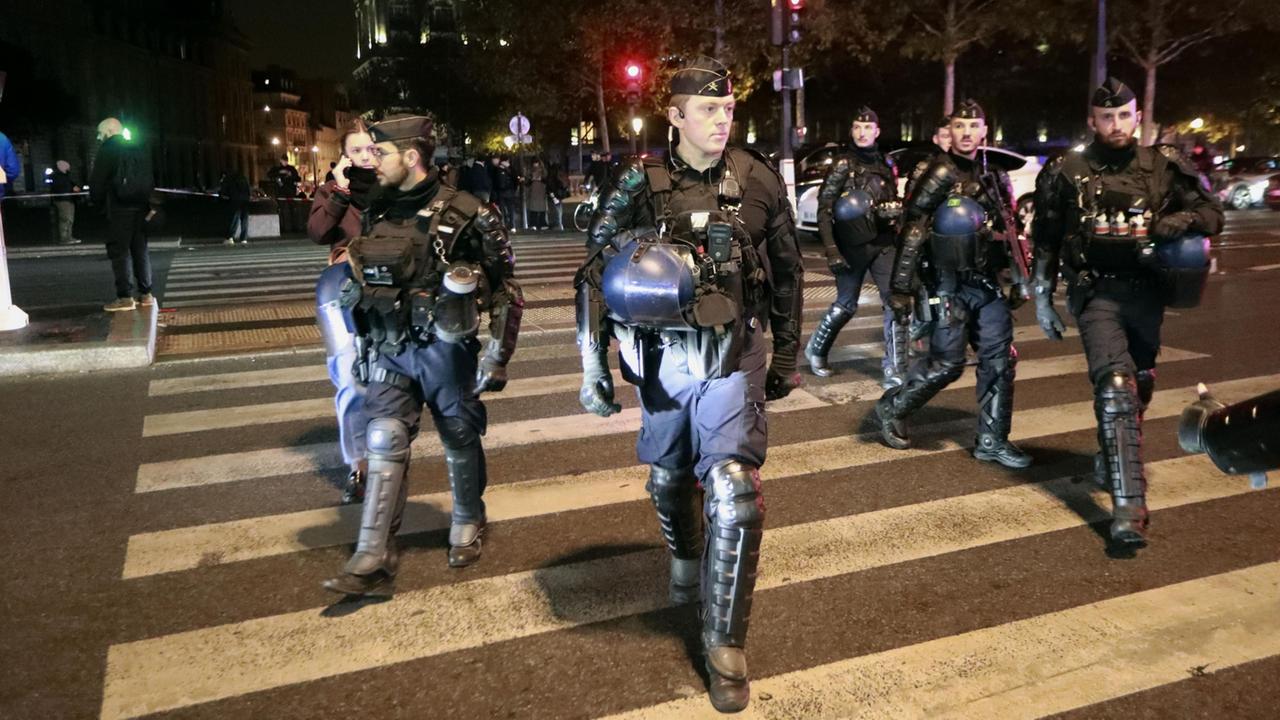
Curfews, anti-terrorist soldiers, new decrees: France and Italy have responded to the riots over the weekend. This should prevent unrest in the future. In France and Italy, protests at the weekend, including against the high cost of living, were overshadowed by heavy riots and looting. This also sparked a debate about whether the security forces could have been better prepared. Both countries have now responded with strict measures to control the situation. In France, protests are also announced for the coming weekend. France: Prohibitions, anti-terrorist unit, bans On Saturday there will be protests again in France. French Prime Minister Sébastien Lecornu announced a large number of security forces. The police operation will be "massive", he said. Lecornu did not name the betting numbers. Soldiers from the Sentinelle counterterrorism unit, who have been patrolling French cities since the IS attacks in Paris and the northern suburb of Saint-Denis, should also guard sensitive places. In this way, more police and gendarmes could be used to control the demonstrations, said Interior Minister Laurent Nuñez. In the French Parliament, MEPs also agreed to set up a commission of inquiry. It should investigate how the unrest and riots occurred last weekend. It shall also examine the measures taken to maintain public order. According to research by the newspaper Le Monde, too few security forces were deployed, which led to some quarters remaining unprotected and increased use of weapons. In the four major cities of Paris, Marseille, Lyon and Bordeaux, the police fired more than 19,000 tear gas and stun grenades. The night curfews in Paris and several other cities were also extended. In Paris, the restrictions apply from Tuesday 23:00 to Wednesday 06:00 around the Place de la République and for the shopping district Les Halles, police said. Similar measures have been imposed in other large cities. In central Lyon, a curfew applies until Wednesday morning, in Marseilles, a night ban for minors was imposed until Friday. In Paris, unregistered meetings were also banned in certain districts from Tuesday evening to Wednesday morning. According to police, rallies are prohibited in the Champs-Elysées, in front of the Paris train stations, in several central squares as well as around the presidential palace, the seat of government, the parliament and the interior ministry. Several metro stations will be closed from 22:00. At the weekend, there were massive riots in several cities in France on the sidelines of demonstrations against high costs of living and maladministration in the education system. Thousands of shops were looted, town halls and police stations attacked and several buildings and cars set on fire. The government attributes the violence primarily to left-wing extremists. In the central French city of Limoges, the historic town hall burned down almost completely. The authorities have now arrested a suspect. In response to the riots, night curfews were already imposed in several major cities on Monday. Further protests are announced for Saturday. Italy: Soldiers, policemen, curfews In France’s neighbour Italy, there were also violent riots on the sidelines of protests at the weekend. After the riots, the government now sends 500 more soldiers to Milan - initially for three months. Prime Minister Giorgia Meloni issued a decree following a crisis meeting of her cabinet. The soldiers are to prevent further riots in Milan's city center. In Italy, the military mission "Strade sicure" ("Secure Roads") has been running since 2008, in which soldiers support the regular police forces in the surveillance of conurbations and endangered properties. This will now be increased in Milan. In addition, alleged rioters should be detained by the police in the future longer. For acts committed by five or more people, the penalties are to be increased - up to five years imprisonment and fines up to 15,000 euros. There is also talk of curfews in certain areas of the inner cities. Meloni had announced a hard move after the riots in Milan, but also in various other cities. In Milan, there were serious riots at the weekend after initially peaceful protests against high costs of living and various legal plans of the government. In the cathedral square and its surroundings, mostly black-clad and masked young people beat windows, plundered shops and supermarkets. In total, there were more than about 270 temporary arrests, mostly aimed at minors. Five young people were arrested. According to official figures, at least 14 security forces were injured in Milan. The public prosecutor's office there spoke of a degree of "rare violence". There was no precise information on the number of injured demonstrators. The damage is estimated to be in the millions.
Source: tagesschau ›

Comments (0)
No comments yet.