Is Europe’s largest steel plant finally on the verge of being shut down?
Taranto lived for a long time from the largest steel plant in Italy - and with its pollution. A judgment could become a turning point. While workers struggle for their jobs, residents demand closure. by Verena Schaltener.
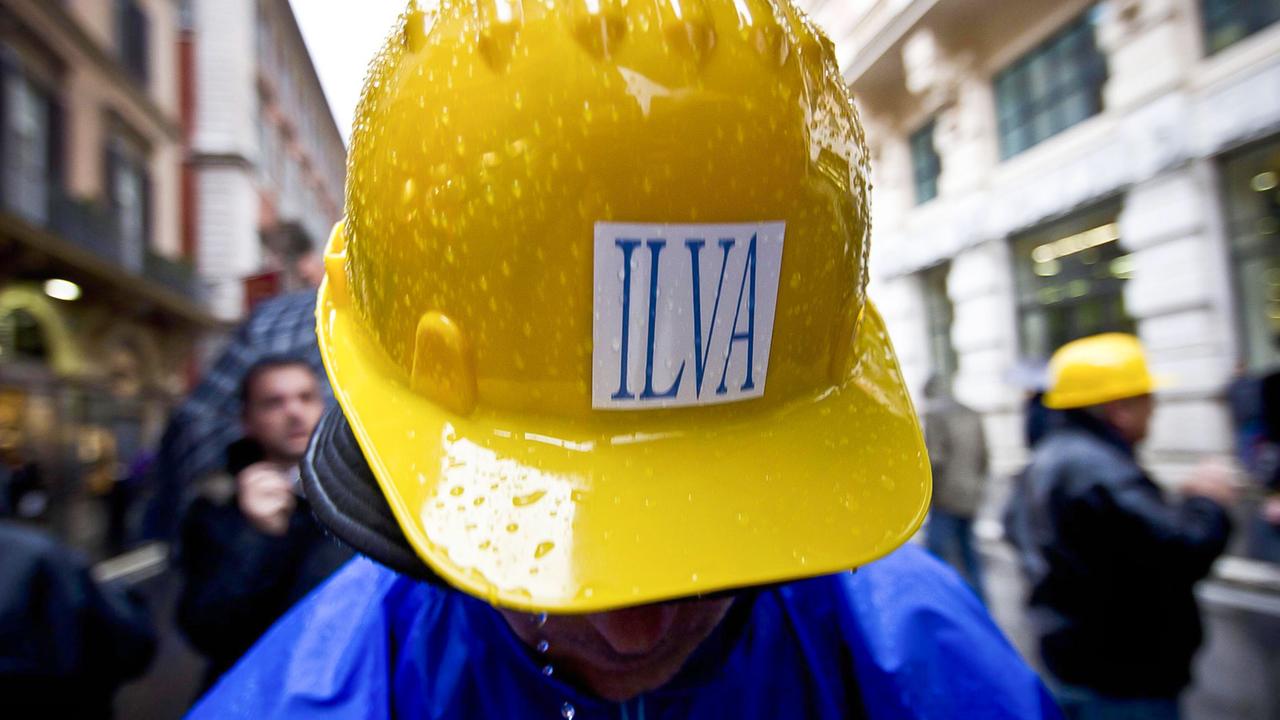
Taranto lived for a long time from the largest steel plant in Italy - and with its pollution. A judgment could become a turning point. While workers struggle for their jobs, residents demand closure. By Verena Schaltener It is quiet on the streets of Tamburi. The district in the north of Taranto was once a classic working-class district. Thousands of families lived here, right next to the huge steelworks known for decades as Ilva. The proximity to the factory, once an advantage, is today the big problem of the district. Giuseppe Roberto was also born here, but moved away years ago. For almost three decades he worked at the steel plant Taranto. Today he wants the work to be closed. Roberto understands the employees who are currently struggling for their jobs. Taranto, he says, has been divided for decades: “It’s always said: on one side are those who demand health and safety – on the other, those who think about the jobs.” Both demands are legitimate. From hopeful to environmental problem The steelworks was built in the 1960s and was long considered a symbol of hope. It should create jobs and prevent people from leaving the region and emigrating to the north as migrant workers. “In the 70s and 80s everything seemed good at first,” recalls Roberto. At that time, Ilva and the numerous suppliers had given tens of thousands of people jobs. “But at that time, the effects of pollution were not yet known.” Over the years, that changed. Research has documented significant health burdens in Taranto. In its 2019 judgment, the European Court of Human Rights referred, among other things, to studies that found a connection between the exposure to pollutants from the steelworks and lung and ribskin cancer and cardiovascular diseases. Further investigation linked industrial exposure to particulate matter and sulphur dioxide to increased mortality from, among others, cancer and cardiovascular and kidney disease. In 2019, the European Court of Human Rights ruled that Italy had not sufficiently protected the population from the health consequences of emissions. Despite scandals, legal proceedings and multiple changes of ownership, steel production continued in Taranto. Because not only the economic future of thousands of families depends on the work. The location is also of great importance for Italy’s steel supply. This is the other side of the conflict, which is now again visible in front of the factory gates. Workers have blocked roads and demonstrated in recent days. They are demanding clarity from the government in Rome about how the plant and its workplaces will continue. One of them is Oronzo Spagnolo. “Closing this plant would drive an entire region into collapse: Taranto, the province, Puglia,” he says. “And the Italian steel industry would also feel the consequences.” The concerns are specific: the special administrators of Acciaierie d'Italia have now applied for short-time work for up to 8,622 employees. Court orders stopping the hot area Now the decades-long conflict could reach a crucial point. At the end of July, the Court of Appeal in Milan ordered production to cease in the so-called "area a caldo". This includes the hot area of the plant - the heart of the previous steel production with coke plant and blast furnaces. The judges put the right to health above economic interests. Several attempts by the companies to temporarily suspend the order failed. Ilva and the operating company Acciaierie d'Italia, both under special administration, have appealed. Today, the Court of Cassation, Italy’s highest judicial authority, deals with the case. Away from coal That it can not continue as before, say now also many employees and trade unionists. Spagnolo calls for a fundamental transformation: "We no longer want to work with a coal-based production cycle." Instead of blast furnaces and coal, a more climate-friendly steel production with electric furnaces and directly reduced iron should offer prospects in the future. The Italian government is also focusing on decarbonisation and new industrial projects and wants to preserve domestic steel production at the same time. But the conversion is expensive - and the search for a long-term industrial solution drags on. A future without steel? At the same time, resistance to any further steel production is growing in Taranto. Only on Friday, hundreds of people took to the streets again under the motto "Taranto torna a vivere" - Taranto returns to life. Citizens' initiatives are calling for the closure of the plant and a comprehensive renovation of the site, which has been contaminated for decades. Their vision of the future of Tarents looks different: New jobs are to be created in areas such as research and education, renewable energies, agriculture and the marine economy.
Source: tagesschau ›




Comments (0)
No comments yet.