Prabowo and Gibran’s Two-Year Pledge to Achieve Food Self-Sufficiency
The Prabowo and Gibran administration is prioritising food self-sufficiency by increasing production, purchasing farmers’ produce and strengthening national food reserves.
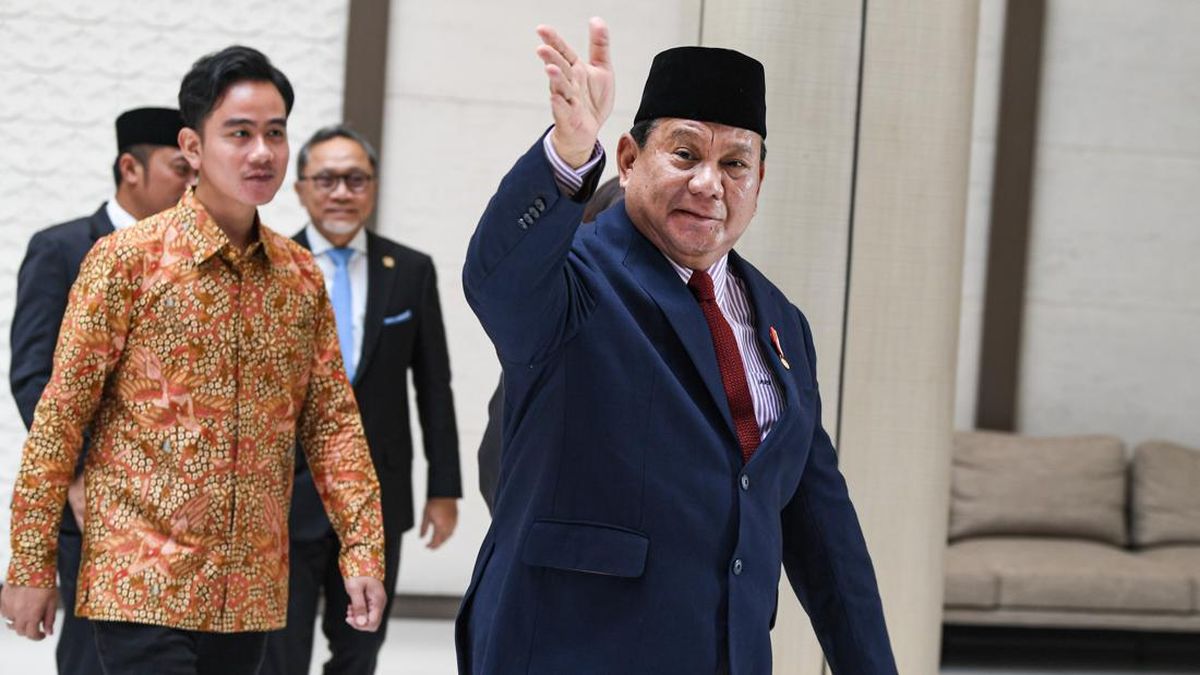
The administration of President Prabowo Subianto and Vice-President Gibran Rakabuming Raka has made food self-sufficiency one of the top priorities on the national development agenda.
Over the past two years in office, this strategy has been implemented through measures such as increasing domestic production, purchasing farmers’ harvests, strengthening government food reserves, and developing high-yielding seeds.
In practice, state-owned food enterprises (SOEs) such as Perum Bulog, PT Sang Hyang Seri (SHS) and ID FOOD have been tasked with strengthening the national food supply chain.
Perum Bulog’s Director-General, Ahmad Rizal Ramdhani, stated that the company continues to strengthen its role in safeguarding food security, particularly through the procurement of domestic farmers’ produce, the bolstering of the Government Food Reserve (CPP), and the stabilisation of food supply and prices.
“In line with the Government’s policy direction to achieve food self-sufficiency, Perum Bulog continues to strengthen its role as a strategic instrument of the state in safeguarding national food security, specifically through optimising the procurement of domestic farmers’ produce, strengthening the Government Food Reserve, and stabilising the supply and prices of food for the public,” Ahmad told CNNIndonesia.com on Tuesday (13 October).
One of the measures taken is to increase the direct procurement of paddy and rice from farmers, strengthen synergies with local governments and stakeholders, and enhance storage capacity and stock management.
Bulog recorded the procurement of rice equivalent to 3.19 million tonnes throughout 2025. Meanwhile, as of 11 October 2026, domestic procurement of paddy and rice reached 4.13 million tonnes of rice equivalent, or 103.29 per cent of the 4 million tonne target. This marks the highest procurement figure in Bulog’s history, surpassing the previous record set in 2012 of 3.65 million tonnes.
“This achievement not only exceeds the set target but also represents the highest procurement figure in Bulog’s history,” he said.
According to Ahmad, this procurement achievement should also be viewed in terms of market certainty for farmers. The government, through Bulog, is endeavouring to ensure that farmers’ harvests are purchased at a fair price, including through the purchase of Dry Harvested Paddy (GKP) in accordance with the Government Purchase Price (HPP) of Rp6,500 per kilogram.
“The principle we uphold is to ensure that farmers’ produce is guaranteed to be purchased at a fair price, thereby supporting the sustainability of farming businesses and maintaining farmers’ enthusiasm to continue producing,” he said.
In addition to purchasing the harvest, Bulog distributes rice through the Food Supply and Price Stabilisation Programme (SPHP) and food aid schemes. The distribution of 828,000 tonnes of SPHP rice for the March–September 2026 allocation is reported to have reached 100 per cent of the assigned quota.
As for food aid, by the end of September 2026, this had reached approximately 1.63 million tonnes. This distribution comprised around 662,860 tonnes in February–March and 997,000 tonnes in July–September, targeting approximately 33.24 million beneficiaries.
Looking ahead, Bulog also plans to expand its role beyond rice. Ahmad stated that strengthening the food ecosystem would include the procurement of domestically produced maize and the management of government maize reserves to maintain a balance between the interests of farmers and poultry farmers. Other commodities, such as soya beans, also have the potential to be included in development initiatives in line with government policy.
“Bulog recognises that achieving food self-sufficiency requires collaborative efforts across the entire ecosystem, ranging from increasing production and post-harvest handling to ensuring market access,” said Ahmad.
He added that strengthening post-harvest infrastructure, modernising warehouses, improving logistics and distribution, and digitalisation are all part of the efforts to strengthen food security. Bulog is also developing partnerships with farmers, farmers’ groups, cooperatives and food business operators.
In addition to the procurement of harvests, efforts to achieve food self-sufficiency also depend on the availability of high-quality seeds. The Managing Director of PT Sang Hyang Seri, Adhi Cahyono Nugroho, said the company is refocusing on its core business of food crop seed production to support increased agricultural productivity.
“As the only state-owned enterprise with a core business in food crop seed production, PT Sang Hyang Seri is at the forefront of supporting the ‘Asta Cita’ food self-sufficiency programme,” Adhi told CNNIndonesia.com on Wednesday (14 October).
SHS owns 3,162 hectares of rice fields in Sukamandi, Subang, West Java. This area serves as a national seed production centre, primarily for producing foundation seed which is subsequently developed through seed multiplication processes to meet farmers’ needs.
Over the past two years, SHS has distributed 25,000 tonnes of certified rice seeds through a Ministry of Agriculture programme. This quantity is estimated to cover the seed requirements for approximately 1 million hectares of land.
The company aims to increase the distribution of certified seeds to 60,000 tonnes by 2027, which is equivalent to the seed requirements for nearly 2.5 million hectares of land.
“Our target is for every farmer in Indonesia to use certified seeds,” said Adhi.
According to him, the use of certified seeds is a key factor in supporting productivity whilst enhancing crop resilience to environmental conditions. SHS has developed a number of varieties, including INPAGO 3 SHS, which is designed to adapt to dry climate stress conditions.
The company has also established collaborations with a number of universities to develop high-yielding varieties. Together with Gadjah Mada University (UGM), SHS is collaborating on the development of Gamagora 7 as well as a number of varieties currently being prepared for the next phase. Collaborations are also underway with Jenderal Soedirman University and the Bogor Agricultural University.
Together with UGM, SHS is developing the Sri Genjah variety, which is intended to have…
Source: CNN Indonesia ›

Comments (0)
No comments yet.