50 years of Loriots Steinlaus: she eats everything short and small
Fifty years ago Loriot discovered the stone lice, the “smallest rodent of our homeland”. Anyone who still asks why Germany’s bridges are all dilapidated, misunderstands the colossal devotion of Petrophaga lorioti.
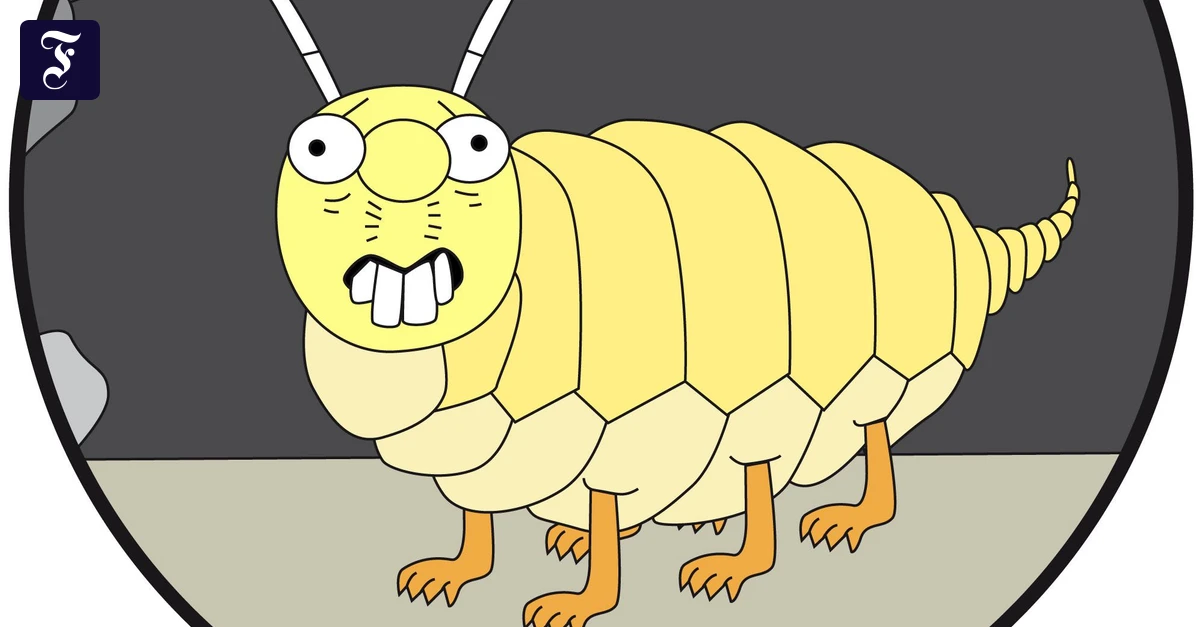
Anyone who is once again stuck in the renovation backlog with his car, bus or train, tormented day in and day out through construction sites over dilapidated bridges or through the tired rail network, may take comfort with this idea: Wouldn’t everything be easier to bear, wouldn’t the infrastructure misery be due to decades of failures in maintenance, the increase in heavy goods traffic, the political bumbling and displacement that now plunges us all into investment holes of billions? The whole thing could be interpreted with gallows humor as the result of a most successful renaturation – or by those who do not want to be in a better mood – as a jokingly recited dark prophecy that has come true. Fifty years ago, there was a zoological sensation on public television. At that time, an elderly gentleman with glasses in front of the dim eyes brought an extinct wild animal into the television studio that had never seen the light of day. 28 kilograms of stone per day The gentleman looked like Bernhard Grzimek, who came to world fame with "Serengeti must not die", retired director of the Frankfurt Zoo; The studio looked like the setting of his more than a hundred times broadcast program “A place for animals”. But instead of letting a chimpanzee, cheetah or serval wander around as usual, telling about the way of life of endangered species—or, for a change, a robber gun from a circus in occupied France—the gentleman, who was actually Loriot in one of his best skits, pointed to a pile of soon-to-be dismantled concrete and bricks. Only a cartoonistic view through the microscope revealed what was hidden in it: the stone lice, the “smallest rodent of our homeland”. The “possier” guy, taxonomically a cross between insect, arachnid and mammal, had expelled “excessive hygiene” and the “reckless use of spray bottles” from German cities – and all this only because a male exterminates 28 kilograms of stone per day, the “pregnant female” the double and the tiny iron carriers did not disdain. It could well have happened “that a building on the whole gave way,” Loriot-Grzimek informed about one-players of collapsed or laid-down buildings, which could still awaken war and post-war memories in the mid-seventies. What was then cast in steel and prestressed concrete is now crumbling away among us, unfortunately parallel to quite a lot of what once seemed stable. The stone louse, whose supposedly last specimens were Loriot from 20 meters deep – there are now actually zoos with stone louse enclosures and lexicon entries about the invented animal – seems to eat through cheerfully; As if many spectators at that time had taken to heart the suggestion of Loriot’s grzimek that stone lice could also be kept as pets. Who wanted to complain about the return of the wolf or invasive species like the Chinese hornet? The stone louse has probably not yet satisfied "its grossest appetite".
Source: FAZ ›




Comments (0)
No comments yet.