Alberta is holding a vote on a possible secession from Canada
For several years now, a separatist movement has been gaining momentum in the oil-rich province of Alberta in western Canada – a movement also supported by US President Trump. A vote on a possible independence referendum is taking place today. By Martin Ganslmeier.
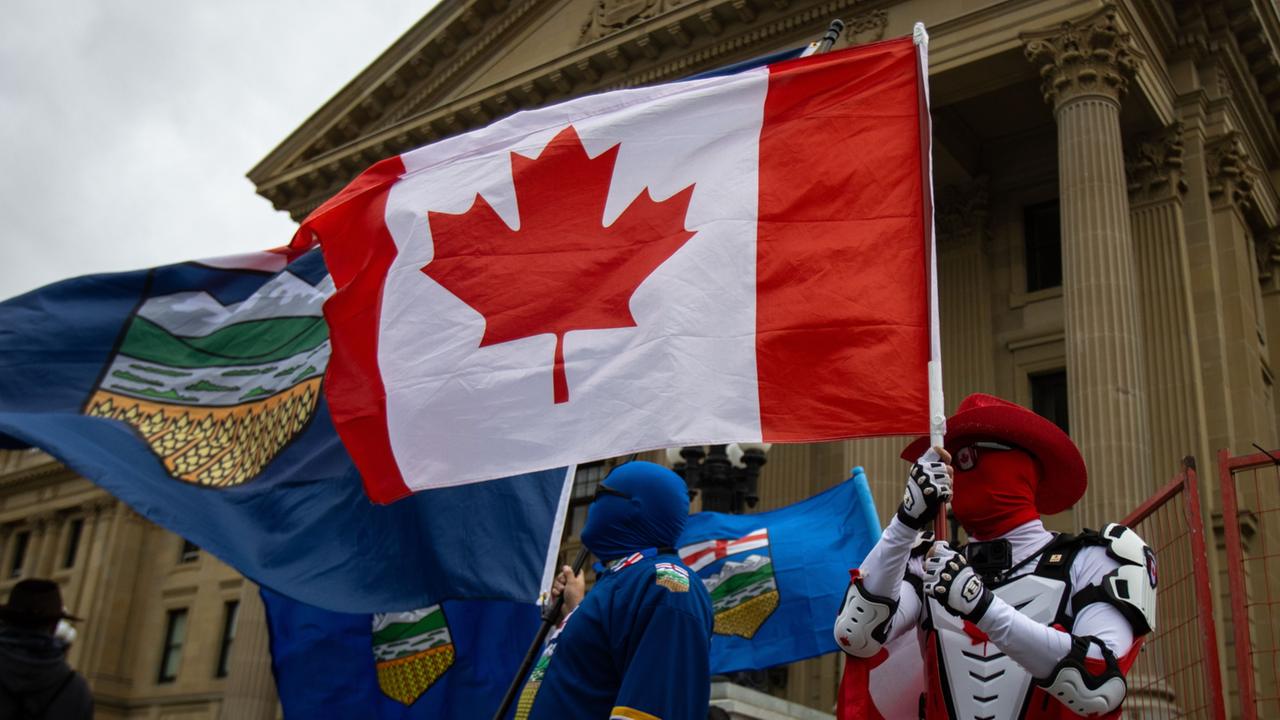
For several years now, a separatist movement has been gaining strength in the oil-rich province of Alberta in western Canada – a movement also supported by US President Trump. A vote on a possible independence referendum is taking place today. By Martin Ganslmeier Canada’s Prime Minister Mark Carney is not to be envied. For more than a year, he has been battling against US President Donald Trump’s tariff policy and defending his country against Trump’s annexationist ambitions. Even though Carney knows he has the support of the majority of Canadians, the economic problems caused by Trump’s tariffs are fuelling the rise of separatist forces. In the French-speaking province of Québec, the separatist Parti Québécois recently returned to power for the first time since 2014. It is seeking to hold another independence referendum in the province as soon as Trump is no longer in the White House. A young separatist movement in an economically strong region Whilst separatists in Québec have traditionally been strong, the secessionist movement in Alberta is relatively young. And unlike Québec, oil-rich Alberta, with its major cities of Calgary and Edmonton, is economically very successful, as Darrell Bricker, head of the Ipsos opinion research institute in Toronto, explains. “Alberta has the fastest-growing population in Canada and is the driving force behind Canadian economic growth,” says Bricker. It was only the restrictions during the Covid-19 pandemic, as well as the environmental and climate policies of former Prime Minister Justin Trudeau, that led to a resurgence of the separatist movement, explains pollster Bricker. The latest polls show that, in today’s referendum, around one in four eligible voters will vote in favour of independence. That is a surprisingly high number, considering that both Canada’s Prime Minister Carney and the Conservative leader of the Alberta provincial government, Danielle Smith, are firmly opposed to secession. The Conservative Premier is, however, using the referendum as a means of putting pressure on Carney to ensure his government does more for Alberta. Carney warns against drawing lessons from Brexit This reminds many in Canada of the former British Prime Minister David Cameron and his Brexit referendum. Which is why Mark Carney, then Governor of the Bank of England, warned the separatists against “a dangerous illusion”: “I saw at first hand how many Britons had hoped at the time for a better negotiating position vis-à-vis Brussels. Now, ten years on, they are struggling to undo what they actually achieved back then.” The secessionist movement received support on social media through Russian influence and, even more directly, from US President Trump and the MAGA movement. The separatist leaders were received three times at the White House and the US State Department. Promises against secession Carney, who himself hails from Alberta, has gone on the counter-offensive in recent weeks. Whilst his predecessor, Trudeau, rejected new investment in the oil and gas industry on climate change grounds, Carney promised the construction of a new oil pipeline from Alberta to the Pacific, a high-speed rail link between Calgary and Edmonton, and the building of thousands of new homes. None of this will succeed “if we are divided”, said Carney. “You cannot build great things across dividing lines. We must be strong, and together we are stronger.” Even though the result of today’s referendum is not legally binding, Carney must be concerned that the centrifugal forces within his country are growing.
Source: tagesschau ›
Comments (0)
No comments yet.