Do not be distracted by global crises. Nature cannot wait for a better year – we must act now | Steven Guilbeault
In 2022, I helped push through the international agreement to protect biodiversity. Wars and economic pressures can make nature seem like a ‘nice-to-have’. But it is a critical asset, and Cop17 must deliver real actionWhen I was five, property developers came to cut down the woods behind my home in La Tuque, Quebec. My mother encouraged me to climb one of the trees in protest, then told the developers, straight-faced, that there was nothing she could do when they asked her to get me down. A few days later, the tree was cut down anyway.I thought about that tree in the early hours of a...

In 2022, I helped push through the international agreement to protect biodiversity. Wars and economic pressures can make nature seem like a ‘nice-to-have’. But it is a critical asset, and Cop17 must deliver real action
When I was five, property developers came to cut down the woods behind my home in La Tuque, Quebec. My mother encouraged me to climb one of the trees in protest, then told the developers, straight-faced, that there was nothing she could do when they asked her to get me down. A few days later, the tree was cut down anyway.
I thought about that tree in the early hours of a freezing Montreal morning in December 2022, as the gavel came down on a global agreement between nearly 200 countries to halt and reverse the loss of nature by 2030. I thought about how important nature is for our health, our food security and our economies, but also how much passion there is around protecting it, and how it has the power to inspire people all around the world.
Despite differences in national circumstances, interests, and levels of responsibility, what we agreed to do really did, and still does, have the power to create longer term stability for billions of people across borders. We agreed to protect 30% of the world’s land and oceans and channel $200bn (£150bn) a year into nature. We admitted that far more money was flowing into destroying nature than protecting it, committing to address $500bn of subsidies currently contributing to the problem.
Nearly four years later, the reality is that we are not delivering on those promises.
The context has changed. War, extreme weather and homes swept away or burned to the ground are becoming the norm, and public finances are strained everywhere. Leaders feel pressure to choose between protecting biodiversity, which is perceived as a “nice-to-have”, and policies that look like self-preservation.
This is a false dichotomy. Nature is a critical asset for national prosperity and economic security, and the evidence is already there.
Farmers in France who have leant on biodiversity instead of chemical fertilisers have seen crops thrive through extreme drought. In Brazil, Indigenous fire brigades have cut blazes by more than 20% in parts of the Cerrado and Amazon, regions vital to the soya and commodity trade with the global north.
To the environment ministers preparing for the biodiversity summit starting this week in the Armenian capital, Yerevan, I know what you are about to be told: budgets are tight; there’s a war, an election, a trade dispute. Nature can wait for a better year.
But the reality is, there might not be a better year, there is only the one you are in. I and some of the ministerial colleagues that sat beside me in the early hours of that Montreal morning four years ago agree that the ship can be turned around, and it can start with three clear next steps in Yerevan.
In Yerevan, ministers must set out a timetable and interim milestone to deliver on the $30bn public finance promise by 2030, having just fallen shy of the $20bn target by 2025. Overseas development finance dropped 23% last year – the largest drop on record – and it is expected to decline further before the end of 2026. Biodiversity-specific funding within that has fallen 17%.
Countries such as the UK are publicly acknowledging that ecosystems such as the Congo basin and the Amazon rainforest are also critical for food security within its own borders. Investing in nature overseas is not charity – it is a sure bet on stable food import costs among other things.
Finance ministers should meet within the next two years to set out a plan for turning off the tap on subsidies that undermine economic security. We have four years left to start shifting $500bn of harmful subsidies, as this is no longer just an issue only for environment ministries.
Harmful subsidies have rocketed to $2.6tn in recent years. Across countries’ biodiversity plans, only 15% had plans to address the gap. The quantity of money spent on destroying nature is 30 times higher than what is going into protecting and restoring it.
Ministers must also draw up a plan of action for closing the gap between terrestrial and marine ecosystem protection, building on all the tools that have been used for land, and pushing for progress at the first ever Ocean Cop in New York in January next year. According to national commitments, 27% of terrestrial land is protected, which is something that should be celebrated, while oceans have just 12% similarly covered by protective agreements.
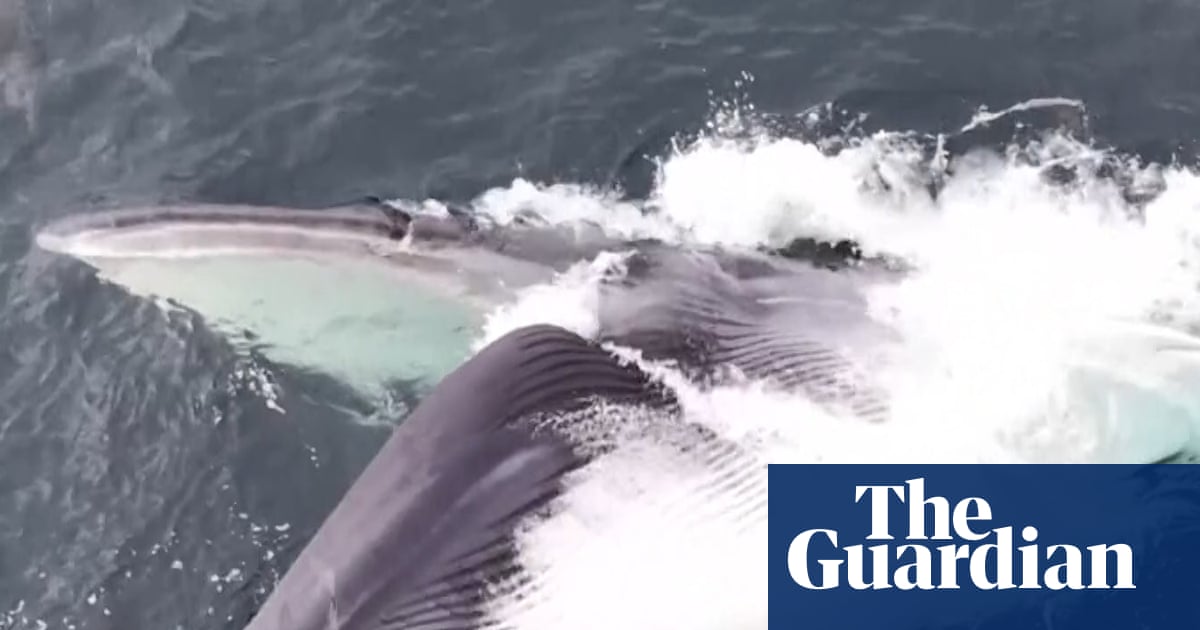
Ocean ecosystems are remarkable and humbling places with unfathomable potential. The species we have yet to discover, the amount of carbon and heat they absorb each year, and the buffers against extreme weather that coastal ecosystems such as mangroves and coral reefs can provide are well worth the cost of investing in protection.
To the ministers heading to Armenia, I say: this Cop is your tree. In Montreal, nearly 200 countries climbed up together. In Yerevan, the pressure to climb back down will be intense. I ask those ministers not to give in to it. Do not let them cut it down. There is no better year coming, only this one, and the choice to drive forward the goals we all set together back in 2022.
Source: The Guardian ›

Comments (0)
No comments yet.