‘For Panama, it is life or death’: how drought is choking the canal that feeds a nation
Failed rains and a dire El Niño threaten the waterway that sustains the country, with farmers selling cattle to surviveThe cattle should be ambling, grazing contentedly, through Robert Delgado’s fields. Instead, the animals slump in the shade, tongues lolling, in futile attempts to avoid the blistering heat. Soon it will matter little whether their appetite returns, for there will be no grass left to graze.In Azuero, an agricultural region in Panama’s Arco Seco (Dry Arc), the summer is generally relentless and unforgiving. But this year, the crucial rainy season that precedes it – ty...
Failed rains and a dire El Niño threaten the waterway that sustains the country, with farmers selling cattle to survive
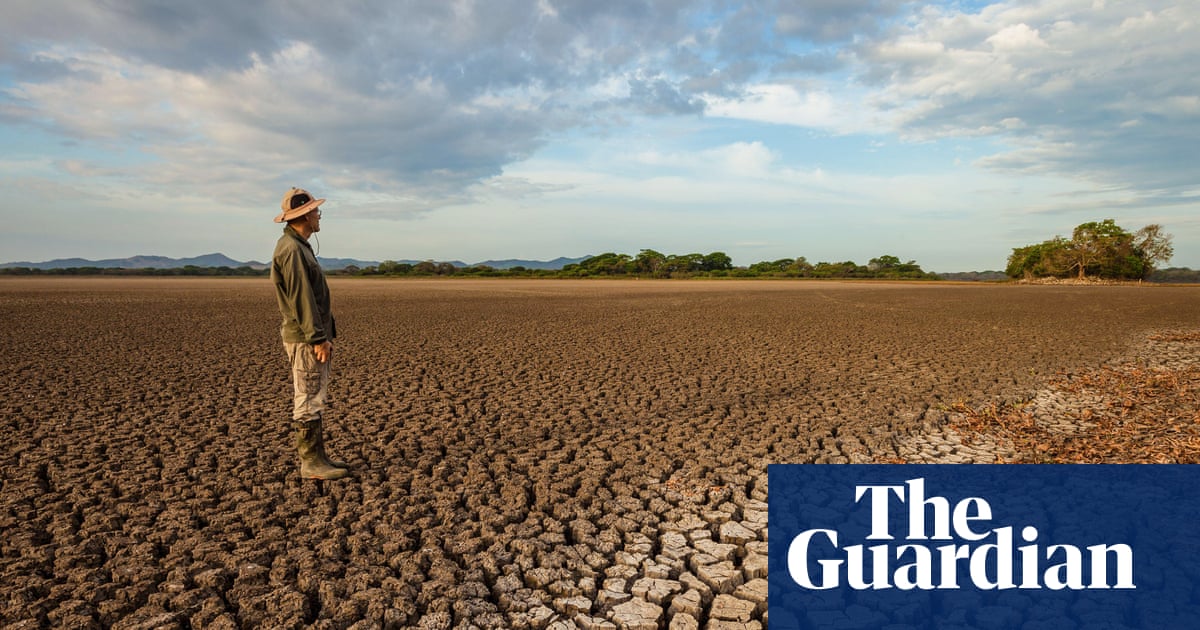
The cattle should be ambling, grazing contentedly, through Robert Delgado’s fields. Instead, the animals slump in the shade, tongues lolling, in futile attempts to avoid the blistering heat. Soon it will matter little whether their appetite returns, for there will be no grass left to graze.
In Azuero, an agricultural region in Panama’s Arco Seco (Dry Arc), the summer is generally relentless and unforgiving. But this year, the crucial rainy season that precedes it – typically from May to December – has brought little rain to parched fields. The watering holes, streams and rivers that farmers rely on have not been replenished, and pastures – the vital source of animal feed during the dry months – have not regenerated themselves.
Delgado’s milk production has fallen by half. As the dry season approaches, he is selling off cattle for fear of what is to come. He says: “I and other producers have had to slaughter or sell animals of high genetic value simply to avoid the heartbreaking prospect of watching them die of thirst or starvation. The lack of water has greatly affected us, and it is going to continue to do so.”
Panama is gripped by a water crisis. A rainy season punctuated by drought, exacerbated by the climate crisis, has ravaged large swathes of the country. El Niño threatens to continue the havoc. In August, the government declared a national state of emergency that will remain in place until June 2027. Authorities forecast rainfall deficits of more than 50% in some regions until December.
“The situation is dramatic,” says Panama’s environment minister, Juan Navarro. “Climate change has undoubtedly increased the frequency and also the gravity of El Niño, as well as other climate extremes; we used to get an El Niño every 10 or 20 years. The last, in 2023, cost the Panama canal almost a billion dollars in revenue.”
And this latest El Niño, Navarro says, citing scientists, is pointing towards being the worst in history. He says: “We are already starting to feel the impact, but we have seen nothing yet. For Panama, this is life or death. The canal is life and death for our economy, and for our drinking water supply.”
Panama’s economy relies heavily on the Panama canal – and the canal is acutely vulnerable to the climate crisis. The 50-mile (80km) waterway linking the Atlantic and Pacific oceans, through which about 5% of global maritime trade flows, accounts for up to 7.7% of Panama’s GDP. The freshwater lakes that supply the canal’s locks, Gatún and Alajuela, also provide drinking water for about 2 million people – nearly half of Panama’s population. A sizeable chunk of the country’s hydroelectricity generation also depends on the watershed.
In September, low water levels twice triggered restrictions on daily vessel transits. While some have been lifted, officials are braced for worse when the El Niño-intensified dry season begins in December.
The government is funnelling $80m (£60m) towards “resilience actions” to prepare for El Niño, Navarro says. In the long term, it is investing about $1.5bn in a reservoir on the Indio River intended to supply Lake Gatún and meet demand for the next five decades.
The new reservoir is, in Navarro’s words, “the most important investment we are making – Indio is the ultimate bet on resilience”.
Yet the project has not come without controversy and fierce resistance. Damming the Indio River will flood the lands of 550 families in 38 rural communities, about 2,500 people in total, who live in the basin. Cropland will be swept away, graves exhumed and reburied elsewhere, and whole communities – homes, schools, churches – will be dismantled.
In response, people have held street protests, taken legal action and set up blockades. Yet the project is steaming ahead; authorities forecast completion in two to three years.
“For us, this isn’t merely a matter of changing homes,” says Florentino Chirú, vice-president of the Coordinadora Campesina por la Vida Contra los Embalses (Peasant Coordinating Committee for Life Against Dams). “It means leaving behind the history of entire generations. Furthermore, we would lose fertile land.”
According to Chirú, farmers rely on small-scale livestock farming for their livelihoods, meaning they would lose their only means of feeding themselves and generating income.
“The impact would be absolutely devastating. There are no words to describe it. I’ve lived on this land for 63 years; my whole life is here,” he says. “If we were to be displaced, well, this is our life insurance. We would be left with nothing.”
The Panama Canal Authority says the resettlement will include compensation for homes, land, crops and livelihoods, along with support to restore families’ income sources. It says residents can choose from different relocation options, including moving together to preserve community ties.
A greater supply will not solve all of Panama’s water management and storage problems, though. Experts say the current crisis has exposed structural failings in the country’s relationship with water.
Despite living in one of the wettest countries on Earth, hundreds of thousands of people still lack access to reliable drinking water. In places such as Azuero, drought is compounding a chronic lack of potable water. By the government’s own estimates, in some areas about 50% of water is lost through ageing, leaky pipes.
A recent El País investigation found that 240,000 Panamanians lack regular access to drinking water, and even communities within the canal watershed rely on rainwater, tanks and informal deliveries.
“We have a challenge with water,” Navarro acknowledges. “The number-one challenge is the watersheds. Number two: our water purification and treatment facilities to produce potable water are inadequate. Three, we have a horrendous problem with loss. Because we have such abundant water, we haven’t t…
Source: The Guardian ›

Comments (0)
No comments yet.