Gigantic differences: researchers calculate energy consumption of birds when flying
A condor requires only one fifth of the energy of a swan per flight kilometer. It is crucial whether a bird counts among the gliders or flutterers. If climate change shifts atmospheric conditions, entire migratory routes falter.
A condor requires only one fifth of the energy of a swan per flight kilometer. It is crucial whether a bird counts among the gliders or flutterers. If climate change shifts atmospheric conditions, entire migratory routes falter.
It looks lightweight, but sometimes costs a lot of energy: We are talking about flying - not about a holiday flight to Mallorca, but about the way birds move. A team of researchers from the Max Planck Institute for Behavioral Biology and the University of Swansea has found that how efficiently birds exploit winds and air currents is extremely important for energy consumption.
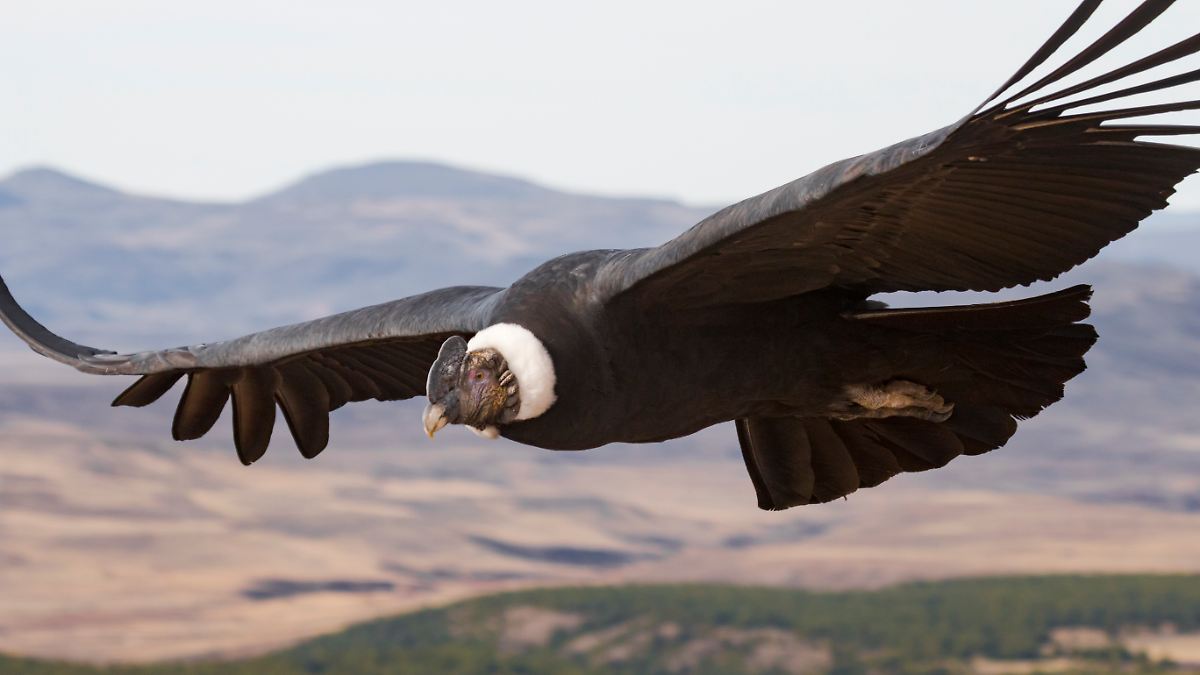
The team gives an example in the journal "Science": An Andean condor and a trumpeter swan - both weighing about eleven kilograms - have a very different balance. Compared to the trumpeter swan, the condor needs only a fifth of the energy for a kilometre flight. The air makes the difference: the condor uses upwinds and only beats its wings in 0.1 percent of its flight time, while the swan does so 99 percent of the time. Previous assumptions have assumed that the energy consumption of both would have to be similar.
For their study published in Science, the researchers looked at a total of 50 species of birds and bats in the wild and concluded that flies may be the most favorable mode of locomotion in terms of energy consumption. The team took into account a variety of GPS and radar data, the largest study to date on the energy costs of flying in wildlife.
So far, science has assumed that swimming in animals is on average the most energy-saving way of getting around – and then flying comes. However, these assumptions were based on measurements in the laboratory - in swimming pools, flight tunnels or on treadmills. This leaves out the real conditions in the wild, but these played a major role in flying, the researchers argue.
It showed in the more detailed analysis: The animals can be divided into two larger groups - the gliders and the flutterers. Size also plays a role in consumption: the heavier a sliding bird, the less fluttered it was and the lower its energy expenditure when flying. For lighter birds, another mode may be more advantageous.
"For us, the sky may just look like a backdrop for flying animals, but it's an indispensable resource that can dramatically change the cost of a trip," explains lead author Martina Scacco. “When flying animals have access to natural air currents, they get free fuel from the sky,” adds co-author Emily Shepard.
But why is it even relevant how much energy birds need to fly? Senior author Kamran Safi explains, “As atmospheric conditions change, so do flight costs and thus the way animals choose their hiking routes and form communities.” In times of climate change, the effect could have consequences for ecosystems.
Source: n-tv ›



Comments (0)
No comments yet.