Humanoid robots: How robotic people explore German factories – and what that means for jobs
AI robots with arms and legs should revolutionize the industry. A visit to the workplace of the first machine people shows that they still have a lot to learn – but that can happen quickly.
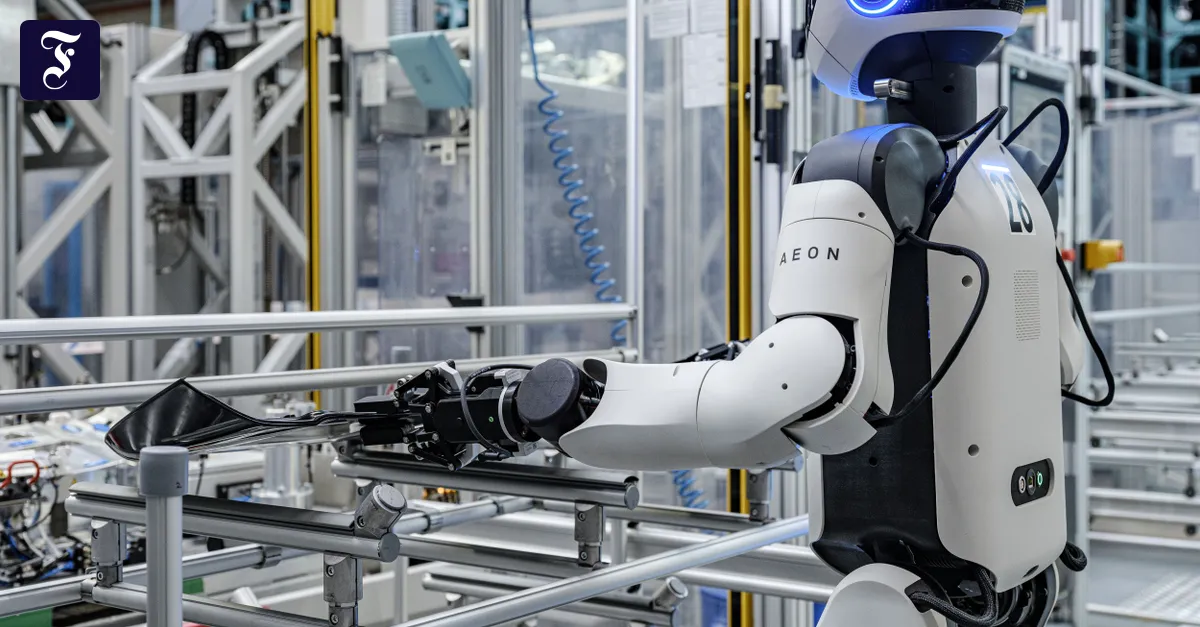
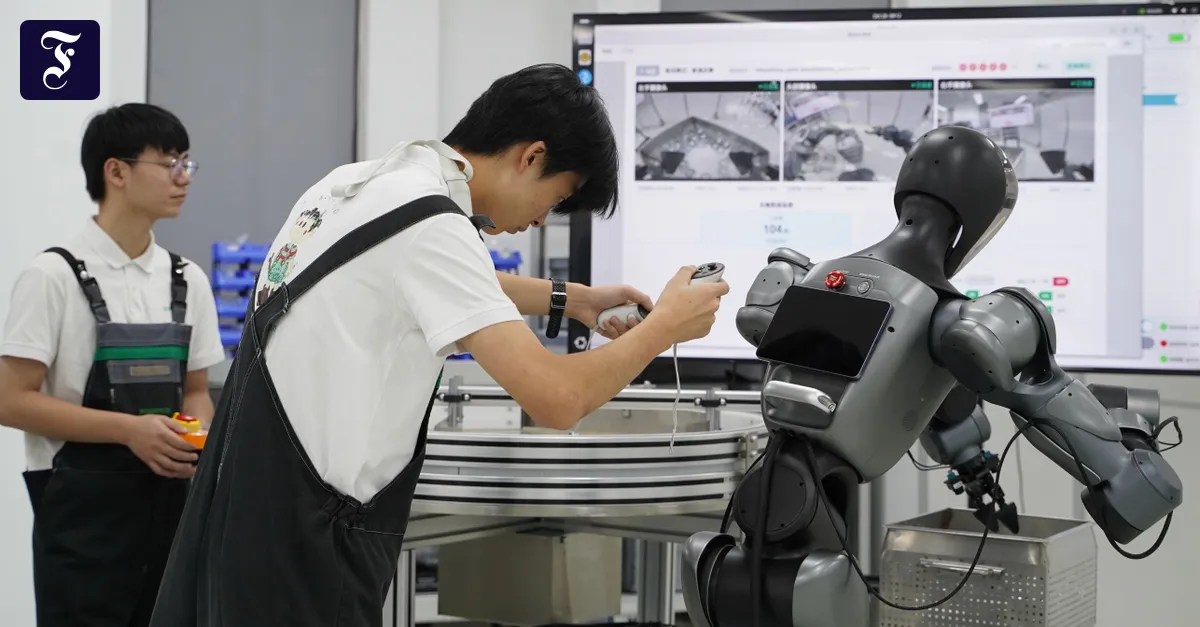
The first impression is: sobering. In August, the world had marveled at the pictures of the “World Humanoid Robot Games” in Beijing. More than 2000 human-like robots competed against each other in sports competitions. One ran the 100 meters in 8.64 seconds, almost one second faster than world record holder Usain Bolt. But whoever gets the rare opportunity to encounter a humanoid robot in real life, and not during staged performances in show sports fights and at industry fairs, realizes how difficult the everyday life of machine people still is in truth. At the same time, you get an idea of how artificial intelligence (AI)-controlled robots, which have heads, arms and legs, will change our lives if they no longer just hop, dance and run for the audience, but work, help and take care of themselves. In factories, in logistics centers, in restaurants and nursing homes and at some point at home at work in the household. When exactly our life with machine people begins, no one can say with certainty today. But some experts predict that it could be within a few years. The F.A.S. watched the AI robots take their first steps out of the laboratories and into the human world. Experts speak of “physical AI” because they give artificial intelligence a body with which it can act directly in the world. “You still have much to learn” On one point, most experts agree: one of the first habitats of the humanoid robots will be the factory. Because in this technical, structured, and well-planned environment, your AI brain is still the most able to cope. And here they could soon make a big difference. Optimists believe the humanoid robots will be a life-ring for distressed German industry. Because they help to compensate for cost disadvantages and stop the migration of factories. A Thursday afternoon at the end of September at the BMW plant in Leipzig. This is one of the very first factories in Europe where machine people are already being tested. There are still only a few. But the car company wants to use thousands of humanoid robots in its factories within a few years. BMW considers machine people to be a “game changer”. A technology that opens up completely new possibilities. On this autumn day in Leipzig, the new robot colleague named Hexagon Aeon is helping with the injection molding machine. Or rather, he is trying. He takes a plastic spoiler out of the machine, turns around and takes it to a conveyor belt a few meters away. His movements are agonizingly slow, sometimes the component falls to the ground. One of the technicians who assists him must then pick it up and hand it over carefully. The observer must think of the old Jedi Master Yoda from Star Wars: “Much you have yet to learn.” The Aeon is a 1.65-meter and 60-kilogram humanoid robot from the manufacturer Hexagon Robotics from Zurich. He has two legs, each with a role instead of feet, and it is fascinating to watch him keep his balance on the way. If it remains standing, it extends two small supports for stabilization. The head of the Aeon looks like it is wearing a motorcycle helmet with an impenetrably dark visor folded down. It seems gloomy. The industrial designers must probably come back and give him a friendlier face. But the robot man gets everything. The cameras installed in the head give it a 360-degree view. The Aeon also has eyes behind. He has been ahead of the people. Despite ongoing production, BMW freed up the robot’s workstation on the injection moulding machines for practice at midday. Because he can not yet independently carry out this simple task. On a chair sits a person with virtual reality glasses on his eyes, two controllers in his hands and a notebook on his knees. He controls the robot and teaches him what to do. This is how the learning process works: first a human controls the robot, then the algorithms imitate the work process. He should gradually become more and more independent and carry out tasks without guidance. This is the new thing about AI-controlled robots: conventional industrial robots, as they have been used for decades, carry out predefined workflows, to put it simply. They work like a baker who prepares a cake step by step by recipe. The AI robot, on the other hand, resembles an accomplished baker who can modify and improvise recipes if, for example, he lacks an ingredient. The hope is that forward-thinking humanoid robots will take on simple tasks in factories for which automation was previously too expensive. Tasks such as equipping machines with components or removing workpieces from machines. And the mobile AI robots should also switch flexibly between different jobs in the factory, depending on where they are needed. The first robotic people at the BMW plant in Leipzig are still a long way off. Even light reflections on a painted plastic component can confuse them, even a floor that is still wet from wiping can become a challenge. And there are technical problems like so-called “overfitting”, which can be translated as overfitting. If the robot rehearses a particular task too often, it finds it harder to transfer the necessary skills to other tasks as desired. You could say, The robot memorizes the work process instead of really understanding it. “Be ready for the ChatGPT moment” The engineers are betting that the robot brains will quickly become smarter. The Swiss manufacturer Hexagon cooperates closely with the US..
Source: FAZ ›


Comments (0)
No comments yet.