Sanofi CEO in conversation: “The market for weight-loss agents is already highly saturated”
The CEO of the French pharmaceutical group Sanofi has laid the foundation for a new insulin factory in Frankfurt. While competitors cut investments, Belén Garijo is committed to the German location.
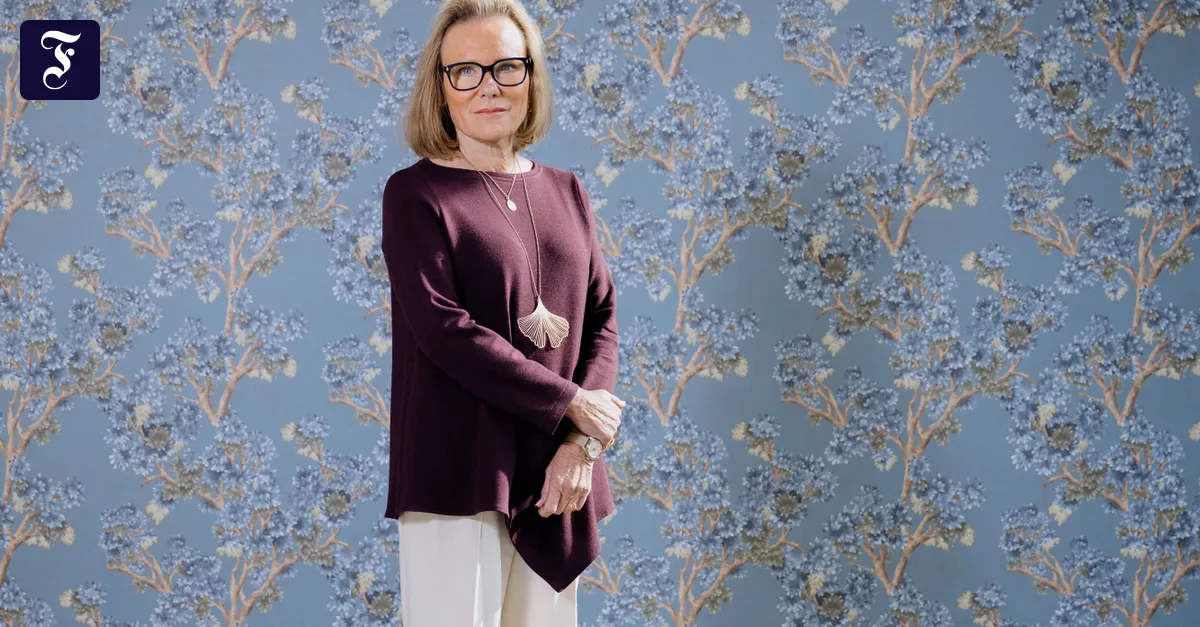
Ms. Garijo, you have now moved to Paris as Chairman of the Board of Sanofi for almost six months. What is it like, if only for a short visit, to be back in Frankfurt? It is a great pleasure. In a way, it feels like I’m coming home. I have already been here for another meeting with the Frankfurt team, and as it happens, we will be here quite often this month. Sanofi is expected to produce at least 1.1 tons of insulin per year in Frankfurt by the end of 2042. In addition, the EU expects Sanofi to stock up on one ton of insulin for crisis cases over the next ten years. How is that supposed to work? First, we have production dynamics that evolve according to our forecast. Secondly, there are safety stocks, which vary depending on the drug. With insulin, we keep the stock constant. But it also depends on demand, because above all we want to ensure good care for patients. Until the new plant creates capacity from 2032, we will rely on the quantities that we already produce in Germany – as the most important location for insulin production. We want to start the new plant as quickly as possible, together with the other site where we are also building. What will happen after 2042? The date 2042 is very long-term. But we need to be successful in the next five to ten years to become more competitive compared to the US and China. I am concerned that countries only pursue national priorities. We need to make sure that governments focus on Europe. Only in this way will we become stronger and catch up in innovation and create an ecosystem that is safe in the long term. Shortages of insulin occur again and again. The market for this vital drug is highly concentrated. Together with Novo Nordisk and Eli Lilly, Sanofi still accounted for almost 90 percent of the world market in 2022, according to a report by the Access to Medicine Foundation. To what extent is the oligopoly, which has grown over decades, itself the reason for the fragile supply situation? These three companies have traditionally been the leaders in the diabetes sector. But there are also smaller companies and generics manufacturers that also contribute to insulin production. We serve about a third of the global insulin market and are market leaders in basal insulins, which continue to form the backbone of diabetes therapy. It is true, however, that the diabetes market is evolving. Patients with type 2 diabetes currently have other options, for example, because other companies are more focused on innovation, especially GLP-1 supplements. However, this will not reduce the need for insulin. That is why we must continue to produce. We need more capacity. Would it not be in the interests of security of supply to facilitate market entry for European biosimilar producers, as the EU intends to do with the Biotech Act? Once patent protection has expired, companies that can produce on a larger scale and with larger volumes should have free access. We absolutely agree with that. This is the normal course of business. The industry, if well managed, can even help regulators and payers shift funds towards innovation. Manufacturers of copycat preparations from China and India are also entering the market. Ondibta, a basal insulin biosimilar from Sandoz developed with Chinese company Gan & Lee, and Semglee from Indian manufacturer Biocon are just two examples. Prices are likely to fall further. What does this mean for Sanofi in light of the billion-dollar investment in Frankfurt? We continue to invest in capacity, primarily because our main priority is patient care. Our insulin business continues to contribute to the growth of our general drug business, profitable. Parallel to Frankfurt, Sanofi is also building production capacities for insulin in China. How should the two sites work together? Both plants will work very closely together to share knowledge and data that will make our production more efficient overall. Both productions will also go into operation approximately at the same time. More and more European pharmaceutical companies are moving drug production to China or investing in the US in light of President Trump’s pricing policy. Does Sanofi China also hold itself open as a back-up option if conditions in Germany deteriorate? Given the current geopolitical conditions that can affect trade dynamics, a supply chain is important that allows us to be closer to patients and ensure delivery capability. That is why we must invest regionally. It is not an either-or-choice. For a long time, we also decided on the profitability of investments. That is precisely why Europe needs to be much more active in building the ecosystem we need to defend our industrial base. With the new health insurance reform, the location conditions in Germany for the pharmaceutical industry will deteriorate. Manufacturer reductions of 15.5 percent on patent-protected drugs are planned. Eli Lilly and Boehringer Ingelheim have therefore cut investments. Would Sanofi have preferred to blow off the insulin construction project in hindsight if it were not bound by public funding and supply obligations? We started planning the project more than two years ago. The health insurance reform with tighter framework conditions has intervened. For Sanofi, insulin production in Frankfurt has a long tradition and great importance. This does not mean that we are ignoring the situation. We have self-understood..
Source: FAZ ›

Comments (0)
No comments yet.