Economy in the village: rural areas do more than you think
Rural regions are considered to be left behind and often remain underexposed in public debate. Family businesses and everyday entrepreneurs from the countryside contribute significantly to the economic power of Germany.
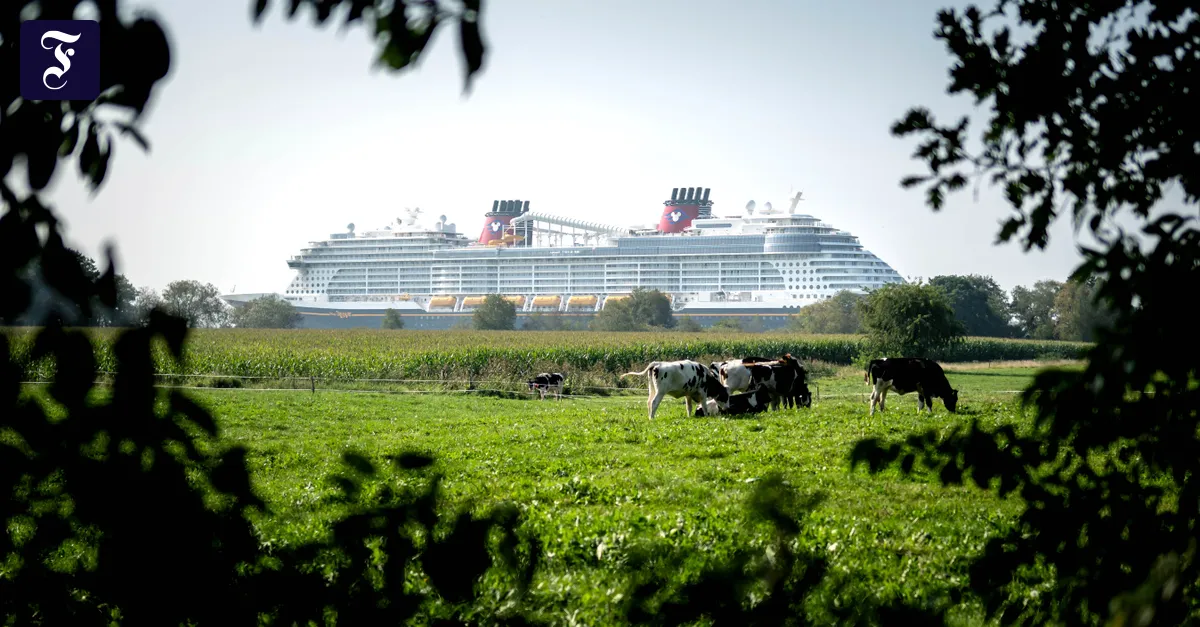
At first glance, Emsland seems to confirm the provincial cliché: vast landscapes, sparse settlement, a lot of agriculture. Around 334,000 inhabitants account for 1.7 million livestock – five per capita. Moore, Heide and difficult infrastructure have long earned the Lower Saxony region a reputation as the “poorhouse” of the republic. Today it is different. The Emsland Plan, adopted in 1950, drained peatlands and opened up land for fields, farms and settlements; At the same time, roads were created that connected remote places better. This made it possible to expand agriculture and industry. Unemployment has long been low in Emsland, the region is gaining residents and numerous Emsland companies are successful all over the world, which is also reflected in regional rankings. The family business Krone in Spelle is an example of this change. Over the decades, a small forge has grown into an international manufacturer of agricultural technology and commercial vehicles, which generates billions in sales and ranks among the world leaders in individual segments. In the Ems Axis growth region, companies like Krone are joining forces with municipalities and institutions, recruiting specialists and improving the location conditions. Similar stories could be told across many counties. Nevertheless, the picture of a backward, abandoned province holds. The debate about the business location is dominated by highly rated technology groups, emerging start-ups and DAX companies. Hero stories fascinate, while everyday businesses outside the metropolises often remain invisible. Hanno Kempermann, Managing Director of IW Consult, also refers to this. “Rural areas are totally underestimated,” he says. About half of the population live in the countryside; It also generates about half of the total gross value added. Rural regions are the economic backbone of Germany, says Peter Adrian, President of the German Chamber of Commerce and Industry (DIHK). “Whoever talks about competitiveness, transformation and industrial policy must first talk about rural areas.” This importance has hardly been reflected in the political agenda so far. More industry and commerce in the countryside Data from the Thünen Institute show: The economic structure in the countryside differs significantly from that in cities. Rural holdings are often small or medium-sized; Production and technical professions, for which training is often required, are more strongly represented. This is also evident in the industry structure: In the countryside, 22 percent of employees work in the manufacturing sector, twice as many as in the city. These include, for example, the metal, feed or glass industries. Agriculture, which many associate with rural areas, now provides only a good 1% of jobs. Even in rural areas, the service sector is the largest employer. However, his share of employment is well below that in cities, where he reaches around 60 percent. Above all, knowledge-intensive services such as research and specialized consulting are more concentrated in urban areas. This does not mean that companies outside the metropolises are less innovative. Innovation often develops gradually, for example through improvements in production and organization or through cooperation with customers, suppliers and universities. The “hidden champions” prove that growth can succeed: They are world market leaders in a niche, but hardly known outside their industry. With 1,600 such companies, Germany is home to the most in the world. In terms of the total number of all German companies, this is still little. Many hidden champions emerged from small craft businesses and only developed over time into world market leaders, says Susannechlepphorst from the Institute for SME Research (IfM) in Bonn. How many of them sit in the countryside, can not be said exactly, estimates of about 70 percent. Examples are the tunnel boring machine manufacturer Herrenknecht or the Kirchhoff Automotive Group. Many rural businesses are family-run. “Many family businesses think in generations instead of quarters and feel obligated to their location,” says DIHK President Adrian. They are often more than just an employer: trainers, sponsors, neighbours and sometimes silent support of the community. This proximity is hardly in big cities. In the village of Spelle in Emsland, Bernard Krone, owner of the company of the same name, volunteers for example in the Schützenverein, but also nationally in the network "Ems-Axis". “It is important that a company considers the quality of life of the region and actively participates as part of the community,” he says. The cooperation of people among themselves is often personal, the paths short, one knows each other. Less unemployment in the countryside than in the city family businesses also strengthen local supply chains and networks. Medium-sized companies worked more often with regional banks, craft businesses and service providers. In addition, they train and contribute with trade taxes to the municipal financial strength. A study by IW Consult, a subsidiary of the German Economic Institute, shows that rural areas with many family businesses have lower unemployment and better employment development than districts with fewer family businesses. Companies create apprenticeships for the next generation and income in economically weak regions. Overall, unemployment in the countryside is also lower than in the city, although there are larger companies and often better paid jobs. According to Eurostat, it was recently located in urban areas..
Source: FAZ ›


Comments (0)
No comments yet.