Real estate loans as expensive as since 2009
Anyone who currently wants to buy a house must dig particularly deep into the pocket for financing. The interest rates on real estate loans are as high as long. In addition, there are high material and labour costs.
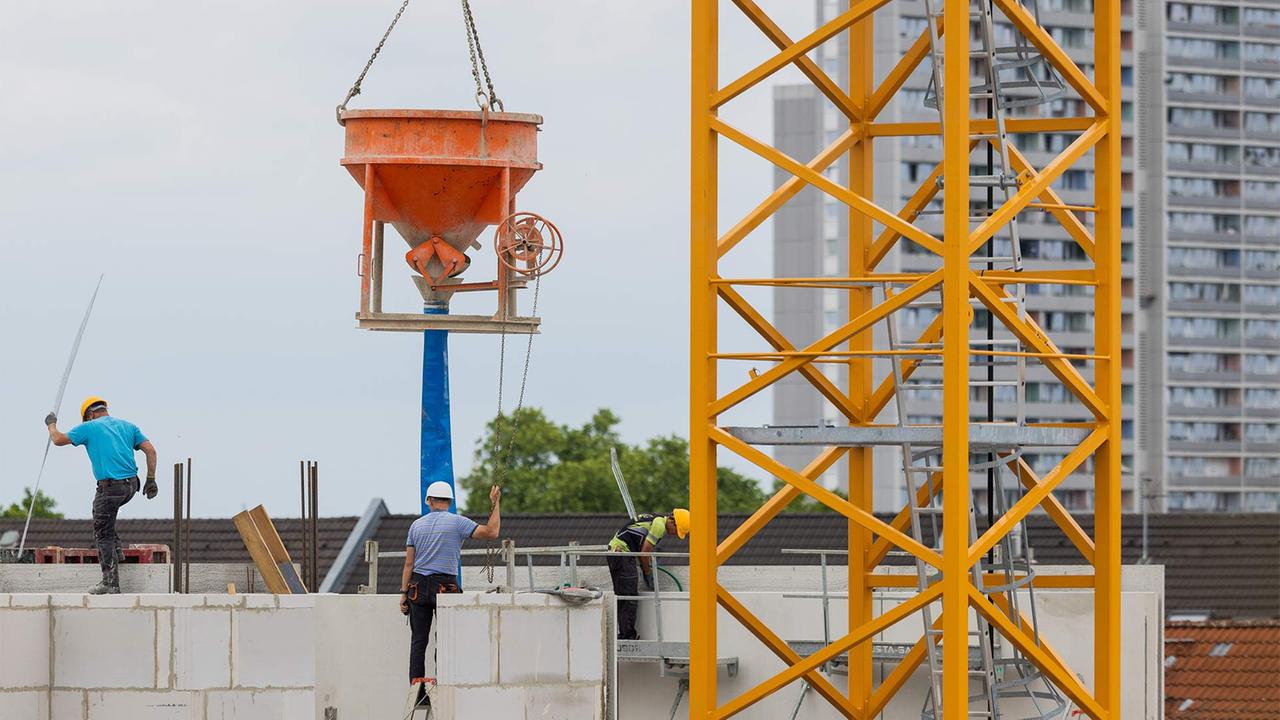
Anyone who currently wants to buy a house must dig particularly deep into the pocket for financing. The interest rates on real estate loans are as high as long. The background is the Iran war. The inflation and interest rate surge resulting from the Iran war also burdens homeowners and the construction industry in Germany: Because real estate loans in Germany are currently as expensive as since 2009 no longer. The average interest rate of ten-year loans has reached a value of just under 4.5 percent according to data from the financing intermediary Interhyp. According to Interhyp, the average interest rate was still 3.9 percent in May and 3.6 percent in March. At around 4.4 percent, the previous interest rate high of the end of 2023 has now been exceeded. Similarly high interest rates recently occurred during the financial crisis, as can be seen not only from the Interhyp figures, but also data from the Bundesbank on housing loans to private households. Higher interest rates quickly eat up slightly cheaper prices due to reasons for the recent rise, in particular the resurgence of the Iran war and the resulting inflation concerns, said Interhyp CEO Jörg Utecht. As a result, the European Central Bank (ECB) raised key interest rates to dampen inflation. This strikes through in the usual chain reaction to the construction interest rates. Only if there is a sustainable solution in the Iran conflict, the inflationary pressure is likely to ease and the construction interest rate will fall again noticeably, Utecht said. "However, there is little evidence of this at the moment." After all, real estate prices have not yet reached the highs from the years before the end of the zero interest rate phase in 2022. But higher interest rates quickly eat up a slightly lower property price. With an average financing, the recent increase in interest rates means almost 200 euros more in monthly installment, Utecht said. "This leads to increased restraint among some customers." Nevertheless, buyers would have some leverage in their hands even in the current market phase, according to the Interhyp CEO. Sellers often accept lower prices Probably the most important point: negotiations with the owner. “Many sellers still have the maximum prices from the years 2021/2022 in mind,” explained Dirk Wohltorf, President of the Real Estate Association Germany (IVD) – the umbrella organization of the German brokers. The offer prices on the Internet are often still the desired prices of the sellers, but are often no longer certified in the amount. “If interest rates go up significantly, prices have to go down,” Wohltorf said. Several sellers therefore necessarily accept price reductions, as Interhyp CEO Utecht confirmed. We experience in our consulting dialogues that sellers are increasingly willing to go down with prices. Especially with existing properties, discounts on the price can be achieved through negotiations. The mood among interested parties is nevertheless clouded: The brokers therefore mediate fewer purchase contracts than in previous years, as IVD President Wohltorf reports. “The buyer side is unsettled and restrained.” This also has consequences for the construction industry. Lack of equity as a further hurdle "The interest rate development affects in particular the housing construction - with serious consequences," says a spokeswoman for the Bavarian Building Association. “As of July 2026, we have totaled a contract minus in housing of 3.2 percent in Bavaria compared with the already weak previous year.” In a direct twelve-month comparison, the order minus amounted to 8.2 percent in July. Also in the rest of Germany, the development of housing construction is similar. “Many construction companies have hardly any housing contracts and these, if available, are still enough for the rest of the year 2026,” says the spokeswoman. These orders date back to before the rise of inflation and interest rates. “Accordingly, we expect further declines in construction completions this year.” According to the Landesbausparkasse (LBS), interest rates are not even the biggest obstacle: "The current very high costs of a real estate acquisition are caused only to a small extent by interest, but mostly by the strongly increased material and wage costs in the construction sector, by high additional costs and an excessive state regulation," said a spokesman. The major barrier to a real estate acquisition is currently the lack of equity – especially for young people and families.
Source: tagesschau ›



Comments (0)
No comments yet.